


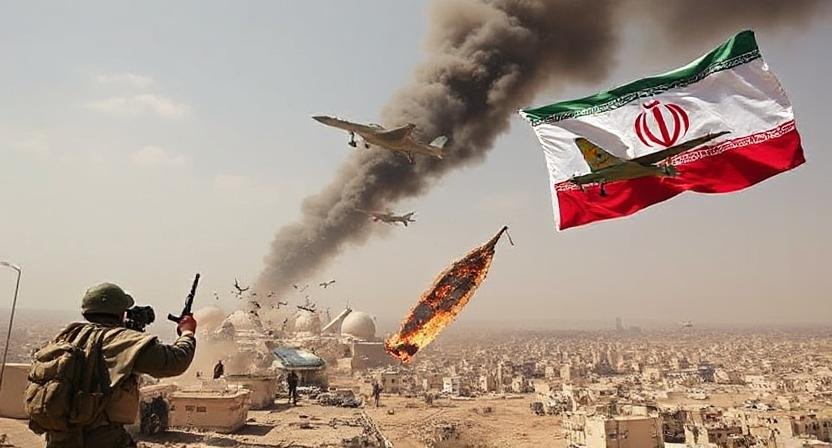
- The Middle East Is Now a War Zone: The Israel-Iran conflict has effectively turned large swathes of the region — including Iran, Israel, Syria, Jordan, UAE, and even Egypt — into a no-fly zone, with flights suspended and borders on high alert.
- Hospitals in Crisis Mode: Medical systems in Tehran, Tel Aviv, and Jerusalem are overwhelmed. Bomb shelters are full, emergency wards are working around the clock, and supplies like blood and medicine are running low.
- Global Powers Take Sides: The U.S. vetoed a UN resolution condemning Israeli strikes, while Russia, China, and much of the Global South back Iran. The West is fractured, and Arab nations remain split and anxious.
- Nuclear Escalation Fears Rise: Israeli strikes damaged Iran’s Natanz nuclear facility and killed top Iranian commanders. In response, Iran launched dozens of missiles at Israeli cities. The possibility of regional — even nuclear — escalation grows by the hour.
The Israel-Iran war, now entering its third day, has plunged the Middle East into a perilous and chaotic crisis. Once a hub for global finance, tourism, trade, and diplomacy, the region now resembles a sprawling battlefield, rattled by sirens, shaken by missile strikes, and paralyzed by fear.
The conflict has effectively turned much of the Middle East into a no-fly zone, with air traffic suspended or heavily rerouted, and regional capitals under unprecedented threat. The emotional, economic, and human cost is rising by the hour.
From Tel Aviv to Tehran, and from Dubai to Damascus, the effects of this war are being felt in every corner of the region. Israeli air raids have struck deep into Iranian territory, targeting nuclear facilities and top military officials. In return, Iran has launched massive retaliatory strikes, including swarms of drones and ballistic missiles, some of which have hit central Israel.
So far, more than 70 people have died in Iran, including four of its most senior security officials. Israel has reported at least four civilian deaths and scores of injuries.
A Region Under Siege
Across the Middle East, a sense of dread has swept through the population. Airports in Israel, Iran, Jordan, and parts of the UAE have suspended commercial flights, and airspace across the region is being treated as a military zone. Civil aviation authorities have warned airlines to avoid the Eastern Mediterranean and Persian Gulf corridors.
Dubai International Airport, once the world’s busiest, is operating under emergency protocols, with several runways reserved for military and humanitarian operations. Amman’s Queen Alia Airport has become a transit hub for diplomatic evacuations. Egypt’s Sinai airspace has been closed entirely after a stray missile landed near Sharm El Sheikh, sparking fears that the Red Sea corridor may also be at risk.
Oil prices have soared to above $140 per barrel as tankers reroute away from the Strait of Hormuz — the world’s most critical oil chokepoint — fearing missile strikes and naval confrontation. Global markets are jittery, and panic selling has begun across Gulf stock exchanges.
Scenes of Desperation in Tel Aviv and Tehran
In Tel Aviv, apartment buildings have been turned into makeshift bunkers, and the once-vibrant beachfront is eerily deserted. Sirens pierce the air at regular intervals, as residents scramble to underground shelters. Israel’s Iron Dome system has intercepted dozens of incoming Iranian missiles, but not all. A direct hit in the Ramat Gan suburb left one dead and several wounded. Magen David Adom emergency responders are overwhelmed, operating round the clock to manage the injured and panicked.
Hospitals in central Israel, particularly in Jerusalem and Tel Aviv, are functioning at full capacity. Medical personnel are working in bomb-proof underground wards. The Hadassah Medical Center in Jerusalem has admitted over 120 injured in the past 24 hours alone, with blood shortages already being reported.
READ MORE: Live Updates: Israel and Iran Trade Strikes as Conflict Enters 2nd Day
Meanwhile, in Tehran, the mood is equally grim. Israeli airstrikes on Iran’s Natanz facility and military targets in Isfahan and Fordo have devastated infrastructure. Residents describe fiery explosions and a city on edge. With over 300 injured and rising, Tehran’s hospitals are flooded. The death of Gen. Mohammad Bagheri, Gen. Hossein Salami, and Ali Shamkhani has sent shockwaves through Iran’s political and military elite.
Iranian authorities are calling this a “war of deterrence,” while Israel claims it is a “war of survival.” But for civilians, it is simply a nightmare.
UN Paralysis: U.S. Vetoes Ceasefire Call
Amid the intensifying bloodshed, the UN Security Council convened in an emergency session, where a resolution condemning Israel’s attacks and calling for an immediate ceasefire was introduced by Russia and supported by China, Turkey, Brazil, and several non-aligned states.
But the United States vetoed the resolution, shielding its key ally Israel. U.S. Ambassador to the UN, Linda Thomas-Greenfield, argued that Israel had the “right to defend itself from existential threats” and called Iran “the primary instigator of regional instability.” The move drew condemnation from much of the world, further polarizing the international response.
MUST READ: Middle East on the Edge: Israel Kills Iran’s Top Generals in Devastating Strikes on Nuclear Sites
French and German officials have called for restraint on both sides, but have not openly condemned Israel. The UK has adopted a cautious tone, urging de-escalation without taking sides. Arab countries are split: Saudi Arabia and the UAE have publicly urged calm but have privately signaled concern about Iran’s role, while Qatar, Syria, and Iraq have blamed Israel for triggering the conflict.
Alliances and Loyalties: A Divided Global Order
The war has brought long-simmering alliances into sharp relief. Israel’s closest allies remain the United States, the United Kingdom, and a few European states, alongside quiet support from Saudi Arabia and the UAE, driven by their own tensions with Iran. Meanwhile, Iran is drawing rhetorical and logistical support from Syria, Hezbollah in Lebanon, and non-state actors in Iraq and Yemen.
Russia and China, both competing with the West for influence in the region, have voiced support for Iran’s right to defend itself. Moscow has called the Israeli strikes a violation of international law, while Beijing warned that further escalation could destabilize global energy markets.
Turkey has condemned both sides but expressed alarm at Israel’s bombing of Iranian nuclear facilities, saying it sets a dangerous precedent.
What Comes Next?
Prime Minister Netanyahu has warned that the campaign will continue “for as many days as it takes.” In contrast, Ayatollah Khamenei has vowed “punishment” and “resistance.” With the death toll rising and both sides unwilling to back down, fears are growing that the war could widen — dragging in Hezbollah, U.S. forces in Iraq, or even Gulf states.
Diplomatic efforts are underway behind the scenes, but with the Oman peace talks canceled and international institutions gridlocked, few expect a breakthrough soon.
As missiles continue to fall and regional capitals brace for more strikes, the once-thriving Middle East now resembles a war zone, with civilians paying the ultimate price for geopolitical rivalry.