


- Populist Surge: Sanseito, led by Trump-inspired Sohei Kamiya, is poised for historic gains, capturing young and disillusioned voters nationwide.
- LDP on the Brink: Prime Minister Shigeru Ishiba’s ruling coalition risks losing its majority, sparking leadership crisis rumors.
- Record Voter Turnout: Over 21.45 million early votes cast — a new record — signals public hunger for political change.
- Inflation & Immigration Drive Debate: Rising costs and foreign worker influx are shaping voter decisions, fueling nationalist sentiment.
Japan went to the polls on Sunday in an Upper House election that is widely seen as a political turning point, with voters grappling with a cost-of-living crisis, rising immigration, populist nationalism, and eroding faith in traditional parties. The outcome could reshape the country’s power balance — and perhaps force Prime Minister Shigeru Ishiba to step down.
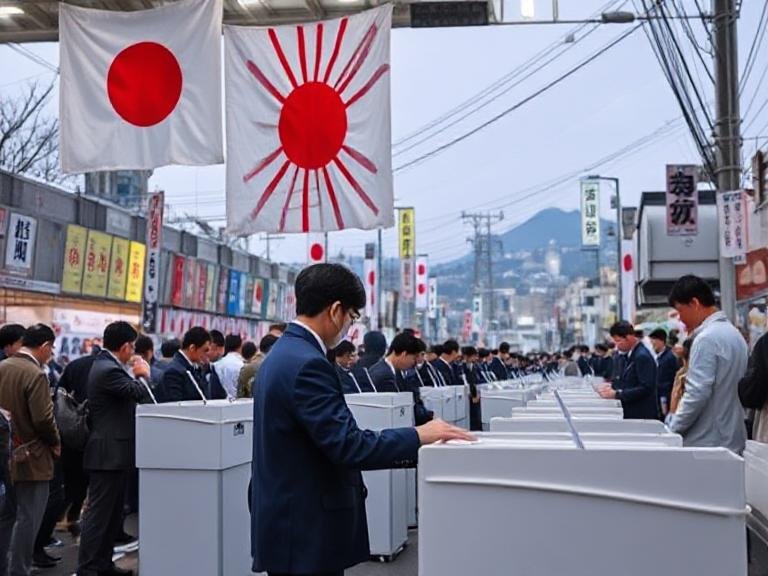
Voting began early across the nation, with a record number of citizens — more than 21.45 million, or over 20% of the electorate — casting early ballots even before Sunday, signaling heightened engagement in one of the most consequential elections in recent memory. The vote will fill 124 of the 248 seats in the House of Councillors, Japan’s upper parliamentary chamber.
A Shaky Future for the LDP-Komeito Coalition
At the center of the drama is the ruling Liberal Democratic Party (LDP) and its junior coalition partner, Komeito, which together aim to retain at least 50 of the contested seats to preserve their fragile majority. However, political analysts and final-stage Kyodo News polls suggest the coalition may fall short — a development that would mark its first upper house defeat since 2007 and severely damage Prime Minister Ishiba’s credibility.
Ishiba’s leadership, already under strain following losses in the Lower House elections, is being tested as his approval ratings remain low. The LDP has been unable to fully reconnect with its base, with even its historical strongholds — such as Kagoshima and Miyazaki — now tilting toward the opposition.
“If the coalition fails to maintain control of the chamber, Ishiba’s resignation would be almost inevitable,” said Koichi Nakano, a visiting scholar at Harvard University’s Weatherhead Program. “But even with his departure, the LDP’s structural problems won’t vanish overnight.”
A Resurgent but Fragmented Opposition
The Constitutional Democratic Party of Japan (CDP), under veteran leader Yoshihiko Noda, appears poised to make gains and remain the largest opposition force in both chambers. However, the broader opposition remains fragmented.
READ MORE: As Japan Votes, a Trump-Inspired Politician Grabs the Spotlight
The Democratic Party for the People (DPP) — the surprise performer in the last Lower House election — is eyeing double-digit wins again, banking on dissatisfaction with the ruling coalition’s handling of inflation and social services. Meanwhile, the Japanese Communist Party and Nippon Ishin no Kai are struggling to expand beyond their core urban bases.
But the real jolt to Japan’s establishment politics may come from Sanseito, a populist, nationalist party that’s electrified younger voters across the country with fiery rhetoric, anti-elite messaging, and a nativist platform.
Sanseito: Japan’s “America First” Moment?
Founded just five years ago, Sanseito, meaning “Participate in Politics,” has transformed from fringe movement to serious contender. Led by 47-year-old firebrand Sohei Kamiya, a former reservist and self-proclaimed admirer of Donald Trump, the party has campaigned aggressively on a “Japanese First” agenda — anti-globalist, anti-immigration, and anti-tax.
ALSO READ: South Korea, Japan & U.S. Respond to North Korea Missile Test with Joint Drill
Though Kamiya is not on the ballot this year — having been elected in 2022 — his presence has loomed large. Traveling across the country on a bright orange campaign truck, Kamiya has been met with enthusiastic crowds, many of them young, disaffected, and drawn to his promise to dismantle a system they see as ignoring them.
“We don’t want to exclude all foreigners, but Japan should be for the Japanese,” said Yoko Kiba, 47, a hospital worker who attended Kamiya’s rally in Kagoshima. “He’s the only one talking about how we are being forgotten.”
Polls suggest Sanseito could secure between 10 and 20 seats — an astonishing rise for a party that didn’t exist before 2020. That would likely place it as the third-largest force in the chamber, ahead of many traditional players.
Kamiya has tapped into a powerful vein of frustration. He blames globalism, multinational corporations, and foreign residents for Japan’s stagnation, asserting that the country is being “turned into a colony” of foreign interests. His party has demanded scrapping the 10% consumption tax, curbing immigration, and building a full-fledged military independent of the United States.
“This could be an epoch-making election,” said Jiro Mizushima, a professor at Chiba University. “For the first time, a radical populist party that is openly chauvinist and against austerity is winning widespread support.”
The Issues Driving and Dividing the Vote
The 17-day campaign has been dominated by two core issues: inflation and immigration.
Rising Prices: With wages stagnant and consumer prices soaring, opposition parties have pushed for tax cuts to ease the burden on working- and middle-class families. The LDP, in response, has promised a mix of cash handouts — including for foreign residents — and targeted subsidies for low-income households and families with children.
Immigration: Though immigrants make up just 3% of Japan’s population, their numbers have surged by nearly a third in the past three years, as the country struggles to fill jobs in an aging workforce. Populist rhetoric has capitalized on resentment toward newcomers, often linking them — unfairly, critics say — to crime and social disruption.
“This election has exposed Japan’s growing generational and cultural divide,” said Ayako Okamoto, a political sociologist in Tokyo. “Young voters are fed up with paying the costs of an aging society while being told to stay quiet and obey.”
Voter Behavior: Record Early Turnout, Young Engagement
Turnout is high and youth engagement is notably elevated, fueled in part by Sanseito’s savvy use of social media and live-streamed rallies. The crowd sizes at Sanseito events — often exceeding 800 and skewing younger — stand in sharp contrast to the traditional LDP campaign scenes, where elderly supporters quietly clap in community centers.
The record-breaking early voting figures are believed to be driven by both political enthusiasm and the timing of the election, which falls during a three-day holiday weekend. Early voters included a significant share of first-time voters and nontraditional supporters, signaling volatility in the electorate.
“This isn’t just about policy anymore,” said Taro Hoshino, a 24-year-old university student voting for the first time. “It’s about feeling seen.”
What’s Next?
If the ruling coalition loses its majority, possible outcomes range from a broader governing alliance — potentially pulling in centrist opposition members — to a divided government where the Upper House blocks Ishiba’s agenda. The worst-case scenario for the LDP? A leadership challenge, followed by prolonged paralysis in both chambers.
Either way, the vote reflects a changing Japan — one where populist energy, youthful disillusionment, and the search for a new identity are beginning to reshape political life.
“This election won’t just decide who governs,” said Mizushima. “It will decide what kind of country Japan wants to be.