


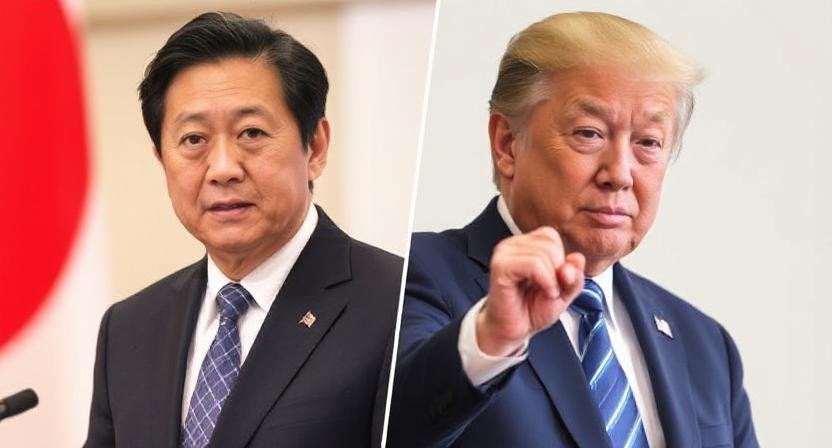
- Prime Minister Ishiba Loses Mandate: Japan’s PM Shigeru Ishiba suffers a humiliating electoral defeat, losing control of both parliamentary chambers in Sunday’s vote.
- Tariff Talks in Jeopardy: Weakened leadership casts serious doubt on Tokyo’s ability to finalize a trade deal with President Trump before the August 1 tariff deadline.
- Populists Gain Ground: Right-wing Sanseito surges with 14 seats, capitalizing on anti-immigration and anti-globalization sentiment among disillusioned voters.
- Japan Faces Political Paralysis: With no clear ruling majority, Japan braces for chaos and uncertainty as trade, inflation, and foreign policy challenges mount.
Japan’s Prime Minister Shigeru Ishiba woke up Monday not as a statesman with leverage over Washington, but as a leader stripped of pride, power, and political mandate. The bruising defeat his ruling coalition suffered in Sunday’s Upper House elections has not only unraveled his domestic legitimacy but also crippled his hand in crucial trade negotiations with President Donald Trump — a diplomatic effort now hanging by a thread.
The Liberal Democratic Party (LDP) and its junior partner Komeito secured only 47 seats, three short of the 50-seat threshold required to maintain their tenuous grip on the upper chamber of the Japanese Diet. That outcome has delivered a staggering blow to Ishiba’s credibility and triggered a political firestorm that threatens to spiral into full-blown chaos in the weeks ahead.
“This is no longer a matter of legislative arithmetic — it’s a collapse of political authority,” said Ayumi Tanaka, a political analyst at Waseda University. “Ishiba has lost the mandate to lead, and Japan now enters a dangerous period of drift.”
A Leader Without Confidence
Having already lost his Lower House majority last October, Ishiba’s political capital is now nearly exhausted. Once seen as a political survivor who clawed his way to the premiership on his fifth attempt, Ishiba now presides over a fractured government facing widespread public discontent, a resurgent populist right, and the looming threat of American economic retribution.
“I myself have met face-to-face with President Trump twice and spoken with him numerous times on the phone,” Ishiba said on national television as election results streamed in. “This is something we mustn’t let go to waste.”
But most observers agree the moment has passed.
“He’s no longer in a position to negotiate, let alone confront Trump,” said William Chou of the Hudson Institute. “He misread the room — both in Tokyo and in Washington.”
Public Backlash and Populist Surge
The public mood was unforgiving. While Ishiba and the LDP tried to frame the election as a referendum on their tough trade stance with the United States, voters were far more concerned with rising prices, stagnant wages, and the growing presence of foreign workers — issues that have long simmered below the surface but erupted into electoral rebellion on Sunday.
READ MORE: Japan Election Throws a Wrench in Trade Talks
The big political winner of the night was the upstart nationalist party Sanseito, led by former reservist Sohei Kamiya, who has openly modeled his political rhetoric and strategy on Donald Trump’s populist playbook. The party finished fourth, with 14 seats, largely by galvanizing young, angry voters disillusioned by traditional politics and economic stagnation.
“Sanseito speaks to a generation that feels forgotten,” said Jiro Mizushima, professor of political science at Chiba University. “And they’re turning their backs on the establishment.”
Kamiya’s rallies — fueled by fiery speeches warning of foreign encroachment, immigration woes, and the threat of Japan becoming a “colony of globalists” — struck a deep chord, especially in working-class and rural districts.
ALSO READ: Japan Votes in Pivotal Upper House Election Amid Populist Surge and Political Uncertainty
Sleepless Nights in Nagatacho
For the ruling coalition, the Upper House defeat is more than symbolic — it’s destabilizing. It casts doubt over Ishiba’s ability to pass major legislation, risks paralyzing governance, and erodes Tokyo’s negotiating leverage ahead of the August 1 deadline imposed by the White House. That’s when 25% reciprocal tariffs are set to hit nearly all Japanese exports to the U.S., Japan’s largest trading partner.
“We live in Trump’s tariff world now,” said David Boling, director of Asian trade at Eurasia Group and a former U.S. negotiator. “Even close allies like Japan are being squeezed.”
The auto sector, in particular, stands to suffer. Japanese automakers like Toyota and Honda have already reported shrinking margins under existing tariffs. A 25% rate could devastate Japan’s export-heavy economy, possibly pushing it into recession. And any concessions Tokyo makes now — especially without a parliamentary mandate — risk sparking backlash at home.
Uncertainty Ahead: A Government on Life Support
Despite the setback, Ishiba has vowed not to resign. But political insiders suggest his days are numbered, with factions within the LDP already discussing possible successors who can stabilize the party before a deeper implosion.
His weakened government will likely attempt to survive by forming ad hoc alliances with smaller parties in the Diet. But such arrangements are fragile and prone to collapse under pressure — particularly as the public appetite for bold reform, not backroom compromise, continues to grow.
“What we’re witnessing is not just an election loss,” said Koichi Nakano, visiting scholar at Harvard University. “It’s a rejection of an entire political establishment.”
Meanwhile, opposition parties, though fragmented, smell blood in the water. The Constitutional Democratic Party and the Democratic Party for the People are calling for a parliamentary inquiry into the government’s failure to protect national economic interests and contain inflation. Sanseito has demanded a complete audit of foreign labor policies and consumption tax laws.
A Nation on the Brink
In the coming days, Japan faces a triple threat: an embattled prime minister without a mandate, a volatile U.S. president pressing trade demands, and a surging populist movement threatening to reshape Japanese politics.
The defeat of Shigeru Ishiba is more than a personal loss — it marks the fall of an incumbent unable to meet the moment, out of step with voters and outmaneuvered by populist forces.
The old guard in Tokyo may still cling to power, but Sunday’s vote has sent a clear message: the public wants change — and they want it now.