


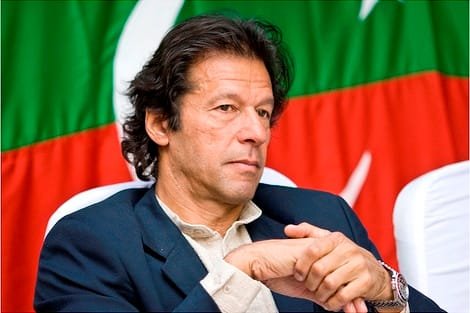
Alarming inflation rates, doomed economic policies and the increasing cases of Covid-19, leading to permanent damage to Pakistan.
Pakistan is one of the most affected countries by COVID-19, with the economic damage already dooming, triggered by the pandemic exacerbating a situation that still existed. Before the COVID-19 outbreak, Pakistan ‘s economy strained to remain afloat but was in no immediate danger of failure. However, the pandemic seriously impacted the nation’s economy and brought it virtually to the verge of bankruptcy. While almost all nations have been substantially impacted by the global health emergency, Pakistan ‘s economy is not capable of enduring the huge disruption caused due to the pandemic.
Amid the coronavirus crisis, the Pak government is planning to shed a number of state-run enterprises. Hammad Azhar, the minister for industries and production, said Friday the government has decided to privatise Pakistan Steel Mills in order to revive and steer it out of losses. About 9,000 employees of the Steel Mills will be sacked in two phases after payment of their dues and one-month salary, Azhar told media.
Businessmen and industrialists say they are forced to lay off workers due to the economic situation. Qaiser Ahmed Shaikh, a prominent industrialist and member of parliament’s, finance committee, said several sectors have borne the brunt of the pandemic. High taxation, increased interest rates, and the devaluation of the Pakistani Rupee (which raised the prices of imported inputs) lead to a massive fall in industrial production.
The Human Rights Commission of Pakistan (HRCP), an NGO, said it was “horrified at reports that 9,300 plus Pakistan Steel Mills employees may be laid off,” reported The Wire.
Even before the pandemic last year, the country was ongoing on the twin-deficit of its IMF (International Monetary Fund) program and the monetary revenues. The fiscal deficit problem continued unchecked—partly because the revenue collections fell drastically short of the targets and because the government slashed developmental expenditure to demonstrate a positive primary balance, which was one of the conditionalities of the IMF program, research of observer research foundation states.
The pandemic has forced most countries to break with the past and initiate deep reforms, not only in the economy but also in politics and foreign and security policy. However, being a national security state, Pakistan continues to adhere to its existing model, since changing its foreign and security policy will require upending the power dynamics between the dominant military and the civilian political establishment. Consequently, Pakistan is treating COVID-19 as an opportunity to obtain concessions, bailouts and debt relief, to avoid undertaking the reforms it had accepted as part of the 2019 IMF bailout. The country is also seeking bailouts from China and Saudi Arabia. While helpful, these measures cannot replace the underlying need for deep structural reform in Pakistan.
Economy Outlook:
When Imran Khan took power in 2018, Pakistan’s GDP growth was around 5.8%; now it is 1.9% and is likely to decline further. The country’s fiscal deficit is almost 10% and revenues have plummeted in the past two years. Pakistan’s public finances were already in a parlous state. The COVID-19 crisis has made it even more difficult for Pakistan to service its mountain of debt. In FY19, the net revenue of the Federal government was less than the debt servicing incurred by the government. No wonder why the nation is addressing criticism across the states and its people.

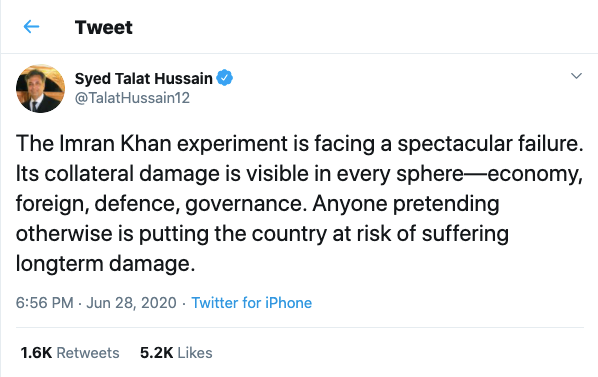
The foreign relations are also seen denying the dependency of the state from other countries. Recently, adding another big blow to Pakistan’s economic revival efforts, the nation has not been included in the draft list of 54 countries that will benefit from the reopening of the external borders of the European Union, which is scheduled to happen by the beginning of July. Pakistan is one of those countries that are definitely banned from entering the block upon the border reopening as it failed to control the Coronavirus pandemic.
Inflation rates are touching the heights of record ever especially in the present scenario. The effect of which is visible on the domestic market. In such a situation, the Gems and Jewelry sector of Pakistan are suffering big losses. Haji Harun Rashid Chand, President of ASSJA, says that now buying gold in Pakistan is out of the common man’s hand, as it is really difficult for the common man to bear the daily expenses. At the same time, foreign investments are at the losing side due to the continuing uncertain situation in Pakistan.
The country will face the prospect of further deterioration in its economy, state experts in a research. The increase in poverty and unemployment will fuel political and social unrest; this, in turn, could destabilize the government and threaten whatever democratic progress Pakistan has made so far. Although Pakistan is expected to incur the highest ever fiscal deficit in FY20, at around 9.2 percent of the GDP, the IMF is convinced that the country will be able to bring this down to 6.5 percent by FY21.