


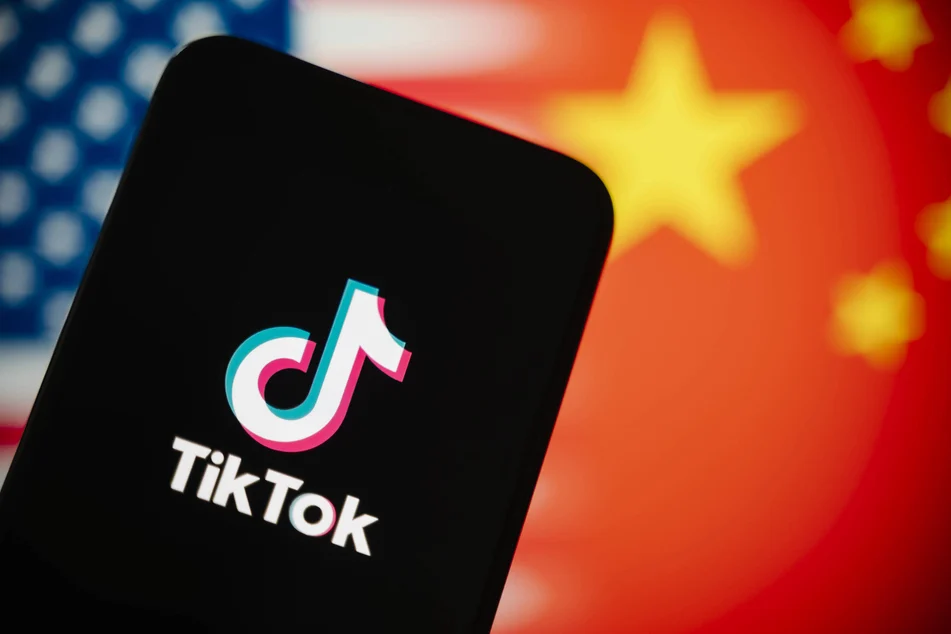
- U.S. and China strike preliminary TikTok deal in Madrid, creating a framework to shift the app into U.S.-controlled ownership.
- Talks highlight fragile diplomacy as both nations balance national security fears with economic interdependence amid tariffs and tech blacklists.
- Madrid meeting offers rare pause in U.S.-China rivalry, proving dialogue can break deadlocks despite escalating tensions over chips and trade.
- Trump and Xi expected to review the framework, with upcoming APEC talks in Seoul likely to determine the future of trade negotiations.
In the crisp September mornings of Madrid, something quietly historic unfolded — something that few in Washington or Beijing dared to predict. After years of threats, tariffs, and a looming digital cold war, negotiators from the United States and China managed to carve out a blueprint for peace, if only partial, around one of the most unlikely symbols of global power politics: TikTok.
The two-day talks in the Spanish capital, led by U.S. Treasury Secretary Scott Bessent and China’s Vice Premier He Lifeng, were not glamorous affairs. They were long, tense, marathon sessions stretching into six-hour standoffs one day and five the next. Yet, against all odds, they delivered something that eluded policymakers for years: a framework deal that could shift TikTok out of Chinese ownership and into U.S.-controlled hands. This, U.S. officials claim, would resolve Washington’s national security concerns while saving the app from an outright ban.
At first glance, it seems trivial. Why would the two largest economies on earth risk further souring relations over an app where teenagers lip-sync and share cooking hacks? But TikTok was never just an app. It was a Trojan horse for anxieties about 21st-century power — about who controls data, who shapes narratives, and who writes the rules of the digital future.
A Battle Beyond Entertainment
When Congress passed bipartisan legislation requiring TikTok to divest from its Chinese parent, ByteDance, or face a ban, it was less about memes and more about national sovereignty. U.S. lawmakers feared that China’s laws could compel ByteDance to hand over American user data to Beijing. The app’s billion-strong audience represented, to U.S. security hawks, a direct channel of influence in American homes.
READ MORE: U.S. and China Reach ‘Framework’ for a TikTok Sale
President Trump, never shy of using brinkmanship, repeatedly delayed enforcing the ban. He flexed, threatened, and then paused — three times. But his gamble paid off in Madrid. China came to the table with “very aggressive asks,” Bessent admitted, but they stayed at the table. By Monday evening, both sides had what they called a “framework.” The TikTok drama had momentarily shifted from threat to opportunity.
What this deal truly represents is not just a reprieve for an app but a signal — that even in an era of tariffs, blacklists, and tech wars, Beijing and Washington can still find slivers of compromise.
Madrid as a Turning Point
The choice of Madrid as the venue was itself symbolic. Far removed from the pressure-cooker politics of Washington or Beijing, the Spanish capital became neutral ground for two superpowers too entrenched to bargain at home. There, in the gentle morning light of Europe, U.S. and Chinese negotiators remembered that diplomacy is still about talking, not posturing.
ALSO READ: Madrid’s Sunshine Unlikely To Melt U.S.–China Ice
The talks were not confined to TikTok alone. Rare earth minerals, magnets critical to U.S. industries, agricultural imports, and tariffs all hovered in the background. Each issue is a reminder that U.S.-China relations are not defined by one app but by a tangled web of interdependence. America still relies on China’s industrial might; China still needs access to U.S. markets. Both sides can shout, but neither can walk away.
Madrid may prove to be only a small turning point, but turning points matter.
The High Cost of Tariffs
While TikTok grabbed headlines, tariffs continue to gnaw at both economies. Trump’s April move to slap 145 percent tariffs on Chinese imports was an earthquake, halting trade flows and rattling global markets. Though reduced later to 30 percent, the aftershocks are everywhere. Inflation remains sticky in the United States; China’s retail and industrial growth has slowed to its lowest pace this year.
Behind closed doors, negotiators admitted these pressures. Farmers in America’s Midwest need China’s soybean market. China’s manufacturers need American demand. Both Trump and Xi know their political capital depends on economic stability at home. That reality, not TikTok’s trending videos, explains why Madrid mattered.
A Cold Peace, Not a Warm Embrace
Still, it would be naïve to believe Madrid signals a thaw. The U.S. Commerce Department’s decision to blacklist Chinese chipmakers days before the talks, and China’s retaliatory antitrust probe into Nvidia, show the depth of mistrust. Beijing is still pushing for a world order less dependent on Washington; Washington is still building coalitions to contain Beijing.
Madrid, then, is not a love story. It is a cold peace. A reminder that even bitter rivals can occasionally trade weapons for words, bans for blueprints.
What Comes Next
Trump and Xi are expected to speak on Friday, and the Asia-Pacific Economic Cooperation forum in Seoul next month could offer another stage for face-to-face diplomacy. Whether the TikTok framework survives domestic politics in both capitals is another question. Congress, ever hawkish, may resist compromise. Chinese nationalists, wary of “surrendering” to Washington, may push back.
Yet, the fact remains: TikTok forced the world’s two giants to do what they had forgotten how to do — talk.
The Larger Lesson
What happened in Madrid was not magic. It was diplomacy at its most basic: sitting down, hammering through details, swallowing pride, and leaving the room with something better than nothing. It reminded the world that even in an age of algorithm-driven anger and viral polarization, governments can still surprise us with cooperation.
For the millions of young Americans scrolling TikTok and the millions of Chinese watching from afar, Madrid’s mornings whispered a rare message: deadlocks can break, enemies can pause, and history can turn on the smallest of symbols.
The TikTok deal may not change the trajectory of U.S.-China rivalry. But it proved that rivalry need not always mean rupture. Sometimes, even in the darkest chapters, a blueprint can be drafted, and an app can become a bridge.
Prophecy
Madrid will be remembered not for the paella or plazas, but for the morning when America and China blinked at each other — and chose dialogue over destruction. This TikTok blueprint is no final peace, only a fragile pause. Yet history teaches that pauses, when nurtured, can grow into pathways. If Trump and Xi grasp the moment, the app once mocked as frivolous could mark the first thread in a new fabric of coexistence. Ignore it, and the world will drift back to tariffs, blacklists, and silence. Madrid is the test; the prophecy lies in their hands.