


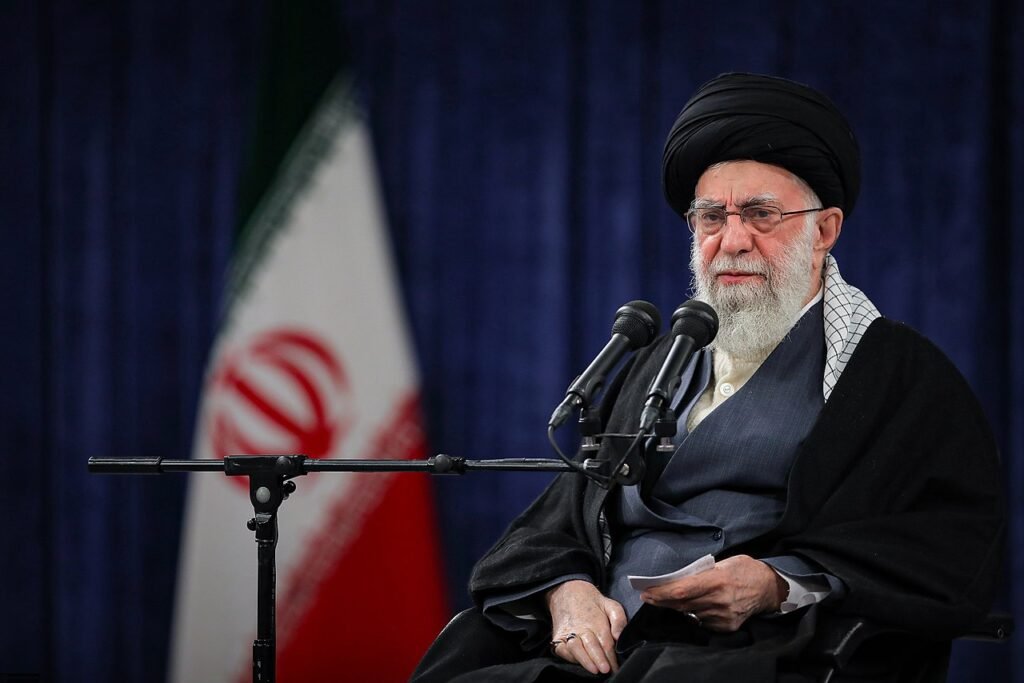
- Middle East conflict: The Trump administration has briefed regional allies on potential military options regarding the ongoing Iranian domestic crisis.
- Middle East conflict risks have spiked following Tehran’s vow to strike all U.S. bases in the region if attacked.
- The U.S. has strategically relocated reserve forces from Qatar’s Al Udeid base to mitigate Iranian retaliatory strikes.
- European and Israeli officials suggest a decision on military intervention may have already been reached in Washington.
The Middle East stands at a terrifying crossroads. As internal dissent fractures the Islamic Republic, the specter of a direct military confrontation between the United States and Iran has moved from the realm of “contingency planning” to what appears to be an imminent reality.
With the Trump administration actively readying its regional posture and Tehran issuing scorched-earth threats, the question is no longer if the status quo is sustainable, but whether the global order can survive the explosion that follows its collapse.
The current escalation is driven by a volatile mix of domestic Iranian desperation and a shift in American foreign policy. Iran is currently grappling with the most significant internal unrest since the 1979 Revolution. Triggered by dire economic conditions, the protests have morphed into a full-scale rejection of clerical rule.
U.S. strike on Iran looms as Trump reviews military options for 2026
With death tolls reportedly exceeding 2,600 and nearly 20,000 arrests, the regime’s survival instinct is at its peak. In Washington, President Trump has seized this moment, signaling that “help is on the way” for the protesters and vowing “very strong action” should the executions of dissidents continue.
Strategically, the chess pieces are moving. The Trump administration has reportedly spent weeks taking regional neighbors into confidence, ensuring that if a strike occurs, the diplomatic fallout within the Sunni Arab world and Turkey is managed. However, the logistical reality is more cautious.
U.S. strike on Iran looms as Trump reviews military options for 2026
The recent withdrawal of U.S. personnel from Qatar’s Al Udeid Air Base—the largest American facility in the region—is a telling sign. It suggests that Washington takes Iran’s retaliatory threats with deadly seriousness. Tehran has been explicit: if a single American missile hits Iranian soil, every U.S. installation, from the Fifth Fleet in Bahrain to bases in the UAE and Turkey, becomes a legitimate target.
This “all-or-nothing” defensive posture by Iran is designed to leverage the vulnerability of U.S. allies. By warning neighbors that they will pay the price for American intervention, Tehran hopes to fracture the coalition Trump is building. Yet, the momentum toward conflict seems nearly irreversible.
Iran-US Tensions Reach Fever Pitch as Death Toll Climbs in Tehran
European officials have signaled that military intervention could be a matter of hours, not days. This suggests that the U.S. has moved past the stage of “maximum pressure” and into a phase of active “regime destabilization.”
Can the Middle East afford another war? The answer is a resounding no. The region is already scarred by decades of conflict in Iraq, Syria, and Yemen. A direct war with Iran would not be a contained affair; it would likely ignite a regional conflagration involving Hezbollah in Lebanon, militias in Iraq, and potentially drawing Israel into a multi-front struggle. The global economy, already sensitive to energy fluctuations, would face a catastrophic shock if the Strait of Hormuz—the world’s most vital oil artery—becomes a battleground.
Furthermore, the humanitarian cost would be unthinkable. While the Trump administration frames its intervention as support for the Iranian people, history teaches us that foreign bombs rarely foster democratic transitions. Instead, they often unify a population under a nationalist banner or leave behind a power vacuum filled by even more radical elements.
The withdrawal of personnel from Qatar is a tactical retreat to minimize casualties, but it also signals the clearing of the decks for action. If the U.S. proceeds, it is betting that the Iranian regime is a house of cards ready to fall. If it bets wrong, the result will not be “liberation,” but a generational war that the world is ill-equipped to handle. We are watching the fuse being lit on a powder keg; the only hope remains a last-minute diplomatic off-ramp that currently remains invisible to all.