


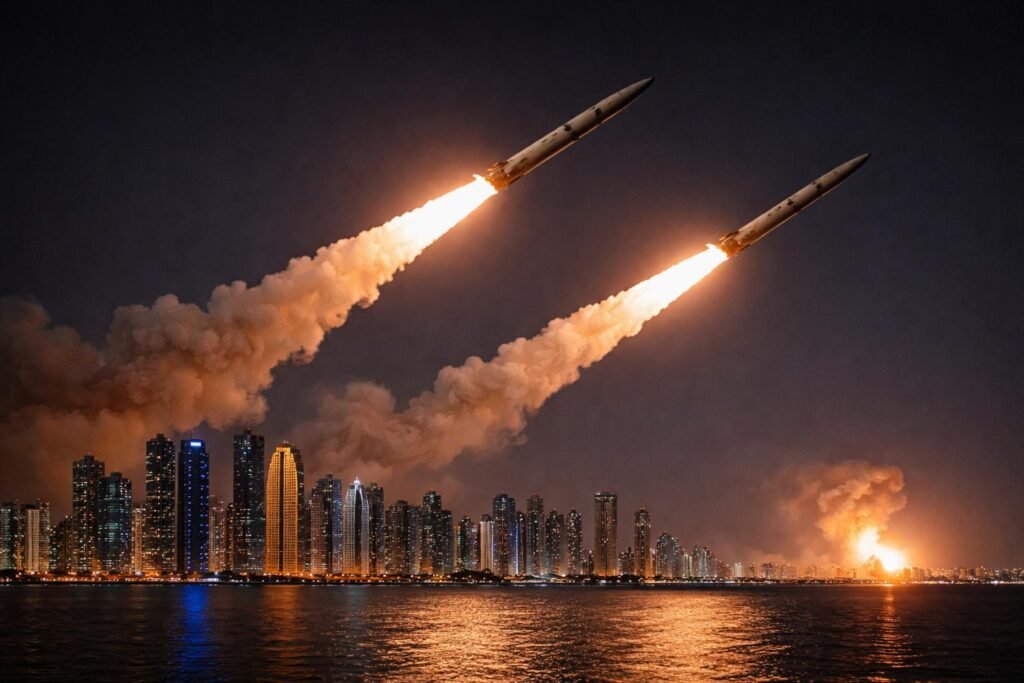
The Middle East crossed a dangerous threshold when Iranian ballistic missiles targeted American forces in Jordan—an attack that, while intercepted, has fundamentally altered the trajectory of an already volatile conflict. This was not merely another flashpoint in a prolonged confrontation. It was a calculated signal that the war is entering a new phase—one that could reshape the geopolitical architecture of the region and trigger a global energy crisis.
For months, Iran had largely calibrated its military responses as retaliatory measures against U.S. and Israeli strikes. That strategic restraint has now been abandoned. The unprovoked nature of the missile barrage demonstrates a shift toward proactive escalation, signaling Tehran’s willingness to dictate the tempo and terms of engagement.
At the heart of this escalation lies a deeper geopolitical contest: control over the future of the Middle East and its critical energy corridors.
Iran Ukraine Tensions Escalate: Is a New Front Opening in the Caspian?
The timing of Iran’s strike is particularly significant. It came at a moment when fragile diplomatic efforts aimed at reopening the Strait of Hormuz were gaining momentum. This narrow waterway, through which nearly 20% of global oil supply once flowed before the war, remains the most critical artery of the global energy system. By escalating militarily while rejecting an Omani-backed proposal to restore shipping, Iran is effectively weaponizing geography—leveraging its strategic position to influence global markets and political outcomes.
Washington’s response has followed a predictable yet perilous trajectory. Within hours of the Iranian strike, U.S. and Saudi forces launched coordinated airstrikes against Iran-backed militias in Iraq, expanding the conflict’s geographic footprint. Simultaneously, President Donald Trump issued stark warnings, threatening to destroy Iran’s infrastructure if a ceasefire agreement is not reached.
Such rhetoric reflects more than deterrence—it signals preparation for sustained escalation.
The consequences are already reverberating across global markets. Oil prices surged beyond $82 per barrel immediately after news of the attack, underscoring the sensitivity of energy markets to developments in the region.
READ NEXT: Trump Warning to Iran: Pakistan and MBS Align After Red Sea Attacks on Saudi Tankers
For Iran, this volatility is not incidental; it is strategic. By threatening supply disruptions, Tehran is effectively using oil as an economic weapon, amplifying pressure on Western economies grappling with inflation and energy insecurity.
But the implications extend far beyond price fluctuations.
The conflict is rapidly expanding into a multi-theater confrontation. Iranian influence is being projected through a network of allied groups and proxy forces across the region. In Yemen, Houthi militants have intensified attacks on Red Sea shipping, aiming to disrupt Saudi oil exports. In Iraq, Iran-backed militias continue to target U.S. and allied interests. Saudi Arabia itself has reported drone strikes on critical energy infrastructure. Even beyond the Middle East, the conflict’s ripple effects are evident, with Ukraine targeting Iranian-linked assets in the Caspian Sea.
This widening battlefield reflects a fundamental breakdown of traditional deterrence mechanisms.
Iranian leadership increasingly perceives American restraint—such as pauses in airstrikes—as a sign of strategic hesitation rather than diplomatic intent. This perception emboldens further aggression, creating a dangerous cycle of escalation in which each side tests the limits of the other’s resolve.
READ MORE: Iran Launches Surprise Missile Attack on U.S. Forces
The risks are compounded by the vulnerability of U.S. forces in the region. The earlier missile strike on Muwaffaq Salti Air Base in Jordan, which resulted in the deaths of three American soldiers, exposed critical gaps in missile defense systems. With approximately 50,000 U.S. troops stationed across the Middle East, the potential for further casualties remains high.
In such an environment, even a limited miscalculation could trigger a broader regional war.
The strategic stakes are immense. If the Strait of Hormuz remains contested or closed, the global economy could face severe disruptions. Energy-importing nations across Asia—including major economies such as China, India, and Japan—would be particularly vulnerable. Supply chain disruptions, rising fuel costs, and inflationary pressures could combine to produce a global economic shock reminiscent of past oil crises, but on a potentially larger scale.
For the Middle East, the outlook is even more dire.
A prolonged conflict risks entrenching instability across the region, fragmenting alliances and exacerbating sectarian divisions. Countries already grappling with economic challenges and political fragility could face further destabilization. The expansion of proxy warfare would deepen regional fault lines, making any future diplomatic resolution more complex and elusive.
Moreover, the militarization of critical maritime routes—from the Strait of Hormuz to the Red Sea—could redefine global trade patterns. Shipping costs would rise, insurance premiums would surge, and alternative routes would struggle to compensate for disruptions. The result would be a sustained period of economic uncertainty with global repercussions.
What makes the current moment particularly dangerous is the convergence of military escalation, economic vulnerability, and diplomatic breakdown.
Efforts to revive negotiations have been repeatedly undermined by mistrust and competing strategic objectives. While the United States seeks to curtail Iran’s nuclear ambitions and restore freedom of navigation, Tehran is leveraging its regional influence and geographic advantages to secure concessions and reshape the balance of power.
This strategic deadlock leaves little room for compromise.
Looking ahead, the trajectory of the conflict suggests a bleak forecast. If current trends continue, the Middle East could enter a prolonged phase of structural instability characterized by persistent low-intensity conflicts punctuated by periodic escalations. Energy markets would remain volatile, global economic growth could slow, and geopolitical tensions would intensify.
In this evolving landscape, the missile strike on Jordan may be remembered not for the damage it caused, but for the precedent it set.
It marked the moment when the conflict transitioned from reactive warfare to strategic confrontation—when the rules of engagement changed, and the risks escalated dramatically.
The world is now witnessing the early stages of a crisis that could redefine the Middle East and reshape the global order. Whether through diplomacy or escalation, the decisions made in the coming weeks will determine not only the region’s future, but also the stability of the global economy.
The missiles may have been intercepted. The consequences, however, are only beginning to unfold.