


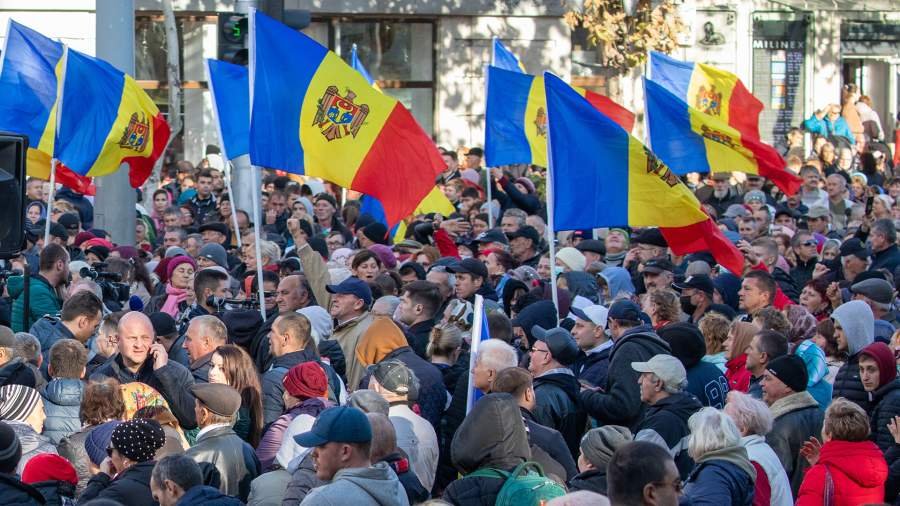
- Democracy Defended: Moldovans resisted Russian disinformation and chose Europe.
- Clear Mandate: PAS secured over 50% of the vote, ensuring stable governance.
- Strategic Victory: A stronger Moldova reinforces Europe’s eastern frontier.
- Future in the EU: The path toward membership by 2030 is now realistic.
- People’s Choice: Citizens voted for reforms, transparency, and hope.
Moldova’s pro-European ruling party has pulled off a stunning victory that will resonate far beyond the small country’s borders. The Party of Action and Solidarity (PAS), led by President Maia Sandu, secured 50.1 percent of the vote, comfortably outpacing the Russian-leaning Patriotic Bloc at 24.2 percent. For the European Union, this is not just good news—it is proof that Europe’s democratic vision still inspires nations caught in the tug-of-war between East and West.
This was not a routine election. It was a referendum on Moldova’s future: Europe or Russia. For years, Moldova has been a fragile frontline state, its 2.4 million citizens buffeted by energy shortages, disinformation campaigns, and the destabilizing winds of the war in neighboring Ukraine. Sunday’s election was, in the words of PAS leaders, the most consequential since independence from the Soviet Union in 1991. And the people chose decisively—they want Europe.
A Look Back: Moldova’s Unfinished Transition
Since the collapse of the Soviet Union, Moldova has lived in a state of uneasy drift. Torn between Moscow’s influence and Brussels’ promises, successive governments have wavered in their commitments. Corruption scandals, political instability, and oligarchic power struggles left citizens disillusioned. Moscow capitalized on this vacuum, tightening its grip through cheap energy, sympathetic political elites, and cultural narratives.
Britain’s Bold Recognition of Palestine Has Redrawn the Map of Global Diplomacy
But even during the bleakest years, Moldovans never entirely turned their backs on Europe. The 2014 Association Agreement with the EU, which granted closer trade and political ties, was an early signal of the country’s westward aspirations. Yet Russian-leaning politicians, including former president Igor Dodon, repeatedly tried to steer Moldova back into Moscow’s orbit.
READ MORE: Moldova’s pro-EU ruling party wins majority in pivotal vote
Sunday’s election represents a decisive break from that past.
The Present: A Vote of Confidence in Europe
The win for PAS is more than just numbers on a tally sheet—it is a victory over fear. In the weeks before the vote, Moldovans endured cyberattacks, fake bomb threats, and an avalanche of disinformation allegedly linked to Moscow. Government websites were targeted, and election infrastructure came under siege. Voters were told their country would collapse if they chose Europe.
And yet, they showed up. Against the backdrop of intimidation, Moldovans exercised their democratic right in large numbers, signaling both resilience and clarity of purpose.
ALSO READ: Japan’s Senate Elections Reveal Rightward Shift Among Youth—A Political Turning Point?
The victory also spares Moldova the instability of fractured coalition politics. Instead of messy compromises, PAS has a clear mandate to pursue its boldest ambition: EU membership by 2030. This is no small milestone. For Brussels, it means there is a partner government with both the legitimacy and the will to implement reforms, fight corruption, and anchor Moldova firmly in the European family.
The Future: Europe’s Strategic Stake
The implications of this election stretch far beyond Chisinau. For the EU, Moldova’s win is a strategic victory in its contest with Moscow. At a time when Russia is waging a brutal war in Ukraine and seeking to destabilize neighboring states, a democratic, pro-European Moldova strengthens the bloc’s eastern frontier.
The victory also offers Europe an opportunity—and a responsibility. If Moldova’s citizens are to keep faith in the European project, Brussels must deliver tangible benefits. That means investment in infrastructure, energy security, and economic resilience. Moldova still faces stubborn inflation, energy price volatility, and a vulnerable economy. Without real improvements in living standards, disillusionment could resurface, providing fertile ground for Moscow’s proxies.
Still, the future looks brighter than it has in decades. With a government empowered by popular support, Moldova can accelerate reforms, align with EU standards, and push toward the long-promised accession.
Factors Behind PAS’s Win
Several key dynamics explain PAS’s remarkable performance:
-
European Vision: Voters rallied around Sandu’s promise of EU integration, seeing it as the only sustainable path to prosperity and security.
-
Anti-Corruption Platform: PAS built its campaign on integrity and reform, contrasting sharply with the oligarch-tainted legacy of its opponents.
-
Resilience Against Russian Meddling: Despite cyberattacks, propaganda, and intimidation, Moldovans refused to be cowed.
-
Public Fatigue with Instability: Years of political chaos made stability a precious commodity. PAS’s clear majority offered a way out of constant crisis.
Europe’s Moment of Clarity
Moldova’s vote is not just about one small country. It is a message to Europe: that its values—democracy, freedom, rule of law—still inspire. It is also a warning: that Russia will not stop trying to undermine these values.
For the EU, the task is to stand firmly by Moldova, ensuring that the sacrifices made by its people yield visible rewards. Enlargement fatigue in Brussels must not become Moldova’s burden. The people have chosen Europe. Now Europe must choose them back.
In the end, Moldova’s election is a reminder that history is not finished in Europe’s east. Nations can still decide their fate, even under the shadow of coercion. And when they choose democracy, Europe wins.