


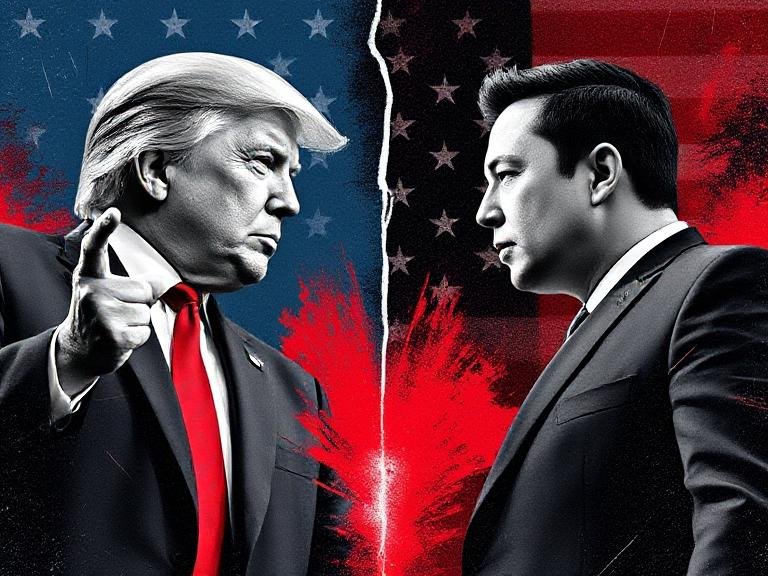
Elon Musk, the billionaire entrepreneur and the Republican Party’s biggest donor, delivered a jolt to Washington this week by threatening to form a new political party if House Republicans move ahead with President Trump’s sweeping domestic spending bill. Musk’s public vow to fund primary challenges against almost every Republican in Congress signals not only a clash over spending priorities but also a potentially seismic realignment of American conservative politics.
“If this insane spending bill passes, the America Party will be formed the next day,” Musk posted on X, the social media platform he owns, to his 220 million followers. “Our country needs an alternative to the Democrat-Republican uniparty so that the people actually have a VOICE.”
Though Musk has a long history of provocative statements, this outburst underscores his growing frustration with what he sees as runaway government spending — even under Republican leadership. The immediate trigger is Trump’s bill, which includes major infrastructure investments and social policy expansions that Musk deems “fiscally reckless.”
The prospect of a billionaire-backed third party — even if Musk’s threat is partly theatrical — could upend Republican electoral calculations in 2026 and beyond. At minimum, Musk’s threat to bankroll primary challengers will embolden far-right fiscal hawks and add new volatility to an already fragmented Republican coalition.
A Complicated Trump–Musk History
The situation is even more complex given Musk’s long, if uneasy, relationship with Donald Trump. During Trump’s first term, Musk served on the president’s business advisory councils but quit in protest after Trump withdrew from the Paris climate agreement. In recent years, however, Musk’s public comments have largely aligned with Trump’s positions on free speech, deregulation, and opposition to what both call the “woke” left.
Musk also praised Trump’s immigration crackdown and judicial appointments, while Trump frequently praised Musk as a “great genius.” The two men even reportedly discussed potential collaboration on manufacturing policy if Trump returned to power. Musk’s political donations have tilted sharply Republican in recent election cycles, and he has become a leading voice on social media for right-wing talking points.
Yet, the new spending bill appears to have ruptured that uneasy alliance. By threatening to launch a rival party, Musk is sending an unmistakable warning to Trump that his loyalty does not extend to what Musk sees as bloated, big-government Republican spending.
Future Shock: A Billionaire’s Third-Party Gamble?
Could Musk truly launch a viable third party? Historically, third parties in America have struggled, but a Musk-backed effort would come with virtually unlimited resources, a massive online following, and a clear anti-establishment brand. That combination makes his threat more credible than the usual third-party posturing seen in U.S. politics.
If Musk follows through, the new “America Party” could draw support from disaffected libertarians, younger conservatives, and swing voters disgusted with both major parties. But it could just as easily split the Republican base and hand victories to Democrats, a scenario that GOP leaders on Capitol Hill are likely to fear.
For Trump, the Musk rift adds a new headache as he seeks to consolidate Republican support ahead of the 2026 midterms. Trump has relied heavily on Musk’s financial backing and social media amplification, and a public falling-out could damage Trump’s fundraising and messaging.
At the same time, Musk’s pattern of grand declarations — often followed by little action — suggests this might be more about leverage than an imminent party launch. By threatening to torch the Republican Party, Musk is signaling that he expects his priorities — particularly on spending restraint — to be respected.
Bottom Line
For now, Republican leaders are caught between appeasing Trump’s spending ambitions and avoiding a Musk-fueled insurrection on their right flank. As Congress heads into a bruising summer budget fight, the next moves from Musk — and whether Trump chooses to negotiate or confront him — will shape not just their personal relationship, but potentially the future of the entire conservative movement.