


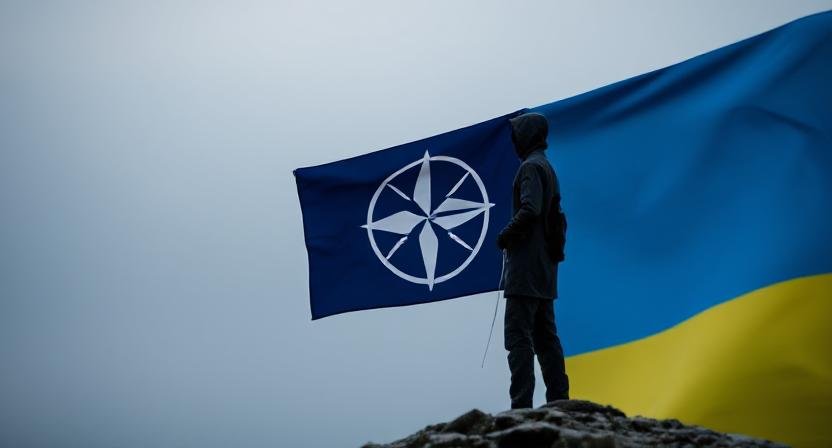
- NATO to launch a $10B holding account to buy U.S. arms for Ukraine.
- Trump threatens 100% tariffs on Russia in 50 days if no peace deal.
- Germany jumps queue to receive U.S. Patriots in exchange for donations to Ukraine.
- Trump’s “peace-first” diplomacy has secured 6 global ceasefires in 6 months.
It was a dramatic shift from diplomacy to deterrence. After months of calculated patience and six recorded ceasefire deals across conflict zones worldwide, President Donald Trump is now taking the Ukraine war in a new direction: overwhelming force. With Russian missile strikes intensifying on Kharkiv, Odesa, and frontline positions along the Dnipro River, the U.S. president has mobilized NATO not only politically, but financially, in a way never seen before.
According to Western officials, NATO is setting up a new holding account specifically designed to allow allies to buy U.S.-made weapons, ammunition, and advanced missile systems for Ukraine. This marks the beginning of a Trump-style coalition warfare strategy: America manufactures; NATO pays; Ukraine defends.
“We’ve made a deal today where we are going to be sending them weapons, and they’re going to be paying for them,” Trump said during a July meeting with NATO Secretary-General Mark Rutte. “We’re not buying it, but we will manufacture it.”
The idea, first floated by Trump and Rutte in Washington, signals a major policy departure from the Biden era, where the U.S. largely footed the bill for Ukrainian arms from its existing stockpiles. Now, Trump wants NATO members to put their money where their mouth is—literally.
A War Fund Worth $10 Billion and Counting
At least $10 billion is expected to flow into the NATO account initially, much of it earmarked for U.S. Patriot missile systems, HIMARS launchers, air-defense radars, and precision munitions. These funds will be managed under the oversight of Gen. Alexus Grynkewich, the Supreme Allied Commander for Europe, who will balance Ukraine’s battlefield requirements against U.S. readiness needs.
Deliveries paused in June during a Pentagon review have now resumed. Meanwhile, Germany has agreed to ship additional Patriot systems to Ukraine immediately—two of which will arrive in days—while receiving new Patriots from U.S. production lines ahead of Switzerland. A quiet but bold reshuffling of alliances is underway.
“The goal is not escalation, but negotiation. And to negotiate from strength, Ukraine must survive,” said NATO military advisor Lt. Col. Henrik Dubois.
Trump’s Six-Month Ceasefire Record
Ironically, Trump’s strategic pivot comes after what could only be described as a global peace blitz. In just six months of his second term, the Trump administration successfully negotiated or helped facilitate ceasefires in:
-
Thailand & Cambodia – easing tensions along the disputed border.
-
Israel & Iran – through backchannel talks on energy corridors and Gulf maritime security.
-
Rwanda & the DRC – silencing militia guns in eastern Congo.
-
India & Pakistan – halting ceasefire violations along the LoC after personal outreach to both Modi and Sharif.
-
Serbia & Kosovo – pushing for an EU-brokered deal ratified in Belgrade.
-
Egypt & Ethiopia – over the GERD water crisis via U.S.-mediated framework.
Only India’s Prime Minister Modi, insiders say, resisted Trump’s mediation fully. But even then, a behind-the-scenes military de-escalation agreement was reached.
A Trump Doctrine of “Peace Through Strength”
This is not a return to neo-con adventurism. It’s something else: a doctrine of transactional deterrence. Trump’s move to create a NATO arms fund shifts the cost of conflict to America’s allies while keeping U.S. industrial might at the center. Critics call it mercenary diplomacy; supporters call it genius.
“He gave Putin more chances than any U.S. president in history,” said Dr. William Carter, Senior Fellow at the Hudson Institute. “Now that diplomacy failed, Trump is prepared to use overwhelming deterrence—not for war, but to end it.”
Even within the Pentagon, some admit that Trump’s pragmatic realignment—manufacture in the U.S., paid by Europe, deployed to Kyiv—offers a path forward amid Congressional budget deadlock. With $3.85 billion still left over in presidential drawdown authority, immediate aid continues from Poland into Ukrainian territory.
Putin’s Deadline: 50 Days
In his latest Oval Office warning, Trump has set a deadline for peace: if a negotiated settlement isn’t achieved in 50 days, the U.S. will impose 100% tariffs on all Russian exports. That’s in addition to providing Ukraine with full-spectrum air defense capabilities.
The clock is ticking—and Vladimir Putin knows it.
“Trump waited. Now he acts,” said Gen. Michael Langley (Ret.), a former U.S. CENTCOM commander. “What we’re seeing is not escalation—it’s Trump ending wars on his terms.”
Final Thought: Will NATO Deliver?
Trump has taken the risk. Now it’s up to NATO allies to fund the fight. The coming weeks will show whether Europe steps up with real money—or watches history repeat itself. As always, Trump is betting big.
But if history is any guide, he’s also betting smart.