


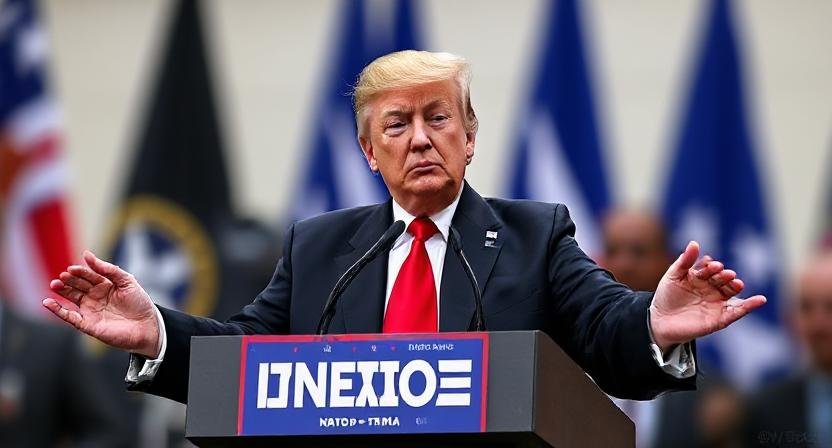
- NATO Becomes Weapons Buyer: Trump has greenlit a plan where NATO purchases U.S.-made arms for Ukraine—replacing direct U.S. aid with an alliance-funded model, marking a fundamental shift in American engagement.
- Transatlantic Strategy Rewritten: Rutte’s Washington visit aims to institutionalize this new approach, signaling a more transactional U.S. role and a push for European self-reliance in defense policy.
- Ukraine’s War Hangs in the Balance: Though arms may continue flowing, the shift from U.S. leadership to NATO coordination could expose Ukraine to fragmented support and slower military resupply.
- Alliance Under Strain, Not Broken: While Europe scrambles to meet defense spending targets, the long-term cohesion of NATO will depend on its ability to adapt without Washington at the strategic helm.
- Russia and China Watching Closely: Moscow sees this realignment as potential Western fatigue, while Beijing could interpret it as weakening deterrence—raising risks for both Ukraine and Taiwan.
WASHINGTON—The visit of newly appointed NATO Secretary General Mark Rutte to Washington this week is more than just a diplomatic courtesy call. As he meets President Donald Trump, Secretary of State Marco Rubio, Defense Secretary Pete Hegseth, and members of Congress, the agenda is expected to focus sharply on the future of the Ukraine war and the evolving nature of the U.S.-NATO alliance under Trump’s second term.
Though the official NATO statement announcing Rutte’s visit avoided any mention of Ukraine or Russia, the timing of the trip—and the flurry of military and diplomatic maneuvering behind the scenes—makes the strategic intent clear: securing continued Western support for Ukraine, even as Trump signals a shift in America’s direct military role.
A New Weapons Framework: Indirect Support for Kyiv
In recent days, President Trump publicly backed a NATO-led plan to supply Ukraine with U.S.-made weapons, but not through direct American aid. Instead, the alliance would act as the purchaser, paying the full cost of the weapons and managing delivery to Kyiv.
“We’re sending weapons to NATO, and NATO is paying for those weapons—100 percent,” Trump told NBC News.
This marks a significant departure from past U.S. policy, under which Washington has provided tens of billions of dollars in weapons and ammunition to Ukraine directly. The proposed workaround, reportedly devised after Trump’s re-election in November, is designed to ensure Ukraine remains armed while insulating the Trump administration from political backlash at home and further entanglement abroad.
America’s Allies Are Redrawing the Global Trade Map—And Leaving Washington Behind
Will Trump Discuss Military Action Against Russia?
While no explicit military action against Russia is expected to be discussed at this meeting, European officials say the growing escalation of Russian strikes on Ukrainian infrastructure and cities has forced NATO to revisit contingency planning. Senior U.S. defense sources, speaking anonymously, confirmed that Defense Secretary Pete Hegseth may brief Rutte on “deterrence options”—a phrase that includes troop repositioning, air defense commitments, and expanded training programs for Ukrainian forces in NATO countries.
READ MORE: The NATO leader will meet with Trump and other top officials in Washington this week.
But given Trump’s long-held skepticism of NATO’s mutual defense obligations under Article 5, and his America First posture, any suggestion of direct U.S. military confrontation with Russia is likely off the table. Instead, the meeting will focus on offloading responsibility to NATO member states and reorienting U.S. engagement through a commercial, transactional model.
Main Agenda: Rewriting the U.S.-NATO Playbook
The core agenda of Rutte’s meetings in Washington revolves around three points:
-
Securing sustainable military support for Ukraine by shifting procurement from Washington to NATO members;
-
Clarifying Trump’s red lines on further U.S. military involvement in Europe;
-
Reinforcing alliance unity amid rising skepticism about the value of NATO among some factions in the Republican Party.
European officials are eager to lock in Trump’s support for the NATO-purchased weapons model before winter, when Russia’s energy leverage and missile strikes typically intensify.
Rutte’s comments on Thursday, urging faster delivery of air defense systems and ammunition, underscore NATO’s growing urgency. The NATO chief’s lobbying effort extends to Capitol Hill, where he is expected to meet bipartisan senators including Lindsey Graham and Richard Blumenthal. Both senators are pushing a sanctions package targeting nations that buy Russian oil—yet another tool to squeeze Moscow without direct battlefield involvement.
ALSO READ: Trump the Peacemaker? All Eyes on NATO Summit as Ukraine War Tops Agenda
A Transatlantic Alliance Under Stress
The Trump-Rutte meeting comes at a time when U.S.-NATO relations are undergoing a fundamental recalibration. Trump has repeatedly criticized NATO allies for failing to meet defense spending commitments and has floated the idea of conditioning U.S. protection on financial contributions.
“We’ve subsidized Europe’s security for far too long,” Trump said in a campaign rally earlier this year. “It’s time they pay their fair share.”
Behind closed doors, however, Trump’s administration has shown a more nuanced approach. Sources inside the Pentagon confirm that the president is willing to maintain the alliance—as long as it reduces American exposure and increases European self-reliance.
This approach has won praise from U.S. conservatives who see it as a return to realist foreign policy, but it has alarmed European capitals. With Russia pushing deeper into Eastern Ukraine and openly targeting NATO’s eastern flank with disinformation campaigns and cyberattacks, allies fear that Trump’s transactional mindset may embolden Moscow.
Future Perspective: NATO Without Washington at the Core?
The long-term impact of this evolving relationship is profound. If NATO becomes a primarily European-driven security consortium—with U.S. arms but limited U.S. leadership—the alliance may survive, but its deterrence credibility could diminish.
Yet there are potential upsides. By forcing NATO to become more self-reliant, Trump may unwittingly strengthen the alliance’s internal cohesion. European defense spending has increased markedly in recent months, with Germany, Poland, and the Nordic countries leading the charge.
“What we’re seeing is the emergence of NATO 2.0,” said Camille Grand, a former NATO assistant secretary general. “It’s a more autonomous but still U.S.-linked alliance, capable of sustaining a protracted conflict like Ukraine—at least economically.”
But analysts warn that as NATO’s center of gravity shifts eastward and southward, the alliance’s ability to coordinate strategy may weaken, especially if Washington continues to take a step back.
The Ukraine War: Sustained but Not Won
The immediate implication for Ukraine is both hopeful and sobering. The arms will keep flowing—but with NATO paying the bill and managing the logistics, Kyiv must navigate a more fragmented support system. The political symbolism of American leadership is also fading, replaced by a patchwork of European diplomacy.
“This visit is about more than weapons,” said a senior NATO diplomat. “It’s about proving that the West can still act as a coherent force—even without Washington calling all the shots.”
Whether that experiment can succeed while the world’s largest military power retreats to the role of arsenal-for-hire remains an open question.