


- • President Pezeshkian orders a high-powered committee for talks.
- • Nuclear negotiations aim to trade enrichment curbs for sanction relief.
- • Pakistan and Saudi Arabia played a key role in stopping U.S. strikes.
- • Move confirms the Islamabad Telegraph report on Supreme Leader’s consent.
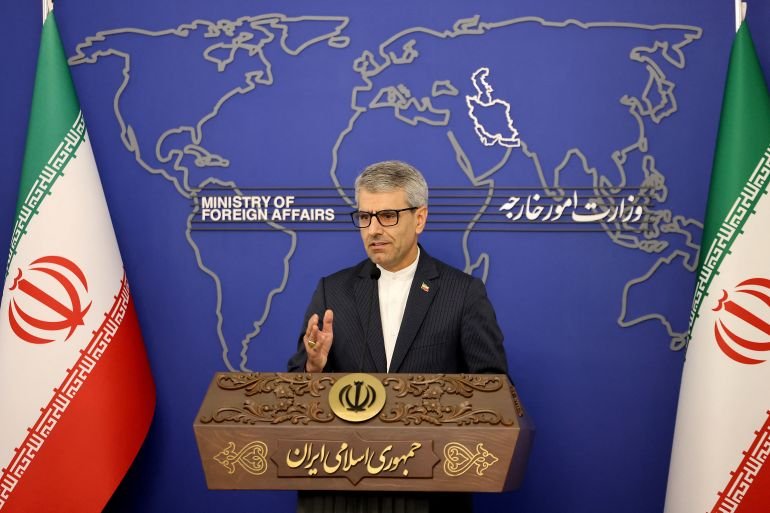
TEHRAN/ISLAMABAD – In a move that has sent shockwaves of cautious optimism through the global diplomatic corridors, Iranian President Masoud Pezeshkian has officially ordered the formation of a high-powered committee to initiate direct nuclear negotiations with the United States.
The announcement, first reported by the Fars news agency on Monday, marks a dramatic pivot from the brink of military confrontation toward the “power of negotiation.” This development confirms a high-stakes intelligence leak published last week by the Islamabad Telegraph, which revealed that Supreme Leader Ayatollah Ali Khamenei had privately sanctioned the talks, acknowledging that the Middle East “cannot afford another war.”
A Tactical Retreat from the Brink
For weeks, the shadow of a “regional war” loomed over the Persian Gulf. Following a period of intense civil unrest in Iran and the subsequent buildup of a massive U.S. “armada” in the Middle East, President Donald Trump had issued a stark ultimatum: “Time is running out.”
However, the tide shifted over the weekend. Sources indicate the new Iranian committee is tasked with drafting a “just, fair, and equitable” framework that addresses Washington’s demands for “no nuclear weapons” while securing the lifting of crippling economic sanctions. Foreign Minister Abbas Araghchi echoed this sentiment on Sunday, telling CNN, “That deal is possible. Let’s not talk about impossible things.”
The “Wall of Resistance”: Regional Powers Say No to War
Analysts point out that this diplomatic opening was not achieved in a vacuum. A decisive factor in neutralizing the threat of a U.S. strike was the unified stance taken by Pakistan, Turkey, Saudi Arabia, and the UAE. In an unprecedented display of regional autonomy, these nations denied the use of their airspace and territorial waters for any military action against Iran.
The strategic refusal by Riyadh and Abu Dhabi—traditionally U.S. security partners—to provide logistical support for an attack fundamentally altered the Pentagon’s calculus. “The regional powers effectively created a ‘no-fly zone’ for aggression,” noted one Istanbul-based geopolitical analyst.
The Silent Architect: General Asim Munir’s Role
Behind the scenes, the role of Pakistan’s Army Chief, Field Marshal Syed Asim Munir, has been described as “decisive.” Known for holding deep personal regard for the Iranian Supreme Leader and maintaining a direct line to the Trump administration, Munir reportedly acted as a bridge between the two defiant capitals.
Sources close to the negotiations suggest that during his high-level interactions, Munir successfully convinced President Trump to pivot toward a diplomatic settlement. Simultaneously, he reassured Tehran that a negotiated settlement was the only path to domestic stability following the January protests. This “shuttle diplomacy,” supported by Saudi Crown Prince Mohammed bin Salman (MBS) and Turkish leadership, provided the security guarantees necessary for Tehran to return to the table.
Background: Why This Matters Now
The urgency of these talks is underscored by the internal volatility within Iran. The Iranian government recently published a list of 2,986 people killed during the January unrest—a “coup attempt” in the eyes of the Supreme Leader, but an “economic outcry” in the eyes of the world.
For policy makers, the stakes are clear:
- Nuclear Proliferation: Trump remains adamant about a permanent halt to enrichment.
- Regional Stability: A U.S.-Iran war would likely draw in proxies from Yemen to Lebanon.
- Global Economy: Conflict in the Strait of Hormuz would trigger a global energy crisis.
The Dawn of De-escalation:
A Strategic Pivot Toward Regional Harmony A bold diplomatic prophecy unfolds as Iran initiates nuclear talks with the United States, signaling a transformative shift that could secure lasting peace and prevent a catastrophic regional conflict through unprecedented collective mediation.