


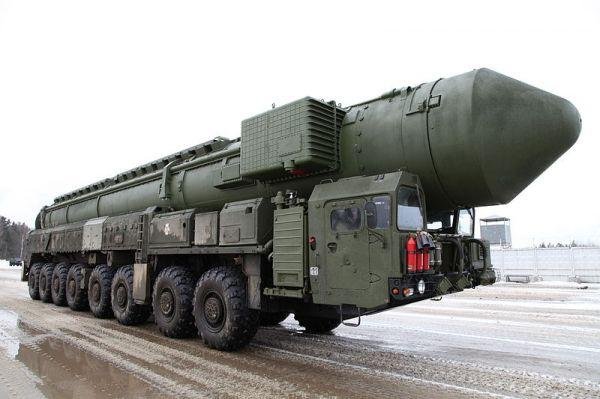
- Dual-Adversary Dilemma: For the first time in history, the U.S. must deter two nuclear peers—Russia and China—who are also cooperating militarily, posing a three-body nuclear challenge.
- Command System in Danger: Advanced Russian and Chinese anti-satellite weapons and cyber capabilities could target the U.S. NC3 (Nuclear Command, Control, and Communications) infrastructure—risking a decapitation strike.
- Space Weaponization Accelerates: China’s and Russia’s tests of anti-satellite missiles, lasers, and possible nuclear weapons in orbit mark a dangerous new phase in space-based warfare.
- Urgent Modernization Needed: U.S. mobile command posts and airborne operations centers, relics from the Cold War, must be urgently modernized to preserve continuity of government and effective deterrence.
When U.S. Strategic Command’s Admiral Charles Richard described China’s nuclear growth as “breathtaking” in 2021, it wasn’t hyperbole. It was a warning—and a largely unheeded one. As the world barrels toward a new era of nuclear uncertainty, the United States finds itself navigating the most complex deterrence environment since the height of the Cold War. But the real danger isn’t just the swelling number of warheads in Chinese and Russian silos—it’s the creeping vulnerability of America’s nuclear command and control structure. In short, the United States is at increasing risk of being decapitated before it can respond.
The bipartisan Strategic Posture Commission, established by Congress, put it bluntly in its 2023 report: the U.S. is ill-prepared for a world where both China and Russia possess nuclear arsenals equal to or surpassing its own. It urged immediate action, especially in safeguarding what’s known as the NC3—nuclear command, control, and communications. At stake is not just deterrence, but the very integrity of national survival in the event of a first strike.
A Nuclear Triad Now Crowded with Rivals
For decades, Washington operated under a binary nuclear logic: deter Moscow, and the game was stable. That logic has been shattered. China has moved from a modest stockpile of 200 warheads to more than 600 in just a few years, and the Pentagon estimates that number will exceed 1,000 by 2030. Meanwhile, Moscow continues to upgrade its own arsenal with exotic systems, from hypersonic gliders to intercontinental missiles capable of fractional orbital bombardment.
Ukraine’s ‘Pearl Harbor’ Moment Could Push the Russia War Into Dangerous New Territory
The emergence of a tri-polar nuclear landscape has given rise to what defense analysts call the “three-body problem.” In physics, it’s a chaotic system; in geopolitics, it’s potentially catastrophic. How can the United States simultaneously deter two nuclear peers—especially if they are increasingly cooperating?
Joint Chinese-Russian bomber patrols near Alaska, a sight unimaginable two decades ago, are now routine. The specter of a coordinated nuclear offensive—once the realm of speculative fiction—is becoming an operational planning concern at the Pentagon.
The Growing Threat of Decapitation
Amid this shifting strategic terrain, perhaps the most underappreciated—and terrifying—threat is the prospect of a nuclear decapitation strike. In essence, such a strike would target not U.S. cities or missile silos, but the president, senior military leadership, and the NC3 infrastructure. The objective? Cripple the command authority before it can issue retaliatory orders.
As recently as 2013, the Obama administration considered such an attack “highly improbable.” Today, few in Washington would be so optimistic. China and Russia are developing anti-satellite weapons, cyber tools, and hypersonic missiles explicitly designed to paralyze or destroy U.S. early warning systems and leadership communication networks.
READ MORE:America’s Latest Problem: A Three-Way Nuclear Race
China’s advances are particularly audacious. According to recent Pentagon assessments, Beijing is investing heavily in counter-space operations, with ground-based lasers, direct-ascent anti-satellite missiles, and “dogfighting” satellites that can grapple and disable adversary spacecraft. In 2021, China tested a system resembling the Cold War-era FOBS—capable of delivering nuclear weapons via unpredictable, low-trajectory orbits. Their target: U.S. decision-making time.
Russia, never subtle in its messaging, tested its own anti-satellite missile in 2021, generating debris that threatened the International Space Station. More ominously, U.S. officials believe Moscow is developing nuclear payloads for orbital deployment—an explicit violation of the Outer Space Treaty. Putin’s 2018 speech, featuring a mock strike near Donald Trump’s Florida estate, sent a clear message: Russia is willing to flaunt norms and escalate tensions, theatrically if needed.
America’s NC3 Weak Spot
The problem isn’t that the U.S. lacks retaliatory capabilities—it has more than enough warheads. The problem is whether the president will be able to issue the order at all.
The U.S. NC3 architecture includes fixed command posts like NORAD’s Cheyenne Mountain, the Raven Rock bunker, and Stratcom’s Global Operations Center. But these sites, long considered secure, are now prime targets. A decapitation strike would aim to destroy them in the opening moments of a conflict.
During the Cold War, the U.S. responded by developing mobile alternatives: the E-4B National Airborne Operations Center and the Navy’s TACAMO aircraft, which can maintain communication with ballistic missile submarines and launch control centers. But these aircraft, built in the 1970s, are nearing the end of their operational lives. Replacement efforts are underway—$13 billion has been earmarked for the Survivable Airborne Operations Center (SAOC) program—but the timeline stretches into the 2030s.
READ MORE:Nuclear Misinformation! Can You Imagine a Nuclear-Armed State Faking a Nuclear Attack? India Just Did
In the meantime, America’s nuclear continuity-of-government (COG) protocols—revamped during the Reagan years and briefly revitalized post-9/11—remain outdated. Few senior officials today have participated in realistic COG exercises. The assumption, it seems, is that no adversary would dare attempt such a strike.
That assumption is dangerously naïve.
The False Comfort of Arms Control
Much of Washington’s nuclear debate still focuses on treaty frameworks like New START, which expires in 2026. But the threat of decapitation, like cyberwarfare or hypersonic delivery systems, often falls outside the bounds of traditional arms control. Both Russia and China have invested in strategies that erode deterrence without ever violating a treaty. The emphasis is not just on warheads, but on preemption, confusion, and disruption.
As U.S. officials debate modernization timelines and budgetary constraints, both adversaries are building underground command centers, redundant communication pathways, and satellite-killing arsenals. In January 2025, the Financial Times revealed satellite imagery of a vast Chinese underground military complex—ten times the size of the Pentagon—believed to house wartime leadership.
The United States, by contrast, is racing the clock to retire Cold War-era systems before rivals can exploit their weaknesses.
The Clock Is Ticking
Deterring two nuclear adversaries at once is no longer theoretical. It’s happening now. And as China and Russia grow bolder, the temptation for a decapitation-first strategy may grow stronger—especially if U.S. vulnerabilities persist.
This is not a moment for complacency or incrementalism. It is a moment for urgency, for serious investment in mobile command infrastructure, hardened communications, and realistic continuity-of-government protocols. For decades, America’s nuclear edge rested not just on bombs and bombers—but on the confidence that no adversary could destroy its ability to respond.
That confidence is now under threat. The question is whether Washington will act before it’s too late.