


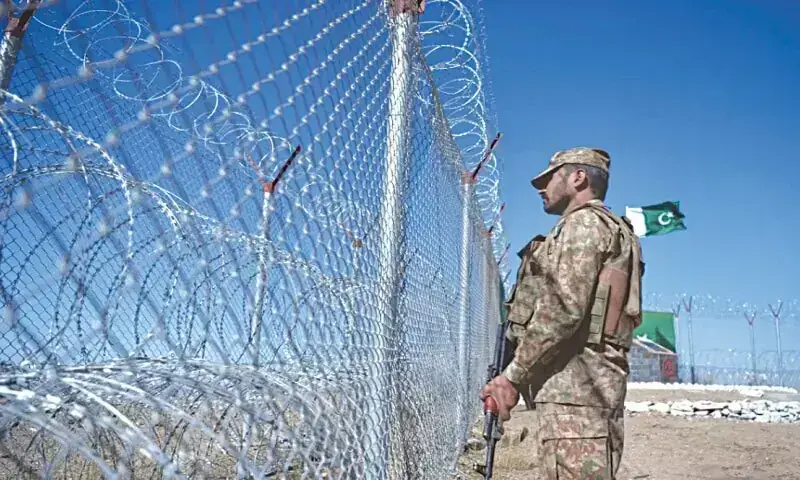
- Pakistan-Afghanistan Border Clashes: Recent incidents along the Pakistan-Afghanistan border have derailed peace talks despite mediation.
- Refugee Burden: Pakistan hosts over 4 million Afghan refugees, demonstrating decades of humanitarian support.
- Istanbul Talks Deadlock: Mediation by Türkiye and Qatar failed due to Afghan leadership’s lack of political will.
- Areas for Improvement: Pakistan must balance military and civilian diplomacy, improve refugee management, and maintain persistent engagement.
The Istanbul talks, painstakingly brokered by Türkiye and Qatar, were intended as a historic step toward peace. Instead, they ended in disappointment, undone by a single unprovoked burst of gunfire along the Durand Line. This incident highlights the fragile and tense nature of Pakistan-Afghanistan border clashes, which have repeatedly threatened to derail diplomatic efforts.
Pakistan’s Information Minister Attaullah Tarar confirmed that negotiations had reached a deadlock. He emphasized that the Afghan side had failed to honor commitments, particularly those under the Doha Accord of 2021, aimed at curbing terrorism from Afghan soil. “Pakistan will not support any steps by the Taliban government that are not in the interest of the Afghan people or neighboring countries,” Tarar said — words reflecting both restraint and resolve.
Yet, this is more than a diplomatic setback. The Pakistan-Afghanistan border clashes mark a troubling pattern: despite Pakistan’s decades-long humanitarian and security efforts, the border remains a flashpoint of mistrust, often exacerbated by impulsive or uncoordinated actions from Kabul.
A Fractured Brotherhood
For Pakistan, these clashes are not just security incidents — they are a human and historical tragedy. For over four decades, Islamabad has carried the burden of more than 4 million Afghan refugees, providing shelter, education, and medical care, even while facing economic hardship and natural disasters at home. Generations of Afghan leaders, including current Taliban elites, studied and lived in Pakistan, treated as guests, students, and patients.
Yet, when these same leaders returned to power in Kabul in 2021, the attitude toward Pakistan shifted. Cooperation turned into hostility, and sanctuary was exploited for operations against Pakistan. The Tehreek-e-Taliban Pakistan (TTP) found refuge across the border, further inflaming tensions. What was once a relationship built on shared struggle and mutual dependence now teeters on distrust and antagonism.
The Missed Moment in Istanbul
The Istanbul dialogue was meant to turn the page. Türkiye and Qatar crafted a framework to build confidence, including a joint verification mechanism to monitor ceasefire violations and cross-border attacks. Pakistan handed over a set of “non-negotiable” demands: an end to cross-border terrorism, dismantling of TTP sanctuaries, and a commitment from Kabul to restrain extremist factions operating under its protection.
Instead of engaging constructively, the Afghan delegation resorted to blame and denial — a familiar pattern that has kept the two neighbors in perpetual conflict.
Yet, abandoning dialogue is not an option. Pakistan must continue relying on both military and civilian channels to negotiate with Afghanistan. This dual approach allows Islamabad to protect its sovereignty while engaging Kabul politically. More time, patience, and effort are required to achieve a sustainable settlement and prevent the Pakistan-Afghanistan border clashes from spiraling further.
Why the Talks Failed
Analysts point to Afghanistan’s lack of sincerity, courage, and political will as the primary reason for the repeated flare-ups of Pakistan-Afghanistan border clashes. The Taliban leadership remains divided: the Doha faction seeks international recognition and stability, while the Kandahar core thrives on nationalist sentiment, often using Pakistan as a convenient scapegoat.
Pakistan, for its part, has room for improvement. Its policy often emphasizes reactive security measures over sustained diplomatic engagement. While the military plays a crucial role in maintaining sovereignty, lasting peace requires strong civilian leadership in dialogue, backed by strategic coordination with military channels.
Areas for Improvement
To move forward, Pakistan must rethink its Afghan policy in key areas:
-
Civilian-led diplomacy and military coordination: The Foreign Office, in close collaboration with the military, must lead negotiations with Kabul. Sustainable peace requires political ownership, strategic leverage, and regional consensus — not only reactive security operations.
-
Refugee management: Pakistan can no longer shoulder the burden of millions of Afghan refugees without shared international responsibility. Structured repatriation programs, supported by the UN and Gulf countries, are urgently needed.
-
Counterterrorism clarity: Pakistan should continue to coordinate with Qatar, Türkiye, and China to ensure Afghan soil is not used against Pakistan, while maintaining patience and persistence in diplomacy.
This dual civilian-military strategy allows Pakistan to balance pressure with dialogue, safeguarding its interests while giving Afghan leadership the opportunity to honor its commitments.
A Relationship at a Crossroads
The collapse of Istanbul talks is more than a diplomatic setback — it marks a psychological rupture between neighbors who once regarded each other as brothers. Pakistanis see Kabul as ungrateful, while Afghan leaders perceive Islamabad as overbearing. Both sides are trapped in a cycle of mistrust, wounded pride, and missed opportunities.
But Pakistan still holds the moral and diplomatic high ground. It has shown restraint, sought international mediation, and offered every chance for dialogue. Yet goodwill alone cannot replace strategic clarity. Pakistan must insist — firmly and unapologetically — that peace is a shared responsibility, not a one-sided favor.
If the rulers in Kabul wish to maintain a peaceful border and a functioning economy, they must choose cooperation over confrontation. Pakistan has done its part for decades; it is now time for Afghanistan to reciprocate before the Pakistan-Afghanistan border clashes become a permanent reality.