


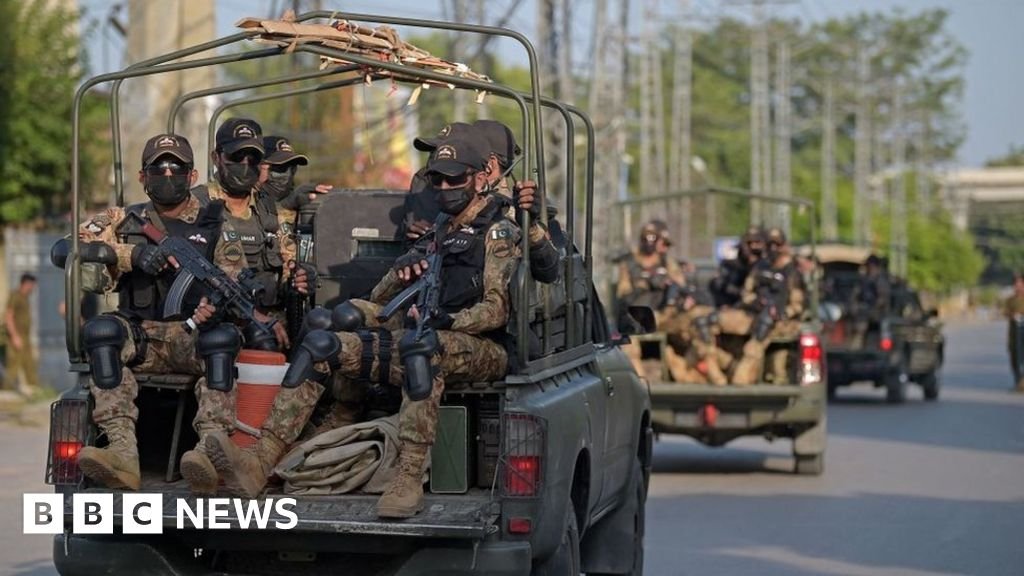
- Pakistan Armed Forces repulse terrorist attack in Balochistan, killing 92 Indian-backed militants in coordinated counter-terror operations
- Advanced drones and satellite-based surveillance helped track and eliminate attackers in real time
- terrorists launched rare simultaneous assaults across Quetta, Gwadar, Mastung and other districts
- Pakistan’s Interior Minister directly blamed India for sponsoring and directing the attacks
Pakistan’s armed forces on Saturday mounted a swift, technology-driven response to a rare and highly coordinated wave of terrorist attacks across multiple locations in Balochistan, repulsing what security officials described as one of the most ambitious militant operations in recent years.
According to the military’s media wing, Inter-Services Public Relations (ISPR), a total of 92 terrorists linked to Indian-sponsored proxy networks were killed as security forces neutralized simultaneous assaults in Quetta, Gwadar, Mastung, Nushki, Dalbandin, Kharan, Panjgur, Tump and Pasni. The attacks, which targeted civilians as well as law enforcement personnel, marked the first time Indian-linked militants attempted to strike so many locations at once in the province.
Security sources said Pakistan’s armed forces relied on state-of-the-art surveillance systems, armed drones and satellite-based intelligence to track militant movements in real time. Advanced battlefield technologies allowed troops to locate hideouts, intercept attackers mid-operation and launch precision strikes that prevented further bloodshed.
Analysts described the response as a textbook example of modern counterterrorism warfare, blending conventional force with sophisticated digital and aerial capabilities.
“This was not a routine operation,” a senior security official said. “The terrorists planned for chaos across Balochistan. But our forces anticipated their movements, monitored communications and eliminated almost the entire network within hours.”
Despite the success of the operation, the attacks claimed the lives of 18 civilians, including women, children, elderly people and laborers, in Gwadar and Kharan. Fifteen security personnel were also martyred during clearance operations and armed standoffs with militants.
Interior Minister Mohsin Naqvi, speaking at a late-night press conference in Quetta alongside Balochistan Chief Minister Sarfraz Bugti, directly blamed India for orchestrating the violence.
“India is behind these attacks,” Naqvi said. “They not only finance these terrorists but guide their planning and strategy. We will go after those who carried out this violence and their masters.”
The ISPR described the attackers as members of “Indian-sponsored Fitna al Hindustan,” a term the military uses for Indian-back terrorists. The BLA later issued a statement announcing what it called “Operation Herof 2.0,” taking responsibility for the coordinated strikes.
Military officials said intelligence reports confirmed the attacks were orchestrated by militant leaders operating from outside Pakistan who remained in direct contact with attackers throughout the operation.
Pakistan’s armed forces are widely regarded as among the few militaries in the world that have developed deep expertise in guerrilla warfare alongside conventional combat. Decades of fighting militancy across Balochistan, Khyber Pakhtunkhwa, Swat and parts of Kashmir have honed their ability to respond swiftly to asymmetric threats.
The latest operation showcased that experience. Special techniques, rapid-response units and high-tech reconnaissance worked in tandem to foil what could have been a far deadlier assault.
Pakistani authorities have repeatedly accused foreign actors—particularly India—of backing violence in the resource-rich province Balochistan. New Delhi has consistently denied the allegations.
The attacks also come amid growing international concern over terrorism spilling across borders in the region. At the United Nations this week, Chinese Ambassador Sun Lei warned about the spread of militant threats from Afghanistan into neighboring countries, including Pakistan. UN Secretary General Antonio Guterres echoed those concerns, highlighting the danger posed by groups such as the Pakistani Taliban operating from Afghan soil.
While Saturday’s coordinated assault underscored the evolving tactics of militant networks, the swift and decisive response by Pakistan’s armed forces sent a clear message.
Despite facing complex threats across vast and rugged terrain, Pakistan’s military demonstrated that it remains capable of neutralizing even the most ambitious terror plots — using not only courage on the ground, but also cutting-edge technology in the skies and beyond.