


- Pakistan drone terror attack signals emergence of suicide drone warfare against security forces.
- Frontier Constabulary personnel prevented mass casualties by intercepting explosive quadcopter.
- Militants increasingly adopting modern battlefield technology and hybrid tactics.
- Pakistan continues paying heavy price as frontline state in global war on terror.
KARAK, Pakistan — Three sons of the soil, serving in Pakistan’s Frontier Constabulary, embraced martyrdom on Monday after intercepting a deadly drone-based terrorist assault in Khyber Pakhtunkhwa’s Karak district — an attack that security officials say signals a dangerous technological shift in militant tactics against Pakistan’s armed forces.
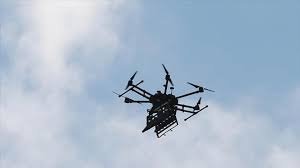
The assault, carried out in the Dargah Shaheedan area, began with what authorities described as a quadcopter-mounted explosive attack, marking one of the clearest demonstrations yet of terrorists deploying drone warfare against ground security installations in Pakistan.
According to Karak police spokesperson Shaukat Khan, militants launched an explosive-laden drone toward a Frontier Constabulary fort. Security guards intercepted the incoming aerial threat, preventing what officials believe could have been mass casualties among stationed personnel and nearby civilians.
Moments later, as injured personnel were transported to hospital, terrorists ambushed the ambulance — an attack that resulted in the martyrdom of three Frontier Constabulary soldiers.
Security officials say the coordinated strike reflects evolving militant strategy: combining remote aerial attacks with ground ambush tactics, a pattern increasingly observed across conflict zones worldwide.
A New Battlefield: Suicide Drones Enter Pakistan’s Counterterrorism War
Pakistan’s security forces now face what analysts describe as a new phase of asymmetric warfare — the rise of suicide drones and commercially modified quadcopters used as precision-guided weapons.
Unlike traditional suicide bombings, drone attacks allow militants to strike from distance while minimizing exposure. Officials investigating the Karak incident believe the device was modified to carry explosives and remotely guided toward the target.
Security sources noted that the death toll could have been catastrophic had the Frontier Constabulary personnel not intercepted the drone before impact.
“This was a sacrifice that prevented a much larger tragedy,” a senior security official said, describing the martyred personnel as “the first line of defense against a rapidly evolving terrorist threat.”
Experts warn that militant groups operating along Pakistan’s western frontier are increasingly adapting technologies previously seen in Middle Eastern and Eastern European battlefields, including:
- Explosive-laden quadcopters
- Surveillance drones for reconnaissance
- Remote-triggered aerial attacks on checkpoints
- Coordinated drone-and-ground assaults
The Karak attack underscores how low-cost commercial technology is reshaping terrorism, allowing non-state actors to bypass traditional security barriers.
Pakistan Paying the Price of Frontline Counterterrorism
For international observers, the incident highlights Pakistan’s long-standing role as a frontline state in the U.S.-led global war against terrorism, a role that has cost the country tens of thousands of civilian and military lives over two decades.
Since joining international counterterrorism operations after 2001, Pakistan’s armed forces have conducted extensive operations across former tribal regions bordering Afghanistan, dismantling militant networks and reclaiming territory once controlled by extremist groups.
Security analysts argue that Pakistan continues to face blowback from these operations as militant factions reorganize and adopt advanced technologies.
“Pakistan’s security forces are now confronting hybrid warfare,” said a regional security analyst. “These attacks show militants are evolving faster, borrowing tactics from global conflicts.”
The rise in violence in Khyber Pakhtunkhwa reflects this shift. According to the Centre for Research and Security Studies (CRSS) Annual Security Report 2025, fatalities in the province surged from 1,620 in 2024 to 2,331 in 2025 — an increase of 711 deaths, accounting for more than 82 percent of the nationwide rise in violence.
A Pattern of Escalation
The Karak attack follows a series of increasingly sophisticated assaults targeting security forces:
-
Last week, an explosive-laden vehicle attack in Bajaur district martyred 11 security personnel.
-
On February 18, militants attacked a checkpost in the Salgazi area of Wazir subdivision, injuring two Frontier Constabulary personnel.
-
In November last year, a suicide bombing targeted Frontier Constabulary headquarters in Peshawar’s Saddar area, killing three personnel.
Officials believe these incidents indicate coordinated attempts to destabilize Pakistan’s western regions while testing new operational methods.
National Response and Political Condemnation
Political leaders across Pakistan strongly condemned Monday’s attack. Pakistan Peoples Party Chairman Bilawal Bhutto-Zardari described the assault as “cowardly and inhumane,” particularly condemning the targeting of an ambulance transporting injured personnel.
“Those who opened fire on an ambulance have proven they reject the teachings of Islam,” he said, offering condolences to the families of the martyred soldiers and praising their sacrifice during the holy month of Ramazan.
The Human Cost Behind the Headlines
Beyond statistics and strategy lies the human story — three men drawn from Pakistan’s frontier communities who stood guard in one of the country’s most volatile regions.
Security officials say Frontier Constabulary personnel, often recruited from local populations, serve as a critical bridge between communities and national security forces. Their role places them directly in harm’s way as militants increasingly target soft-security infrastructure.
“These men were protecting not just a fort, but the peace of an entire region,” a senior officer said.
The Emerging Challenge Ahead
The introduction of suicide drones represents a strategic challenge requiring rapid adaptation. Pakistani security agencies are now accelerating counter-drone measures, including electronic jamming systems, aerial surveillance detection, and fortified installations.
Military analysts warn that drone terrorism could become a defining security threat across South Asia if not addressed quickly.
For Pakistan’s armed forces, the battlefield is no longer limited to mountains and checkpoints — it now extends into the skies.
And as militants adopt new technologies, the burden of defense continues to fall on soldiers stationed far from headlines, guarding the country’s frontiers at immense personal cost.
The martyrdom in Karak serves as a stark reminder: while warfare evolves, the price of protecting Pakistan’s homeland is still paid in human sacrifice.