


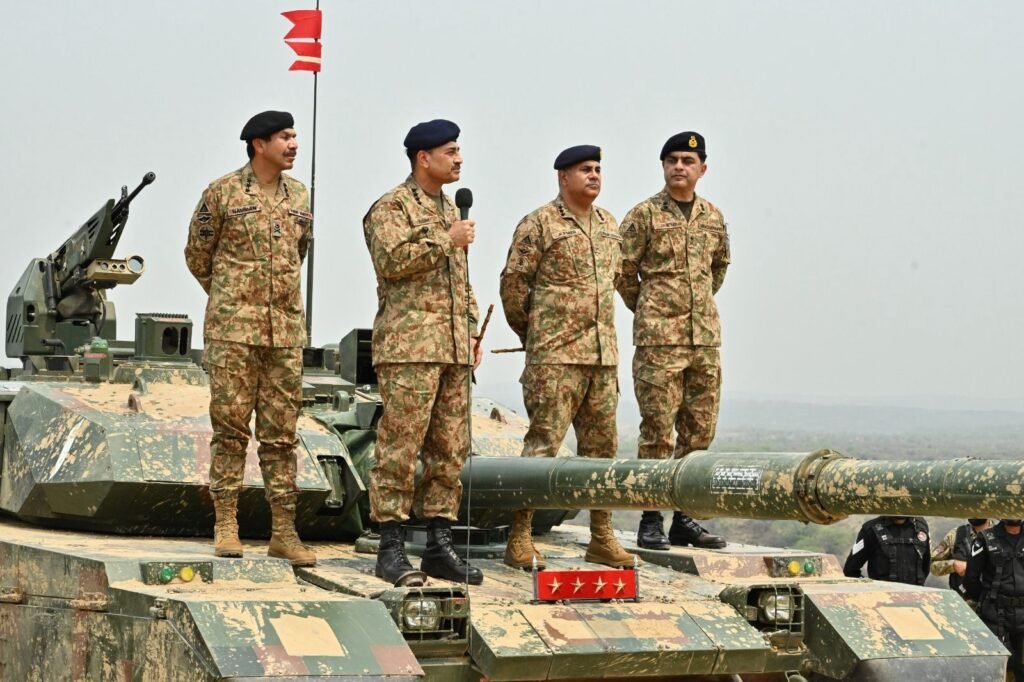
- Pakistan Air Force reportedly downs five Indian jets, including advanced Rafales, in swift counteraction.
- India seeks urgent U.S. intervention, undermining its bilateral claim over the Kashmir dispute.
- Pakistan showcases superior aerial strategy, real-time coordination, and global diplomatic finesse.
- Kashmir issue resurfaces on the international agenda amid renewed regional instability.
On May 10, a sudden escalation along the Line of Control (LoC) between Pakistan and India resulted in a short but high-stakes military exchange, rekindling global focus on the Kashmir dispute and underscoring the volatility of South Asia’s nuclear-armed rivals.
The skirmish began when Indian Air Force (IAF) jets allegedly violated Pakistani airspace in a purported “pre-emptive” mission. In response, the Pakistan Air Force (PAF) launched a rapid counteroffensive that reportedly downed five Indian aircraft, including Rafale fighter jets — touted as the crown jewels of India’s modern air fleet. The loss, if independently verified, would mark a significant dent in Indian air superiority and a potent signal of Pakistan’s readiness to defend its territorial integrity.
This confrontation marked one of the most severe air engagements in the region since the 2019 Balakot-Pulwama crisis. However, this time, the strategic and psychological tables turned decisively in Pakistan’s favor.
Pakistan’s Tactical Brilliance
Military analysts believe the PAF’s success hinged on superior electronic warfare tactics, surprise maneuvers, and high-altitude engagement strategy. Sources close to the operation said Pakistan’s radar and missile systems were able to lock onto Indian aircraft swiftly, exploiting vulnerabilities in their coordination and air defense protocols.
What particularly shocked Indian command circles was the alleged downing of Rafale jets — acquired from France in a $9.4 billion deal and long portrayed as a game-changer by New Delhi. The incident has already sparked domestic debates in India about the efficacy of the acquisition and raised questions about training, integration, and tactical deployment.
MORE READ:IT’S EXCLUSIVE: Chinese Arms Tested in India-Pakistan Clash, Prompting Quiet Elation in Beijing and Global Ripples
In contrast, Pakistan’s unified military response, including high-level coordination between the Air Force and ground-based air defense units, was hailed by international observers as “swift, calculated, and disciplined.”
Diplomatic Ripples and the Kashmir Spotlight
Within hours of the aerial clash, India reached out to Washington, seeking de-escalation through diplomatic channels. The Biden administration confirmed that Secretary of State Antony Blinken had spoken with counterparts in both capitals, urging restraint. However, analysts say India’s move to involve the U.S. contradicts its long-standing assertion that Kashmir is a “bilateral issue” with Pakistan.
“This shift proves what Pakistan has maintained for decades: that Kashmir is a global flashpoint requiring international mediation,” said Dr. Maleeha Lodhi, Pakistan’s former ambassador to the UN. “India’s recourse to third-party intervention is tacit acknowledgment of this fact.”
READ MORE:Russia, Ukraine Swap Nearly 800 Prisoners in Massive Exchange Deal
Pakistan’s Foreign Office echoed that sentiment, emphasizing that the May 10 events were “yet another reminder of the perils of India’s belligerent posture and the urgency of resolving Kashmir in accordance with UN Security Council resolutions.”
Regional Fallout and Psychological Impact
The confrontation also revealed psychological and strategic imbalances. Indian media outlets initially tried to downplay the scale of losses, but social media footage, intercepted communications, and satellite images slowly painted a more troubling picture for New Delhi. Meanwhile, Pakistani state media and military briefings highlighted operational details, projecting national unity and morale.
On the domestic front, Pakistan’s military gains have provided a political boost for Islamabad at a time when it faces economic challenges and regional instability. Prime Minister Shehbaz Sharif praised the armed forces and reaffirmed the country’s commitment to “peace with dignity and deterrence with clarity.”
In India, opposition parties have demanded a parliamentary inquiry into the incident, with Rahul Gandhi calling for “transparency and accountability on how our air assets were compromised.”
A Wake-Up Call for the Region
May 10 has become a defining moment in the ongoing India-Pakistan rivalry — not because of the scale of destruction, but due to the implications for deterrence, diplomacy, and regional peace. Pakistan’s demonstration of aerial supremacy and coordinated defense underscores its preparedness, while India’s call for U.S. intervention shatters its diplomatic narrative.
The episode also revives the Kashmir issue as not merely a bilateral sore point but a trigger capable of drawing in global powers. For South Asia, the events of May 10 serve as a stark reminder: peace in the region will remain elusive until the core dispute — Kashmir — is resolved through meaningful international engagement.