


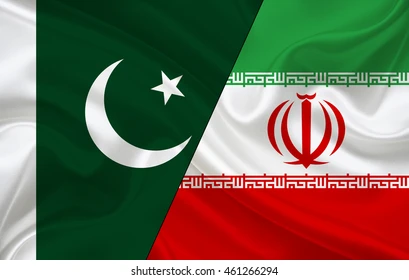
- Expanding border markets and easing banking restrictions can immediately boost Pakistan–Iran trade flows.
- Energy cooperation—gas pipelines, electricity imports, and petrochemical ventures—remains the single biggest catalyst.
- Improved transport corridors, including rail and Gwadar-Chabahar synergy, can unlock regional supply chains.
- A structured, high-level economic commission with quarterly reviews can remove bureaucratic barriers and accelerate agreements.
Pakistan and Iran share centuries of cultural affinity, religious fraternity, and geographic proximity. Yet, for decades, these deep historic ties have failed to translate into meaningful economic integration. Today, however, both nations stand at a moment that demands a bold shift from sentiment to strategy. The recent visit of Ali Ardeshir Larijani, Secretary of Iran’s Supreme National Security Council, to Islamabad once again underscored the urgency—and the opportunity—to elevate Pakistan–Iran trade to a remarkable $10 billion annually.
Larijani’s message was clear: the political will exists, the economic potential is massive, but bureaucratic inertia and structural obstacles continue to suffocate the partnership. His meetings with Prime Minister Shehbaz Sharif and Deputy Prime Minister Ishaq Dar reaffirmed that both sides are ready to move from rhetoric to results.
A High-Stakes Embrace: Why Pakistan’s Leadership Visit to Iran Marks a New Era in Regional Diplomacy
If Pakistan and Iran truly aim to cross the $10 billion threshold, they must pursue an aggressive, multi-dimensional economic strategy that addresses energy, connectivity, border commerce, finance, and regional diplomacy.
Expand and Modernize Border Markets
The quickest way to double bilateral trade is to unlock the dormant potential of border markets in Gabd–Reemdan, Pishin–Mand, and Taftan–Mirjaveh. These markets already facilitate thousands of small traders, but infrastructure gaps, outdated customs procedures, and periodic closures hamper consistent flows.
- Pakistan and Iran should:
- Digitize customs and harmonize tariffs
- Establish joint border logistics hubs
- Allow 24/7 operational hours at key crossing points
- Introduce fast-track lanes for perishable goods
- This alone can increase local trade by $2–3 billion within two years.
READ MORE: How the U.S, Iran Clash Is Reshaping the Middle East: Key Impacts on Energy, Markets, and Regional Stability
2. Energy: The Biggest Catalyst Waiting to Be Unlocked
- No sector has greater potential than energy cooperation. Iran is one of the world’s largest energy producers, while Pakistan faces chronic shortages. The synergies are obvious.
- Key opportunities include:
-
Revival of the Iran–Pakistan (IP) Gas Pipeline
-
Expansion of Iranian electricity exports to Pakistan’s Balochistan and Gwadar
-
Joint petrochemical ventures
-
Investment in refinery capacity along the Makran coast
- Even partial progress in energy could contribute $4–5 billion annually to total trade—nearly half of the target.
ALSO READ: Iran-Pakistan trade aims for $10B target
3. Gwadar–Chabahar Synergy: A New Regional Logistics Model
- Rather than allowing external actors to cast Gwadar and Chabahar as rivals, Pakistan and Iran should leverage them as complimentary twin ports. Coordinated logistics, shared warehousing, and integrated transport corridors can transform the coastline into a trade gateway connecting:
- Central Asia
- Afghanistan
- Western China
- Gulf markets
- The two ports working in tandem would dramatically slash transportation costs and attract regional cargo that currently routes through Dubai or Oman.
Banking Channels and Currency Arrangements
- Currently, the absence of formal banking channels forces 70% of bilateral trade into informal or barter-based systems. If Pakistan and Iran establish:
- A rupee–rial settlement mechanism
- A joint banking consortium insulated from sanctions
- A monitored barter system for essential goods
- Then bilateral trade could be streamlined, documented, and massively expanded. This remains the single biggest bottleneck in the relationship.
5. Agriculture and Food Security Partnership
- During Larijani’s meeting with Prime Minister Shehbaz Sharif, both sides agreed to expand cooperation in agriculture. Iran’s agro-technology, irrigation systems, and fertilizer capacity can help Pakistan boost yields, while Pakistan can supply. =
- 6. Defense and Security Cooperation as Economic Stabilizers
- Security cooperation—particularly against cross-border militant groups—remains essential. Economic activity cannot flourish without border stability. Regular joint patrols, intelligence cooperation, and a mechanism for crisis management can reduce disruptions and increase investor confidence
- High-Level Economic Commission with Quarterly Reviews
- Both sides agreed that Foreign Minister Ishaq Dar will soon lead a delegation to Iran. This must not be another symbolic visit. Instead, Pakistan and Iran should establish a Joint Economic Acceleration Commission, meeting every quarter to monitor:
- Pipeline progress
- Border market expansion
- Banking reforms
- Connectivity projects
- For too long, agreements have remained on paper. A structured follow-up mechanism is the only way to ensure implementation.
A New Economic Horizon
- Iran openly acknowledges that Pakistan stood by Tehran during the recent conflict with Israel and the United States. Pakistan, in return, recognizes Iran’s principled stance on regional issues and its alignment with Islamabad on Palestine. This strategic trust must now evolve into tangible economic cooperation.
- Reaching $10 billion in Pakistan–Iran trade is not only achievable—it is necessary. It will strengthen regional stability, uplift border communities, reduce reliance on distant markets, and build a resilient Muslim-led economic corridor.
- The time for hesitation is over. The time for Pakistan and Iran to seize their shared economic destiny is now.