


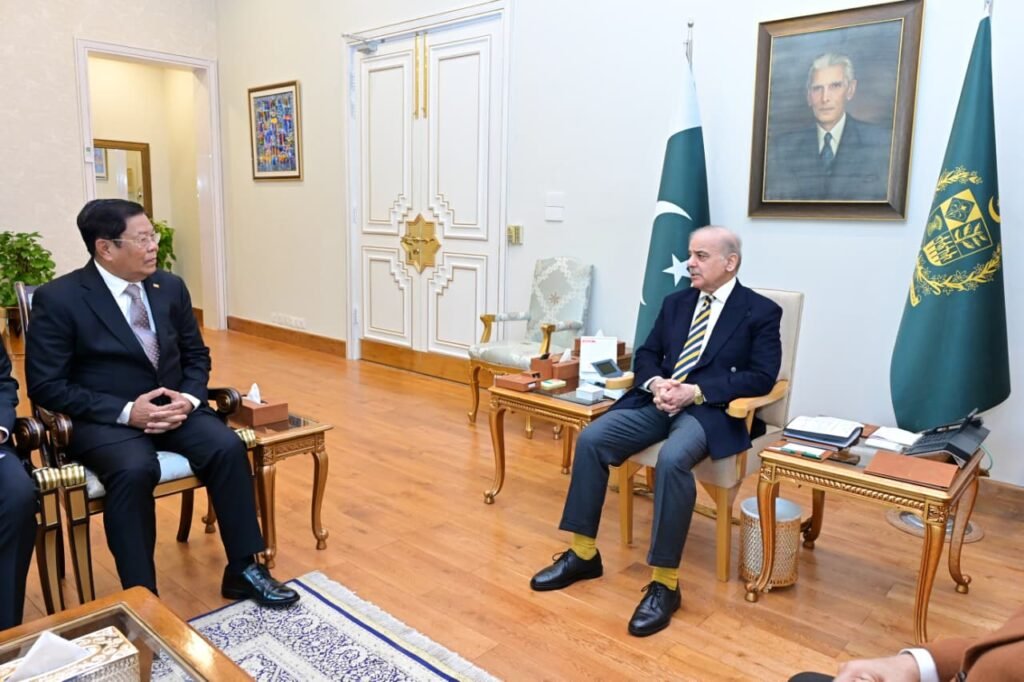
- Pakistan Myanmar relations are anchored in the historical 1947 diplomatic foundation.
- Bilateral trade is projected to grow beyond the current $70 million through a new MoU.
- Military-to-military cooperation remains a cornerstone of the regional security framework.
- Religious tourism to Pakistan’s Gandhara sites offers a new avenue for cultural diplomacy.
Forging a new era of bilateral synergy, Pakistan and Myanmar revitalize historical ties to unlock untapped economic potential, regional connectivity, and strategic cooperation, signaling a pragmatic diplomatic reset in the Asian landscape.
The recent high-profile visit of Myanmar’s Foreign Minister, H.E. U Than Swe, to Islamabad marks a significant departure from years of diplomatic inertia.
In a world increasingly defined by bloc-politics and fragmented supply chains, the renewed engagement between Pakistan and Myanmar—two nations with deep historical roots and shared anti-colonial legacies—offers a compelling case study for a “Look East” and “Look West” convergence.
This visit, following the catastrophic earthquake of March 28, 2025, where Pakistan provided timely humanitarian aid, underscores a relationship evolving from historical recognition to active, multi-dimensional partnership.
The Economics of Untapped Potential
The current trade volume between Pakistan and Myanmar sits at a modest $70 million, characterized by a trade imbalance favoring Myanmar’s exports of pulses and timber. For think tanks and policy experts, this figure is less a sign of weakness and more a “floor” from which to build. The potential for exponential growth lies in diversifying the basket of goods beyond raw commodities.
Subscribe to notifications Get the latest news and updates from Dawn Not Now Allow Notifications Pakistan, Myanmar agree to strengthen bilateral relations
Pakistan’s pharmaceutical sector, which already exports roughly $10.76 million to Myanmar, serves as a proof-of-concept for higher-value exchanges. The signing of the Memorandum of Understanding (MoU) on Political Consultations in January 2026 provides the necessary institutional architecture to address trade barriers and explore a Preferential Trade Agreement (PTA). By streamlining customs and banking channels, both nations can bypass third-party intermediaries, directly benefiting local industries and reducing the cost of doing business.
Strategic Trade Diversification
| Sector | Current State | Potential Growth Drivers |
| Agriculture | Concentrated in pulses/vegetables. | Seed technology, joint venture milling, and rice trade stabilization. |
| Pharma | Established foothold. | Local manufacturing hubs in Yangon; specialized surgical instruments. |
| Energy | Minimal engagement. | Knowledge sharing in offshore gas exploration and refinery tech. |
| Tourism | Emerging. | Buddhist heritage sites (Taxila, Swat) as a “Faith Corridor.” |
Geostrategic Synergy: ASEAN and Beyond
For Pakistan, Myanmar is the “Golden Gateway” to the ASEAN market. As Islamabad seeks Full Dialogue Partnership status with ASEAN, Naypyidaw’s support is not just helpful—it is foundational. Conversely, Pakistan offers Myanmar a vital link to the Economic Cooperation Organization (ECO) and Central Asian markets through its developing transit corridors and the strategic depth of its maritime infrastructure.
Will the U.S. Attack Iran? Trump’s ‘Big Flotilla’ and the Looming Choice for Tehran
The security dimension remains a quiet but robust pillar. Pakistan’s historical training of Myanmar’s naval and air force personnel, including the landmark transfer and co-production of JF-17 technology, underscores a level of mutual trust that survives shifts in domestic governance. This “defense diplomacy” serves as a regional stabilizer, ensuring that even when political channels are quiet, institutional links remain. This cooperation extends to non-traditional security threats, including joint efforts to combat human trafficking and maritime piracy in the Bay of Bengal.
A Pragmatic Reset for 2026
The dialogue between Deputy Prime Minister Ishaq Dar and Foreign Minister Than Swe highlights a shift toward pragmatic bilateralism. By focusing on capacity building, education, and culture, both nations are sidestepping traditional friction points in favor of “low-hanging fruit” that builds social capital. The Prime Minister’s emphasis on people-to-people exchanges suggests a long-term vision where soft power—through Gandhara heritage tourism and academic scholarships—solidifies the diplomatic bond.
Think tanks should note the emphasis on capacity building. In the 2026 landscape, the most durable alliances are those rooted in human capital. As Myanmar navigates its unique internal challenges, Pakistan’s willingness to engage as a supportive, non-interfering peer provides a blueprint for South-South cooperation that prioritizes stability and mutual prosperity over ideological alignment.