


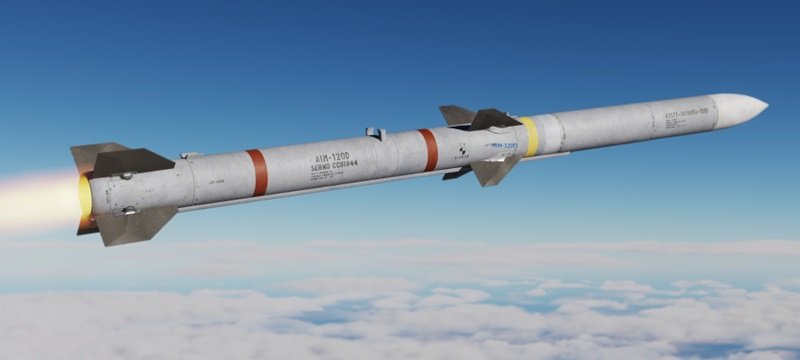
- Pakistan added to U.S. AMRAAM missile contract in $41.6 million modification, boosting F-16 capabilities.
- In May, Pakistani pilots downed 7 Indian jets using Chinese technology, shocking India.
- The AMRAAM sale symbolizes growing U.S.-Pakistan cooperation under Trump.
- Pakistan now possesses layered air defense superiority, eroding India’s conventional edge.
A day after Pakistan’s military leadership vowed to give India a “befitting response” to any misadventure, another announcement has rattled the strategic landscape of South Asia. Washington has quietly added Pakistan to the list of international buyers for its cutting-edge Advanced Medium-Range Air-to-Air Missiles (AMRAAM), manufactured by U.S. defense giant Raytheon.
The deal, disclosed in a U.S. Department of Defense press release dated September 30, modifies an earlier $2.47 billion contract—expanding its cumulative value to $2.5 billion—and includes Pakistan among recipients of the new C8 and D3 AMRAAM variants. Production will be completed by 2030 in Tucson, Arizona.
The AMRAAM missiles will be mounted on Pakistan’s fleet of F-16 Falcons—jets that have long formed the backbone of the Pakistan Air Force (PAF). The same class of missiles famously demonstrated their lethality in February 2019 during Operation Swift Retort, when the PAF shot down two Indian Air Force (IAF) jets that had intruded into Pakistani airspace over Kashmir.
For Islamabad, this new acquisition marks more than just a defense upgrade—it is a geopolitical statement, one that underscores both the resilience of Pakistan’s defense program and its reemerging rapport with Washington.
A reminder from May: Seven Indian jets downed
India does not need reminding of Pakistan’s aerial prowess. In May this year, seven IAF fighter jets were shot out of the skies in a confrontation that showcased the seamless fusion of Pakistani skill and Chinese technology. The incident, celebrated by the PAF and acknowledged in a statement by Director-General of Inter-Services Public Relations (DG ISPR), was nothing short of a seismic moment in South Asia’s military balance.
Utilizing advanced Chinese radar and missile guidance systems integrated into JF-17 Thunder jets, Pakistani pilots—described by observers as fearless and razor-sharp—executed precision strikes that left India stunned. For New Delhi, it was a humbling reminder that air dominance in the subcontinent is far from guaranteed. For Pakistan, it was a demonstration that its indigenous-Chinese platforms had matured into a formidable deterrent.
Now, with the latest AMRAAM acquisition, Pakistan’s aerial defense has reached what many are calling its “climax”—a point where advanced U.S. missiles complement Chinese technology, ensuring multi-layered superiority.
Why AMRAAM matters
The AMRAAM missile is considered the gold standard in modern air-to-air combat. With a range exceeding 160 kilometers, active radar homing, and “fire-and-forget” capability, it allows pilots to lock onto enemy aircraft and disengage even before visual contact.
“AMRAAM is the defining weapon of beyond-visual-range warfare,” said a retired Western defense official familiar with South Asia’s military dynamics. “The fact that Pakistan is being equipped with the latest variants means its F-16s remain at the cutting edge of aerial combat—this will send shivers through India’s strategic planners.”
Pakistan previously purchased 700 AMRAAMs in 2007, in what was then the largest international order for the weapon. But the current deal is different: it comes at a time when Indo-U.S. defense ties are also expanding, yet Washington has chosen to strengthen Islamabad’s arsenal as well—signaling balance.
U.S.-Pakistan ties in new light
The AMRAAM sale is not occurring in a vacuum. Since the inauguration of President Donald Trump in January, Islamabad and Washington have experienced an unexpected thaw.
From crediting Pakistan with preventing a potential nuclear confrontation in South Asia, to acknowledging its counterterror cooperation in disrupting Islamic State Khorasan networks, the Trump White House has consistently engaged Islamabad.
In economic terms too, the relationship is flourishing. Pakistan has secured tariff concessions, attracted U.S. investor interest in its oil and mineral reserves, and opened its financial sector to digital assets. What once appeared a transactional alliance is morphing into a deeper partnership.
The AMRAAM sale underscores that shift. It not only enhances Pakistan’s military capacity but also signals Washington’s recognition of Islamabad as a central actor in South Asia’s stability.
India’s shock and unease
For New Delhi, this development is yet another strategic jolt. Indian defense analysts, already reeling from the humiliation of May when seven IAF jets were downed, now face the prospect of confronting a Pakistani air force equipped with both cutting-edge Chinese systems and advanced American missiles.
India has traditionally relied on its size and numerical superiority, but Pakistan’s combination of pilot training, multi-source technology, and geopolitical agility has eroded that advantage.
“India will not admit it publicly, but this is a nightmare scenario,” a senior South Asia analyst told The Islamabad Telegraph. “Pakistan can now engage Indian jets at multiple ranges—long-range with AMRAAM, medium with Chinese systems, and close combat with its own indigenous upgrades. This is layered deterrence at its finest.”
The defense climax
The symbolism is hard to miss. In the same year that Pakistan humbled India with Chinese-backed victories, it has now secured U.S.-made missiles that ensure its F-16 fleet remains formidable well into the next decade.
Pakistan’s defense strategy—once mocked as reliant on borrowed technology—has matured into a diversified, multi-polar arsenal drawing on both Beijing and Washington. For a nation that has faced existential threats since its inception, this moment marks a climax in its defense doctrine.
The message to India is unambiguous: any aggression will be met with a response not only befitting, but overwhelming.