


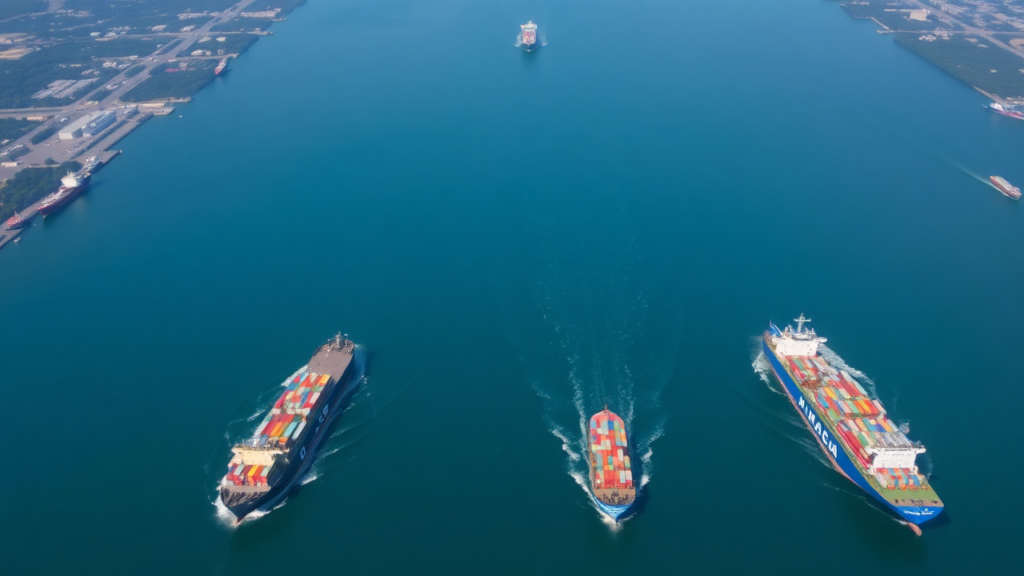
- Panama firmly rejects U.S. claims that the canal is under Chinese control, asserting full national sovereignty.
- Trump’s rhetoric intensifies, with calls to “take back” the canal despite international treaties.
- No evidence of Chinese military activity exists in Panama, challenging the administration’s narrative.
- A U.S. intervention could spark regional instability, economic fallout, and geopolitical tensions.
As Secretary of State Marco Rubio embarks on his inaugural trip as the United States’ top diplomat, his first stop—Panama—could prove to be the most contentious on his itinerary. The backdrop to this tension is President Donald Trump’s repeated and controversial assertions that the United States must regain control over the Panama Canal. This rhetoric has not only drawn sharp rebukes from Panama but has also placed Rubio in a delicate diplomatic position.
Panama’s Firm Stance on Sovereignty
Panama’s President José Raúl Mulino made his country’s position unmistakably clear just days ahead of his scheduled meeting with Rubio. “Panamanian sovereignty over the canal is clear. There is no discussion on this issue. The soul of a country is not up for discussion,” he stated firmly.
Mulino’s response comes in direct reaction to Trump’s recent comments, including his inaugural speech, in which he mentioned Panama six times—more than any other foreign country. Trump and his allies have escalated claims that the canal is under de facto Chinese control, using this argument to justify calls for the United States to “take back” the waterway.
Trump’s Plans for Greenland and Panama Canal Risk Global Fallout
But is the Panama Canal truly under foreign influence? And does the U.S. have any legal or strategic justification for reclaiming it? A closer look at the facts reveals a far more complex reality.
The Allegations: Is the Panama Canal Under Chinese Control?
Since the beginning of his second term, Trump has intensified his narrative about the Panama Canal, framing its handover in 1977 under the Carter administration as a “bad deal.” He has claimed—without evidence—that China has effectively taken control of the canal and is using it as a strategic foothold in the Western Hemisphere.
Trump’s Plans for Greenland and Panama Canal Risk Global Fallout
On his Truth Social platform, Trump even alleged that Chinese troops have been deployed to the canal and that “Panama is, with great speed, attempting to take down the 64% of signs which are written in Chinese.” This claim has been widely debunked, as the so-called “Zone” Trump refers to—once an American-controlled enclave—ceased to exist in 1979.
The reality is that since 2000, the Panama Canal has been operated by the Panama Canal Authority (ACP), an autonomous entity overseen by an 11-member board appointed by the Panamanian government. The vast majority of the canal’s employees are Panamanian nationals, and all ships transiting the canal must be piloted by local captains trained and employed by the ACP.
While concerns about growing Chinese investment in Latin America are legitimate, there is no credible evidence of a Chinese military presence in Panama. When pressed on the issue, Mulino confirmed that the U.S. government has yet to provide any proof to substantiate its claims of Chinese control.
The ‘Foreign Power’ Narrative: What Role Does China Play in the Panama Canal?
The Trump administration’s claims largely stem from the fact that Hutchison Ports—a subsidiary of the Hong Kong-based conglomerate CK Hutchison Holdings—operates terminals at both ends of the canal. However, Hutchison Ports is far from a secretive Chinese military entity. It is a publicly traded company that operates 53 ports in 24 countries, including in U.S. allied nations like the United Kingdom, Australia, and Canada.
Does a ‘foreign power’ threaten the Panama Canal? Here’s what you need to know
Moreover, Hutchison’s role in Panama is limited to managing cargo terminals and providing refueling services. It does not control canal operations, nor does it dictate which ships can pass through. Several other international firms also operate ports near the canal, and Panama’s government retains full authority over who is awarded these contracts.
Nevertheless, given Trump’s accusations, Panama has announced an audit of Hutchison’s Panama Ports. The company has welcomed the scrutiny, even extending an invitation to Secretary of State Rubio to visit its terminals. The State Department has not yet confirmed whether Rubio will accept this invitation.
Can the U.S. Legally Reclaim the Panama Canal?
Under the 1977 Torrijos-Carter Treaties, the U.S. agreed to transfer the canal to Panama with the understanding that it would remain neutral and open to international trade. While the treaty does allow U.S. intervention if the canal’s operations are disrupted by internal conflict or foreign aggression, there is no indication that such circumstances exist today.
Since Panama assumed full control, the canal has undergone a $5 billion expansion, increasing its cargo capacity beyond what was possible during U.S. administration. In 2022 alone, over 14,000 ships transited the waterway, reinforcing its status as a critical artery for global trade.
Attempting to unilaterally seize the canal would violate international law and erode U.S. credibility among allies. It would also contradict previous U.S. assurances that Panama’s sovereignty over the canal is respected, a principle long upheld by multiple administrations.
The Strategic and Economic Implications of U.S. Intervention
Even if the U.S. attempted to forcibly retake the canal, the consequences would be severe. Panama, despite lacking a military since 1989, has a fiercely nationalistic population that views the canal as a symbol of sovereignty. Any military action could provoke widespread resistance and destabilize the region.
Additionally, such an aggressive move would disrupt key U.S. priorities. One of these is migration control. The Darién Gap—a dense jungle between Colombia and Panama—serves as a major transit point for migrants heading toward the United States. Trump had previously secured an agreement with Mulino to crack down on northbound migration, but a U.S. incursion into Panama would almost certainly lead to retaliation, potentially allowing thousands more migrants to move freely toward the U.S. border.
The economic repercussions would be equally significant. About 40% of U.S. container traffic passes through the Panama Canal. Disrupting its operations would trigger price hikes on a wide range of consumer goods, from automobiles to electronics. Additionally, with over 25,000 U.S. citizens residing in Panama, any military action could place American lives in danger.
Global Perception and the Geopolitical Fallout
Beyond economic and regional consequences, a U.S. attempt to reclaim the canal would be a propaganda gift to geopolitical rivals like Russia and China. Both nations have framed the United States as an imperialist power, and such an intervention would reinforce that narrative.
In Latin America, where historical U.S. interventions remain a sensitive topic, any military action in Panama would further strain relationships. Countries that have cooperated with U.S. efforts on trade and security might reconsider their alliances, potentially pushing them closer to Beijing or Moscow.
Rubio’s Challenge: Balancing Trump’s Rhetoric with Diplomatic Realities
For Secretary of State Rubio, navigating this controversy presents a significant challenge. While he must demonstrate loyalty to the Trump administration, he also faces the responsibility of maintaining diplomatic stability. His visit to Panama will be closely scrutinized, not only for whether he endorses Trump’s claims but also for how he handles the inevitable tensions with Panamanian leadership.
Rubio’s confirmation hearings already reflected his alignment with Trump’s national security concerns. However, he may find himself in a position where he must moderate the administration’s rhetoric to avoid deepening the crisis. How he approaches this delicate situation will set the tone for U.S.-Panama relations moving forward.
Conclusion: High Costs for Trump’s Panama Canal Ambitions
While Trump’s desire to reclaim the Panama Canal might resonate with his political base, the reality is far more nuanced. Panama has full control over the canal, and there is no credible evidence of Chinese military activity. Any U.S. intervention would not only violate international agreements but also destabilize regional security, harm the U.S. economy, and alienate key allies.
Rubio’s trip will be a defining moment in this unfolding diplomatic dispute. Whether he chooses to echo Trump’s hardline stance or adopts a more pragmatic approach remains to be seen. But one thing is certain: any move to take back the Panama Canal would come at a far higher cost than the Trump administration appears to have calculated.