


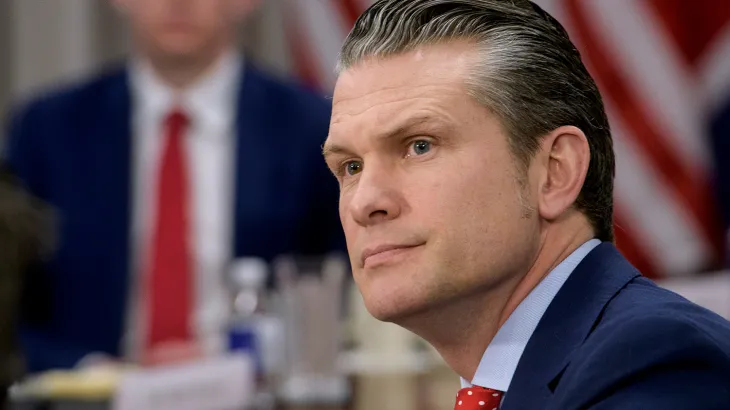
- Defense Secretary Pete Hegseth accidentally leaked sensitive Yemen strike plans via Signal chats including civilians and a journalist.
- The operation, Eagle Silence, involved F-18s, drones, and Tomahawks and was scheduled for a precise 3:00 a.m. strike on Houthi targets.
- The leak led to delays, Pentagon chaos, firings, and a formal investigation by the Department of Defense Inspector General.
- The scandal damaged U.S. strategic credibility and raised legal, security, and leadership concerns inside the Pentagon.
The U.S. military’s precision strike campaign in Yemen—an operation targeting Houthi rebels linked to attacks on Red Sea shipping—was meant to be a tightly held secret, executed with surgical coordination and strategic ambiguity. Instead, operational details about the planned strikes, including launch times and platforms, ended up not just in the inboxes of top Pentagon brass, but in the Signal messaging apps of a handful of civilians—some without security clearances.
At the center of this stunning breach is Defense Secretary Pete Hegseth, whose use of private encrypted chat groups has triggered outrage in Congress, internal chaos at the Pentagon, and now a formal investigation by the Department of Defense Inspector General.
What was once a high-level military strategy has become a cautionary tale of careless communication, internal leaks, and a growing credibility crisis at the helm of America’s national security apparatus.
The Pentagon Operation: Yemen in the Crosshairs
In early 2025, as Houthi militants escalated attacks on international vessels traversing the Bab el-Mandeb Strait—a critical global shipping route—the U.S. Department of Defense finalized a plan to strike back. The operation involved a multi-platform aerial assault designed to degrade the Houthi drone and missile capabilities that were being used to threaten Red Sea navigation.
According to leaked details, the Pentagon prepared for a series of synchronized airstrikes involving:
-
F/A-18 Super Hornets launched from the USS Eisenhower strike group positioned in the Arabian Sea.
-
MQ-9 Reaper drones equipped with precision-guided Hellfire missiles targeting command-and-control nodes in Houthi-held territories.
-
Tomahawk cruise missiles fired from U.S. Navy destroyers in the Red Sea, aimed at hardened underground bunkers and weapons storage facilities.
-
A cyber component, aimed at disrupting Houthi communications shortly before the kinetic strikes commenced.
The plan was to hit at exactly 3:00 a.m. Sanaa time—when targets would be least active but still populated enough to demonstrate deterrence. The operation, dubbed Eagle Silence, was scheduled for early March but delayed due to weather and strategic recalibration.
This was the plan—until it was accidentally shared.
The Signal Leak: A National Security Blunder
According to multiple reports from The Washington Post, Axios, and Politico, Defense Secretary Hegseth shared highly sensitive details of Eagle Silence in a private Signal messaging group called “Defense Team Huddle.” The group chat reportedly included his wife, brother, personal attorney, and at least two former Trump administration officials. None of them had active security clearances.
Hegseth’s messages, sent days before the strike window, included exact timing, platform deployment details, and even live updates about U.S. aircraft positioning.
In one Signal message, Hegseth reportedly typed:
“Air assets spinning up now. F-18s and MQ-9s will be airborne within 90 mins. Tomahawks greenlit. Sanaa will feel the sting tonight.”
If that wasn’t enough, it was later revealed that Hegseth had also shared similar details in a second Signal group that inadvertently included journalist Jeffrey Goldberg, editor-in-chief of The Atlantic. Goldberg, assuming the messages were off-the-record but newsworthy, eventually published portions of the chat in an exposé on Pentagon dysfunction—blowing the lid off the operation entirely.
Pentagon Fallout: Firings, Departures, and Denials
The implications of the leak were immediate.
-
The strike was delayed as Pentagon leadership feared that operational security had been compromised.
-
Three senior Pentagon officials—Dan Caldwell, Colin Carroll, and Darin Selnick—were abruptly removed or resigned amid a broader internal shakeup. Though not directly tied to the leak, their roles in adjacent discussions made them collateral in a growing scandal.
-
Joe Kasper, Hegseth’s Chief of Staff, who was leading the internal leak investigation, also stepped down amid the turmoil.
Meanwhile, Hegseth insisted no classified information was shared and accused “disgruntled former staffers” of mischaracterizing his actions. In a fiery press conference, he declared:
“No classified material was ever transmitted outside secure channels. The narrative being pushed is malicious and political.”
But critics aren’t buying it. Former Pentagon spokesperson John Ullyot, a Trump-era appointee, blasted the current leadership as “chaotic, paranoid, and dangerously unprofessional.”
“You don’t put live operational details into Signal chats—especially ones that include journalists and family members,” Ullyot told Politico. “This isn’t just bad judgment. This is a breach of trust with our troops in the field.”
Security and Legal Implications
The use of Signal, while encrypted end-to-end, is not authorized for transmitting Controlled Unclassified Information (CUI) or classified military data. While the Defense Secretary has wide latitude in internal communications, the inclusion of unauthorized recipients may have violated the Federal Records Act and the Espionage Act, depending on what exact material was shared.
Former Pentagon official warns department’s dysfunction could topple Hegseth
Senator Chuck Schumer (D-NY), the Senate Democratic Leader, called for Hegseth’s immediate resignation, saying:
“This is a disgrace. Our servicemembers’ lives were put at risk by a man too casual with war plans and too arrogant to admit fault.”
Even some Republicans are uneasy. Senator Mike Rounds (R-SD), a member of the Senate Armed Services Committee, said the revelations warrant a “full and fair investigation” and that “no one is above protocol when American lives are on the line.”
The Department of Defense Inspector General has now launched a formal inquiry.
Strategic Consequences: A Damaged Deterrent
Beyond bureaucratic infighting and legal jeopardy, the strategic consequences of the leak are grave.
-
Houthis may have adjusted their positions, hardened their facilities, or gone underground, rendering the planned strikes less effective.
-
U.S. allies in the Gulf—especially Saudi Arabia and the UAE—have reportedly expressed concern over Washington’s ability to safeguard coalition plans.
-
Iran, which backs the Houthis, may have gained early intelligence on the scope and tactics of U.S. force projection in the region.
The leak eroded the very core of what the strike was supposed to achieve: surprise and deterrence.
What Comes Next?
Hegseth’s 100th day in office arrives on May 4, but he may not make it that far. With bipartisan pressure mounting and the Defense Department in crisis mode, his future is uncertain.
The U.S. Strikes on Yemen’s Houthis: A New Flashpoint in the Middle East?
The Biden administration faces a political dilemma: fire Hegseth and face the wrath of Trump-aligned conservatives, or stand by him and risk deeper damage to the Pentagon’s credibility.
For now, Eagle Silence has become an ironic moniker. What was supposed to be a silent and swift strike has devolved into a loud, public scandal—with echoes likely to reverberate through Washington for months.