


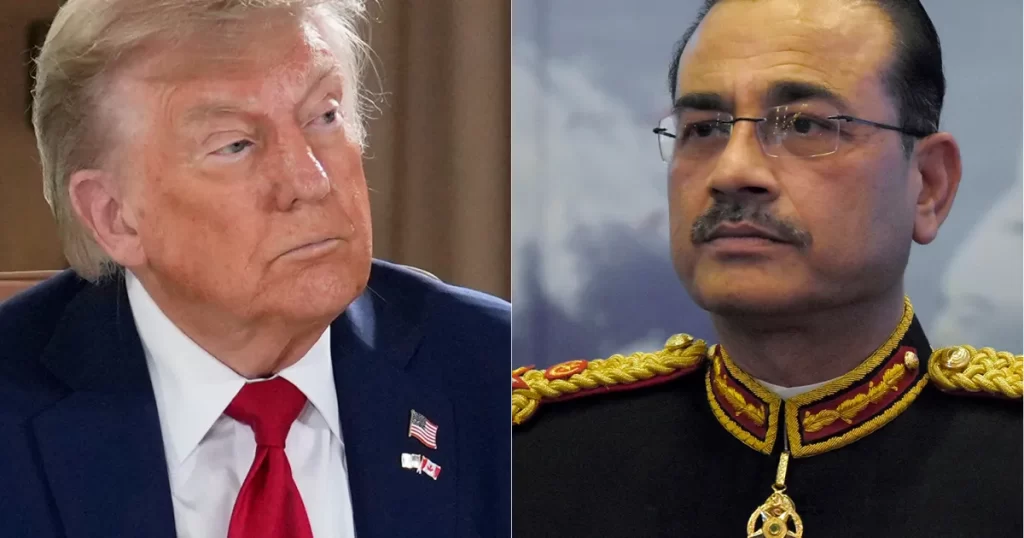
- Pentagon’s command shake-up could reduce CENTCOM’s influence over Pakistan, Afghanistan, and the Middle East
- Trump national security strategy prioritizes the Western Hemisphere over South Asia and Europe
- Reduced U.S. regional presence may increase India’s intelligence and security role
- Pakistan faces both strategic autonomy opportunities and new hybrid security challenges
The Washington Post’s front-page revelation about a sweeping Pentagon reorganization under U.S. Defense Secretary Pete Hegseth marks one of the most consequential shifts in American military posture since the post-9/11 era. While framed in Washington as efficiency-driven reform, the proposed downgrading of U.S. Central Command (CENTCOM) carries deep strategic consequences for Pakistan, South Asia, and the wider Middle East security architecture.
According to the report, senior Pentagon officials are preparing a plan to consolidate several combatant commands, reducing their number from 11 to eight. CENTCOM, European Command (EUCOM), and Africa Command (AFRICOM) would be placed under a new umbrella known as U.S. International Command, while Northern and Southern Commands would merge into a powerful U.S. Americas Command. The objective: cut four-star generals, speed decision-making, and shift U.S. military focus closer to home.
Inside Trump’s Pentagon Purge: How a New Media Policy Sparked a Historic Press Revolt
For Pakistan, the downgrading of CENTCOM is not a technical adjustment — it is a geopolitical inflection point.
CENTCOM has defined U.S. military engagement with Pakistan, Afghanistan, Iran, and the Gulf for more than two decades. From the Afghanistan war to drone campaigns, counterterrorism pressure, and crisis diplomacy, CENTCOM has functioned as Washington’s primary lever in the region. Its reduced prominence suggests that the United States is deliberately stepping back from sustained military oversight of South and West Asia.
ALSO READ” Ukraine War Peace Talks Enter New Phase as Trump Officials Welcome Zelensky’s NATO Withdrawal Offer
This shift aligns closely with President Donald Trump’s second-term national security doctrine, which openly rejects the idea of the U.S. acting as a global guarantor. The administration’s emphasis on the Western Hemisphere, homeland defense, and border-centric security indicates a strategic contraction — not isolationism, but prioritization.
For Pakistan’s national security planners, this creates a dual-edged reality.
On one hand, diminished CENTCOM influence may ease persistent U.S. pressure on Pakistan over Afghanistan-related narratives, counterterror financing allegations, and regional compliance demands. Islamabad could gain greater strategic autonomy to manage relations with Kabul, Tehran, Beijing, and Gulf capitals without constant American command-level oversight.
ALSO READ: Pentagon plan calls for major power shifts within U.S. military
On the other hand, reduced U.S. presence does not equal reduced U.S. interest. Intelligence-led operations, sanctions mechanisms, cyber surveillance, and proxy partnerships are likely to replace overt military command structures. India — increasingly central to Washington’s Indo-Pacific strategy — may be encouraged to assume a larger regional security role, particularly in intelligence sharing, maritime monitoring, and narrative warfare.
From a crisis-stability perspective, this evolution is risky. Even Pentagon officials, as quoted by the Washington Post, acknowledge that excessive consolidation erodes “regional fingertip feel.” For a nuclearized region like South Asia, diminished situational awareness in Washington increases the risk of misinterpretation during Pakistan-India escalations or border crises involving Afghanistan and Iran.
Congressional pushback in the United States further complicates the picture. Lawmakers have demanded a detailed assessment of costs and alliance impacts before approving funding, signaling unease within America’s own security establishment. This internal friction may slow implementation — but it will not reverse the strategic trajectory.
The Islamabad Telegraph assesses that over the next five years, U.S. engagement in Pakistan’s neighborhood will become more episodic, intelligence-driven, and crisis-specific rather than command-based. Drone warfare, covert diplomacy, and selective sanctions will replace sustained regional command leadership.
For Pakistan, the imperative is clear: strengthen regional security coordination, reduce dependency on U.S.-centric command frameworks, and prepare for a security environment shaped less by American generals and more by shifting power balances.
This Pentagon overhaul is not simply about restructuring commands. It is about redefining where America chooses to lead — and where it quietly steps back. Pakistan must read this moment not with complacency, but with strategic foresight.