


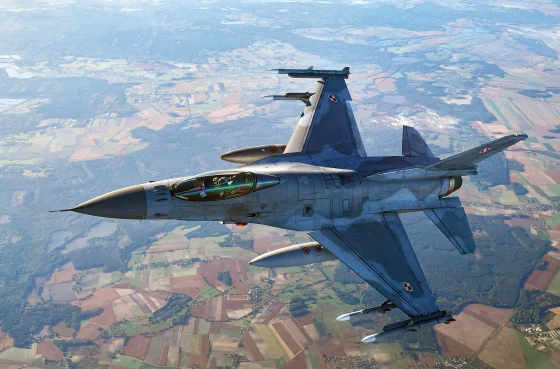
- Poland shot down Russian drones, the first direct NATO engagement since the Ukraine war began.
- President Duda’s recent meeting with Donald Trump set the stage for closer U.S.–Polish defense cooperation.
- The incident raises the risk of NATO–Russia escalation while strengthening Ukraine’s case for regional air defense support.
- Trump is weighing “Phase Two” sanctions on Moscow, signaling a tougher stance after failed peace overtures.
For the first time since Russia launched its full-scale invasion of Ukraine in 2022, a NATO member has shot down Russian drones.
Poland’s military confirmed that multiple drones violated its airspace during Moscow’s overnight barrage against Ukraine, prompting a dramatic scramble of warplanes and the activation of Dutch F-35 fighters. Warsaw has called it an “act of aggression”—and it is nothing short of that.
This moment matters. Not only has the war spilled over into NATO territory again, but Poland’s decision to neutralize Russian drones represents a dangerous shift in Europe’s security environment. It is no longer just Ukraine under attack. Moscow is now openly testing NATO’s red lines.
Netanyahu’s Qatar Strike and Trump’s Dilemma: What It Means for the Middle East
The incursions come at a time of heightened political alignment between Poland and Washington. Just last week, Polish President Andrzej Duda met with Donald Trump at Mar-a-Lago, urging a stronger U.S.-NATO stance on Russia and pressing for greater missile defense cooperation. That meeting, overshadowed at the time by Trump’s disputes with European allies over burden-sharing, now looks prophetic. Poland warned that NATO could not afford complacency—and within days, Russian drones proved them right.
What the Drone Incident Signals for the Ukraine War
Ukraine’s Foreign Minister Andrii Sybiha reacted swiftly, stressing that the incident underscores the need for neighboring countries to intercept Russian missiles and drones before they reach Ukrainian cities. In his words: “Russian drones flying into Poland during the massive attack on Ukraine show that Putin’s sense of impunity keeps growing.”
Indeed, impunity is the key word. For months, Moscow has escalated its drone and missile warfare, hitting Ukrainian cities, energy infrastructure, and border regions with impunity. By repeatedly breaching NATO airspace, Putin is testing whether the alliance will enforce its Article 5 commitments—or hesitate out of fear of escalation.
Poland’s downing of drones breaks a long-standing taboo. Until now, NATO countries bordering Ukraine—Romania, Slovakia, Hungary, and Poland—avoided directly engaging Russian objects, citing escalation risks. That restraint has ended. Warsaw’s intervention sets a precedent: NATO will shoot back when directly threatened.
But herein lies the risk: the Kremlin could exploit this precedent to escalate further. Russia has consistently denied intentions of expanding the war to NATO, dismissing Western fears as “nonsense.” Yet its drones keep flying over alliance territory, and each violation chips away at NATO’s deterrence credibility. If left unanswered, Putin may conclude he has free rein to pressure NATO’s eastern flank.
Trump, Duda, and the Shifting U.S. Posture
The timing of Duda’s meeting with Trump cannot be overlooked. According to Polish and U.S. diplomatic sources, the two leaders discussed a potential U.S.–Poland defense cooperation package, including expanded deployment of American Patriot systems and the integration of Polish radar networks with U.S. intelligence assets. Trump, increasingly frustrated with Vladimir Putin’s refusal to compromise, reportedly assured Duda that Washington would back Poland in case of Russian escalation.
This represents a subtle but significant pivot for Trump. After months of dangling “peace talks” with Moscow, the former president is now moving toward what he calls “Phase Two” of sanctions—targeting Russian oil exports and financial networks more aggressively. The drone crisis may accelerate that timeline, giving Trump political cover to push for joint U.S.-EU sanctions that were under discussion in Washington this week.
For Poland, the symbolism of the Mar-a-Lago meeting is clear: Warsaw sees Trump, not Brussels, as the decisive partner for its security. The Polish government has been openly skeptical of slow-moving EU initiatives and prefers bilateral security guarantees backed by U.S. power. With the drone incident fresh in memory, this transatlantic axis may tighten further.
The Risks Ahead
Still, the crisis carries enormous risks. If Poland formally labels the drone incursions an “armed attack,” NATO could be obligated to consider Article 5 consultations. That would place Trump in a defining position—would he escalate against Moscow to defend Poland, or seek to contain the crisis through diplomacy?
The danger of miscalculation is real. Russian drones crashing inside Poland, even accidentally, could trigger retaliatory strikes. Moscow’s recent military drills with Belarus, near Poland’s eastern border, add to the volatility. Lithuania and Latvia have already announced strengthened defenses. One misstep could set Europe on a collision course with direct Russia–NATO confrontation.
A Turning Point in the War?
The Ukraine war, entering its fourth year, has long been at risk of becoming a frozen conflict with periodic bursts of violence. The Polish drone shootdown changes that calculus. For the first time, NATO has crossed from deterrence into limited engagement, however defensive. This alone shifts the strategic equation: Russia can no longer assume NATO will simply absorb minor violations.
For Ukraine, it could be a lifeline. If NATO countries begin intercepting drones and missiles before they reach Ukrainian airspace, Kyiv gains breathing room for its battered air defenses. For Trump, it offers a chance to redefine his Russia policy as one of strength rather than concession. For Putin, it is a warning—NATO’s patience has limits, and Poland has just redrawn them.
The drones that fell over Poland may not have caused casualties, but they may well mark a turning point in the war. From Warsaw to Washington, the message is clear: this is no longer just Ukraine’s fight. It is Europe’s fight. It is NATO’s fight. And increasingly, it is Trump’s fight too.