


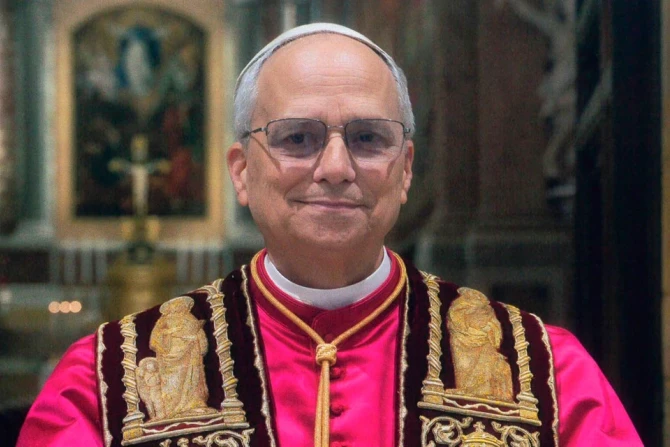
- Putin and Trump agree on the Vatican as a potential venue for Russia-Ukraine peace talks, with Leo XIV seen as a neutral mediator.
- Pope Leo XIV’s early papacy is defined by a proactive stance on peace, with prior statements condemning Russia’s invasion as “imperial.”
- Italy confirms safe passage for Russian diplomats under the Lateran Treaty, sidestepping EU sanctions for Vatican-bound missions.
- Challenges remain over logistics, religious divides, and Europe’s skepticism, yet Leo’s moral authority is giving renewed hope to diplomacy.
VATICAN CITY — The world is watching with cautious hope as Pope Leo XIV, the newly elected American pontiff, finds himself thrust into an unexpected — yet historically resonant — role: international peacemaker. Only two weeks into his papacy, Leo XIV is being floated by world leaders as a possible broker between Russia and Ukraine, rekindling memories of the Holy See’s Cold War diplomacy. The Vatican’s neutrality, moral authority, and centuries-old diplomatic channels may soon be tested in the most significant European conflict since World War II.
At the heart of this effort lies a crucial and quietly consequential conversation: a Monday evening phone call between U.S. President Donald Trump and Russian President Vladimir Putin.
Trump the Peacemaker: How One Call with Putin May End the Ukraine War
Core Points of the Trump-Putin Call:
-
Mutual Endorsement of Vatican Talks:
Trump proposed Pope Leo XIV as a potential neutral mediator. Putin did not object to the Vatican’s involvement, suggesting a tentative openness to exploring the idea. -
Concerns Over European Interference:
Putin reportedly voiced skepticism about European nations “arming Ukraine under the guise of peace talks.” Trump reassured Putin that the Vatican could offer a forum free of strategic manipulation by the West. -
Safe Passage Guarantee:
Trump informed Putin that he had spoken with Italian Prime Minister Giorgia Meloni, who assured him that Italy would honor the Lateran Treaty and allow Russian delegates safe access to the Vatican, even under EU sanctions. -
Personal Trust in the Pope:
Trump emphasized his personal rapport with Pope Leo XIV and claimed the pontiff is “sincerely committed to ending the war, not scoring political points.” -
Informal Consensus on a Symbolic Setting:
Both leaders agreed that the Vatican, as a sacred and politically neutral space, could shift the tone of negotiations from confrontational to conciliatory — a “reset” stage before formal talks resume.
A Pontiff Positioned for Peace
Since his election, Leo XIV has made peacemaking a central theme of his young papacy. He has invoked the suffering of Ukrainians in nearly every public address, called for the return of abducted children, and offered spiritual support to those enduring war. But now, the stakes have risen dramatically: he may soon be asked to convert his moral suasion into real diplomacy.
READ MORE:Trump and Putin Agree to Talks as War Rages On: Is a Negotiated Peace in Ukraine Finally Within Reach?
“The Holy See is available so that enemies can meet and look each other in the eye,” Leo said during a recent audience with Eastern Christian churches — a message that now echoes as both invitation and challenge.
President Trump, during remarks following his call with Putin, praised Leo’s openness to hosting talks. “I think it would be great to have it at the Vatican… maybe that could help some of that anger,” he told reporters. Shortly afterward, Meloni confirmed via Facebook that she had personally contacted the pontiff and received his assurance that the Vatican is prepared to host negotiations.
Challenges Ahead: Political, Logistical, Symbolic
Despite early enthusiasm, several practical and political hurdles stand in the way of Vatican-hosted peace talks.
1. Logistical Obstructions:
EU sanctions currently complicate travel for senior Russian officials. Though the Lateran Treaty of 1929 ensures Italy must allow access to Vatican diplomatic missions, doubts remain over whether high-level figures like Putin would be protected. The precedent of sanctioned Russian Culture Minister Olga Lyubimova attending Pope Francis’s funeral was seen as a successful test — but Putin is no culture minister.
2. European Cynicism:
European leaders have long advocated for a ceasefire before negotiations — a strategy Moscow rejects. Russia’s Foreign Minister Sergei Lavrov recently dismissed calls for halting military operations as a Western ploy to “calmly arm Ukraine.” Vatican mediation may be viewed with suspicion by EU capitals unless Leo secures clearer commitments from both sides.
3. Religious and Cultural Gaps:
Unlike previous Vatican-brokered peace processes — such as the successful Argentina-Chile mediation in the 1980s — neither Ukraine nor Russia is predominantly Catholic. The Orthodox-Catholic divide complicates the Vatican’s moral leverage, especially with the Russian Orthodox Church closely aligned with Putin’s war narrative.
An Emerging Papal Doctrine
Still, Leo appears undeterred. His early diplomatic posture is more assertive than his predecessor’s. While Francis often hedged his words to maintain Vatican neutrality, Leo — formerly a bishop in Peru — has called the war an “imperial invasion.” His first official meeting was with Ukrainian President Volodymyr Zelensky, and his Sunday address after the inauguration was unequivocal: “May everything possible be done to reach an authentic, just and lasting peace.”
READ MORE:Could Pope Leo mediate between Russia and Ukraine? Trump thinks so.
For Kyiv, Leo’s moral clarity is a welcome change. Andrii Yurash, Ukraine’s ambassador to the Holy See, confirmed that Ukraine continues to view the Vatican as a viable mediator. “If there was a request from both sides, Vatican City will be used as a place for the meetings,” Yurash said.
Zelensky himself has named the Vatican — alongside Switzerland and Turkey — as a potential venue for future negotiations.
A Diplomatic Gamble — or Strategic Brilliance?
While critics warn of the risks of aligning Vatican mediation with leaders like Trump and Putin, others see strategic opportunity.
“The Vatican’s involvement could be a really risky thing,” said Massimo Faggioli, a theologian at Villanova University. “But if they do this, it’s in hope of being able to get something on Ukraine’s behalf, for Europe, for the entire world.”
Indeed, Pope Leo is already being approached by other nations. Colombian President Gustavo Petro recently asked the Vatican to mediate talks between his government and the ELN rebel group — a revival of the Church’s role in Colombia’s peace process with FARC.
Back-channel diplomacy is also alive. Under Francis, the Vatican quietly assisted in prisoner exchanges and helped facilitate the return of Ukrainian children taken by Russian forces. Cardinal Matteo Zuppi remains the Vatican’s point man in Kyiv and Moscow, trusted by both sides for his discretion and spiritual authority.
Even critics who once derided the Vatican’s “neutrality” are changing their tune. A senior Ukrainian official admitted that while Vatican efforts under Francis appeared muted, “they were doing things, just quietly.”
Conclusion: Sacred Ground, Secular Stakes
The idea of the Vatican mediating between nuclear-armed adversaries seems both improbable and inspired. Yet in a world where conventional diplomacy has failed to end the war in Ukraine, unconventional actors like Leo XIV might offer the reset both sides secretly desire.
The Trump-Putin call has opened a narrow window. Whether Leo can step through it — and whether he should — is a question for the coming weeks. What is certain is that Pope Leo XIV, barely two weeks into his papacy, now stands at the edge of history’s stage.
Will he become the peacemaker of our time — or merely a well-meaning symbol in a war too vast for holy intentions?
Time, and faith, will tell.