


- Putin proposes a one-year extension of New START, capping nuclear warheads at 1,550 each.
- Washington cautious; Trump wants a broader arms deal involving China.
- Analysts call Moscow’s offer a “positive signal” for arms control.
- Ukraine war and U.S. missile defense plans remain major obstacles.
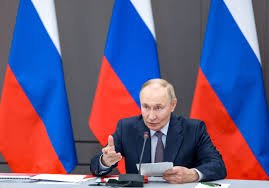
Russian President Vladimir Putin on Monday extended an olive branch to Washington, offering U.S. President Donald Trump a one-year extension of the last surviving nuclear arms control treaty between the world’s two largest atomic powers. The proposal, made public during a meeting of Russia’s Security Council, aims to preserve the New START treaty beyond its February 2026 expiration and avert an unchecked nuclear buildup.
The New START agreement, signed in 2010, caps deployed nuclear warheads at 1,550 for both Russia and the United States. Without renewal or replacement, experts warn both sides could rapidly exceed those limits, reviving Cold War-era stockpiling at a time when East-West tensions are already at their highest in decades.
A Bid for Dialogue Amid Ukraine Tensions
Putin framed the offer as a goodwill gesture in the interest of global non-proliferation. “Russia is prepared to continue adhering to the central numerical limits under the New START Treaty for one year after February 5, 2026,” he said. “Subsequently, based on an analysis of the situation, we will make a decision on whether to maintain these voluntary, self-imposed restrictions.”
The caveat was clear: Moscow expects Washington to reciprocate. “This measure will only be viable if the United States acts in a similar manner, and does not take steps that undermine or violate the existing balance of deterrence capabilities,” Putin warned.
The Russian president’s move comes as Trump continues pressing Moscow to scale down its war in Ukraine, while Kyiv urges Washington to impose harsher sanctions. For Putin, the extension proposal offers a chance to reset dialogue with Washington while deflecting criticism that Moscow is escalating nuclear risks.
Washington’s Silence, Beijing’s Refusal
The U.S. State Department responded cautiously, referring questions to the White House. “The President will decide the path forward on nuclear arms control, which he will clarify on his own timeline,” a spokesperson said. Trump has expressed interest in negotiating a broader arms deal that would also bring China into the fold. Beijing, however, has repeatedly rejected inclusion, arguing its arsenal is a fraction of those held by Washington and Moscow.
As a result, substantive talks on renewing or overhauling New START have yet to begin. The U.S.-Russia impasse over Ukraine continues to stall diplomacy, leaving the treaty’s future in limbo.
Analysts Call Putin’s Offer a “Positive Signal”
Arms control experts welcomed Putin’s unexpected overture. Daryl Kimball, executive director of the Arms Control Association, called it “a positive and welcome move.” He urged Washington to seize the opportunity: “Trump and Putin could help reduce the most immediate existential security threat facing the world.”
Still, observers caution that the offer is tactical. Moscow has long insisted it would only discuss nuclear limits once broader ties improved. By offering an extension now, Putin may be seeking to project flexibility while monitoring U.S. defense moves—particularly American plans for advanced missile defenses and proposals to deploy interceptors in space.
“The practical implementation of such destabilizing actions could nullify our efforts to maintain the status quo in the field of START,” Putin said. “We will respond accordingly.”
A Message to Washington
Russian lawmakers portrayed the offer as a signal of Moscow’s readiness to negotiate a new framework. Konstantin Kosachyov, a senior senator, said Putin was sending “a message to the United States that Russia is willing to enter talks on a new arms control treaty.”
But the Kremlin’s gesture comes against a backdrop of escalating confrontation. With the war in Ukraine grinding on, Western sanctions deepening, and NATO strengthening its eastern flank, the symbolic value of arms control diplomacy risks being overshadowed by battlefield realities.
What Comes Next?
If Washington reciprocates, the extension could buy valuable time for negotiators to work on a successor treaty. Failure, however, would open the door to a dangerous new arms race, undoing decades of painstakingly built security architecture.
For now, Putin’s move has put the ball in Trump’s court. Will Washington treat the offer as a chance to salvage nuclear stability—or dismiss it as a ploy by Moscow under pressure?
The answer could shape not just the trajectory of U.S.-Russia relations but the future of global security in an increasingly volatile era.