


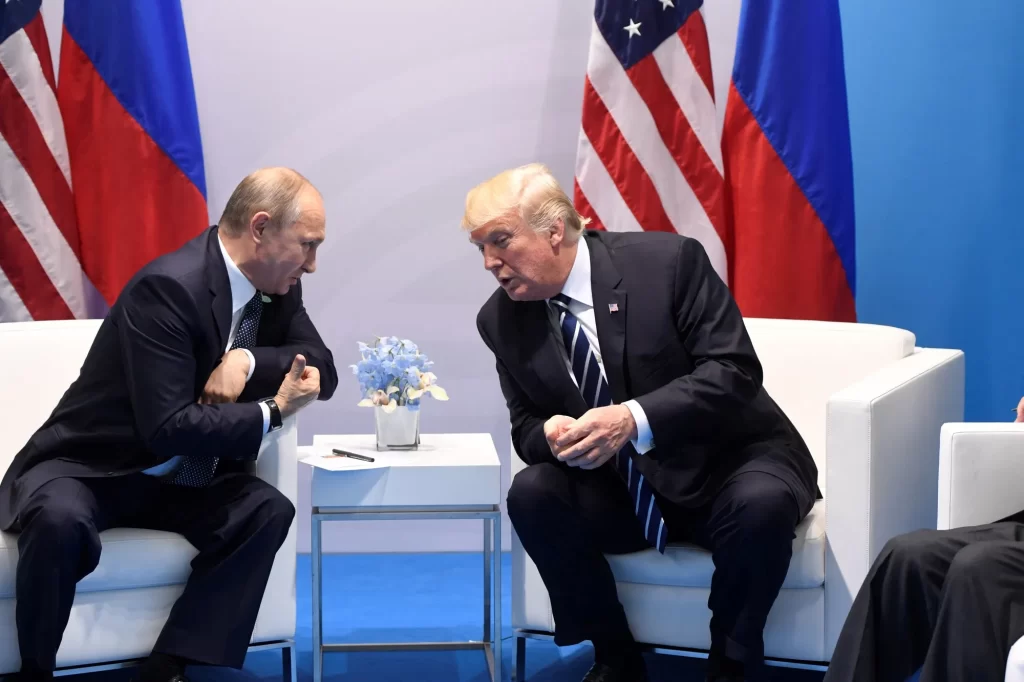
- Putin links Ukraine peace talks to NATO halting eastward expansion, signaling a major shift in war diplomacy.
- Trump-Putin “understandings” at the Alaska summit open potential for a U.S.-mediated settlement.
- Xi Jinping and Narendra Modi back dialogue while boosting economic ties with Moscow despite Western pressure.
- NATO faces a dilemma: defend its open-door policy or risk a prolonged, costly confrontation with Russia.
When Russian President Vladimir Putin declared at the Shanghai Cooperation Organisation (SCO) summit in Tianjin that “the issue of NATO’s eastward enlargement would have to be addressed for there to be sustainable peace in Ukraine,” it was more than a rhetorical flourish. Coming after his separate talks with China’s Xi Jinping, India’s Narendra Modi, and earlier understandings with U.S. President Donald Trump in Alaska, the statement reveals Moscow’s strategic endgame in the protracted Ukraine conflict.
At its core, Putin’s message signals that Russia’s war objectives have moved beyond territorial control to demand structural security guarantees in Europe. Specifically, he is linking any ceasefire or peace deal to the West’s willingness to halt NATO expansion, roll back certain military deployments, and ease sanctions that have battered the Russian economy since February 2022.
For the first time since the war began, Putin is publicly tying the prospect of peace to U.S. involvement—citing his Alaska talks with Trump as opening “a way to peace”—while showcasing the support of powerful Asian economies like China and India. It is a calculated power play: demonstrating to the West that Russia is far from isolated and that the world’s emerging economic powers will not toe Washington’s line on Ukraine.
But behind Putin’s confident rhetoric lies a set of hard realities: Russia controls just under one-fifth of Ukraine after nearly three years of war, Kyiv shows no signs of surrender, and NATO has expanded to include Finland and Sweden since the invasion began. The battlefield remains bloody and inconclusive. Against this backdrop, what does Putin’s statement really mean for the future of the war?
The Background: How Ukraine Became the Fault Line Between Russia and the West
The roots of the Ukraine war stretch back decades. After the Soviet Union collapsed in 1991, NATO began expanding eastward, absorbing former Warsaw Pact countries like Poland, Hungary, and the Baltic states. Moscow watched with alarm as the Western military alliance crept closer to Russia’s borders.
The turning point came in 2008 when NATO declared that Ukraine and Georgia would one day become members. For Putin, this was an existential threat. A Western-aligned Ukraine—let alone a NATO-member Ukraine—would put U.S. and European missiles within minutes of Moscow and sever Russia’s historic influence over its Slavic neighbor.
Tensions exploded in 2014 when Ukraine’s pro-Russian president, Viktor Yanukovych, was ousted after mass protests in Kyiv. Russia responded by annexing Crimea and backing separatist movements in eastern Ukraine’s Donbas region, triggering eight years of low-intensity war before the full-scale invasion in February 2022.
Putin framed the invasion as a pre-emptive move to stop NATO and defend Russian-speaking populations in Ukraine. The West saw it as naked imperial aggression. The result: one of Europe’s deadliest conflicts since World War II, with hundreds of thousands killed or wounded, millions displaced, and entire cities reduced to rubble.
Putin, Trump, and the Alaska Summit: A Diplomatic Opening?
Putin’s reference to “understandings” with Trump at their August Alaska summit is perhaps the most intriguing part of his SCO remarks. While details remain scarce, Russian and U.S. sources have hinted at exploratory talks on a possible ceasefire formula, sanctions relief, and security guarantees for Russia in exchange for freezing the frontlines.
Trump, who has long criticized NATO allies for not spending enough on defense, has signaled openness to a deal that ends the war without Ukraine joining NATO—a position at odds with the Biden administration’s full-throated backing of Kyiv.
By praising Trump’s role at the SCO summit, Putin is likely betting on a more U.S.-Russia-centered negotiation track, sidelining European hawks like Poland and the Baltic states who demand Russia’s complete defeat. If Washington shifts even slightly toward Trump’s “America First” realism, Putin may hope for a deal that secures Russia’s current territorial gains while halting NATO’s further eastward march.
The Xi–Modi–Putin Triangle: A New Anti-Western Bloc?
Equally significant was the optics in Tianjin, where Modi clasped Putin’s hand as they approached Xi Jinping, all three leaders smiling for cameras. It sent a subtle yet unmistakable message: major non-Western powers are no longer willing to isolate Moscow despite Western pressure.
China and India have become Russia’s economic lifelines, buying record amounts of discounted Russian oil and gas since Europe cut imports. Both have also called for peace talks while avoiding direct criticism of Moscow’s invasion.
By aligning with Xi and Modi, Putin is signaling to the West that Russia has powerful partners who reject U.S.-led sanctions and refuse to endorse NATO’s narrative on Ukraine. It is a diplomatic counterweight to Western unity, suggesting that global opinion on the war is far from one-sided.
NATO’s Dilemma: Expansion vs. Escalation
At the heart of Putin’s demand lies NATO’s post–Cold War strategy. Since 1999, the alliance has added 15 new members, moving hundreds of miles closer to Russia. For Eastern European states like Poland and the Baltic countries, NATO membership guarantees protection from potential Russian aggression.
But for Moscow, every new NATO base feels like a tightening noose. Putin has repeatedly demanded a formal halt to NATO expansion, removal of certain U.S. missile systems from Europe, and recognition of Russia’s sphere of influence over former Soviet republics.
The West has so far rejected these demands, insisting that sovereign nations like Ukraine have the right to choose their alliances. Yet the longer the war drags on, the louder the debate within Europe grows about whether Ukrainian NATO membership is worth perpetual conflict with nuclear-armed Russia.
What Lies Ahead: Three Possible Scenarios
-
Negotiated Settlement via Trump and the SCO Track
If Trump mediates a deal acceptable to Moscow and Kyiv, the war could freeze along current frontlines, with Ukraine getting security guarantees but shelving NATO membership indefinitely. Sanctions could be partially lifted in return for Russian concessions on prisoner exchanges and grain exports. -
Prolonged Stalemate and Escalation Risks
If talks fail, the war may grind on into 2026, with Russia fortifying occupied territories and Ukraine launching counteroffensives backed by Western weapons. The risk of escalation—including strikes on NATO territory or nuclear saber-rattling—would rise sharply. -
Western Unity Fractures, Global South Rises
As China, India, and others deepen economic ties with Russia, Western sanctions could lose effectiveness. Europe may face “Ukraine fatigue,” especially if energy prices spike again, creating openings for Putin to exploit divisions within NATO.
Putin Plays the Long Game
Putin’s latest statement reveals a leader confident that time is on his side. By tying peace to NATO’s rollback, courting Trump as a potential dealmaker, and showcasing support from Xi and Modi, he is positioning Russia as a central player in a multipolar world no longer dominated by the West.
Whether this strategy succeeds depends on three factors: U.S. politics, Ukraine’s battlefield resilience, and Europe’s appetite for a forever war on its eastern flank. For now, the Ukraine conflict stands at a crossroads—with Putin betting that the West’s unity will crack before Russia’s resolve does.