


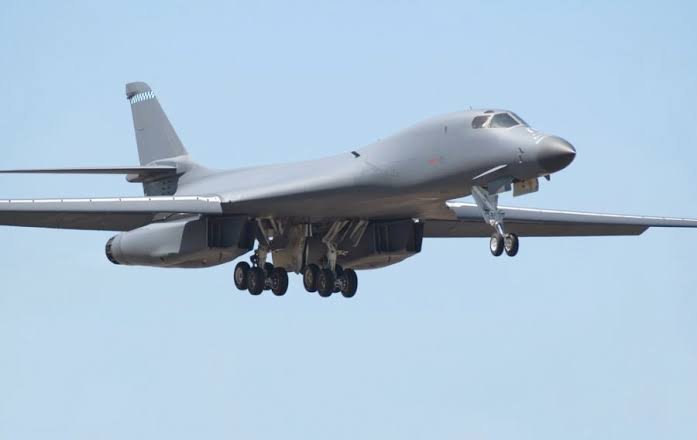
- RAF Airbase Terror Plot: British Counter-terrorism police intercepted five men and three suspicious vans carrying alleged explosives near RAF Fairford in an uncoordinated, non-intelligence-led operation.
- While Tehran has struck over 22 Middle Eastern bases directly, analysts question whether an amateur vehicle plot signals state-backed proxy sabotage or independent action.
- Shadow Proxy Tactics in Western Airbases represent a major evolution in how the Middle Eastern war spreads across European sovereign territory.
CHELTENHAM, England—In the early hours of Sunday morning, a quiet stretch of country road in Gloucestershire became the latest flashpoint of the US-Iran war. Counter-terrorism police intercepted five men alongside three commercial delivery vans suspected of carrying explosive materials, revealing how rapidly the geographic scope of the Middle Eastern conflict is expanding into Allied sovereign territory.
The security operation unfolded in Whelford, a small village on the border of Gloucestershire and Wiltshire, sitting directly adjacent to RAF Fairford. Counter-terrorism officers detained five suspects under the Explosives Act, leaving them shirtless and handcuffed along the roadside while Army Explosive Ordnance Disposal (EOD) teams deployed remote-operated robots to examine the seized vehicles. Aerial imagery showed the rear doors of two vans standing open, with heavy, dark objects scattered across the cargo bays.
Gloucestershire Constabulary declared a major incident, establishing armed checkpoints toward Kempsford and placing military tractors to barricade the main entry gates of RAF Fairford. Nearby homes were evacuated, with displaced villagers sent to a local leisure center.
READ NEXT: Trump Assassination Plot: How a Mother’s Call Foiled a White House Attack
British Prime Minister Andy Burnham and Defence Secretary Wes Streeting received continuous security updates, while government representatives maintained a guarded public posture as forensic teams analyzed the scene. Notably, reporting indicates the arrest was not part of a pre-planned intelligence operation, meaning authorities stumbled directly upon an active tactical setup rather than acting on months of wiretaps.
RAF Fairford has long functioned as a critical forward operating hub for the US Air Force 501st Combat Support Wing. Since hostilities escalated between the United States, Israel, and Iran, the base has hosted American heavy bombers—including B-1B Lancers and B-52s—carrying out long-range operational strikes against missile installations and maritime denial targets. The deployment turned the serene Cotswolds countryside into a vital artery for Washington’s global strike force, effectively linking rural England directly to combat operations over the Persian Gulf.
The Strategic Paradox: State Doctrine vs. Low-End Sabotage
The incident near Fairford follows direct warnings issued in July by Iran’s Islamic Revolutionary Guard Corps (IRGC), which declared that any military facility used to conduct strikes on Iranian territory constitutes a legitimate target. Tehran specifically criticized the deployment of US B-1 bombers operating out of British airfields, warning London against facilitating offensive sorties.
READ MORE: Pakistan Puts a Counter-Terrorism General at the Helm of the Mecca Defense Alliance
Since open warfare erupted, Iranian military forces have executed a clear retaliatory doctrine: launching high-velocity ballistic missile and long-range drone salvoes against installations directly involved in operations against Iranian soil. Across the Middle East, Iran has directly targeted or heavily bombarded over 22 regional airbases and forward operating hubs. Among the primary installations subjected to these direct state-sanctioned barrages are:
- Muwaffaq Salti Air Base (Jordan)
- Al Dhafra Air Base (United Arab Emirates)
- Ain al-Asad Airbase (Iraq)
- Ali Al Salem Air Base (Kuwait)
- Al Udeid Air Base (Qatar)
This operational history presents a striking strategic paradox. Iranian wartime doctrine relies almost exclusively on formal military command structures, heavy ballistic artillery, and formal state accountability intended to project overt national power. In contrast, an uncoordinated, non-intelligence-led vehicle-borne plot in rural England bears the hallmarks of asymmetric proxy warfare or low-level sympathizer activity.
Because state-directed IRGC strikes are typically executed via missile commands rather than improvised van bombs in foreign villages, Western defense analysts remain skeptical about attributing the Whelford plot directly to orders originating from supreme command in Tehran. Instead, intelligence agencies are examining whether the attempt represents an independent radicalized cell inspired by regional propaganda, a low-level sympathetic network operating autonomously, or a covert foreign proxy operation structured specifically to test Western domestic security apparatuses without crossing the threshold that would trigger a direct NATO Article 5 response.
The Broadening Front of Hybrid Vulnerability
Regardless of whether official forensic investigations establish direct state sponsorship or third-party inspiration, the foiled plot outside RAF Fairford marks a psychological turning point for Western home fronts. It demonstrates that forward operating bases located thousands of miles from the immediate combat theater can no longer rely on geographical distance as a primary defense.
As long as Allied airbases serve as launching pads for long-range strategic operations, the friction of the US-Iran war will inevitably reach into surrounding civilian communities. Security forces across Europe must now adapt to a dual-threat environment: containing state-level military escalation abroad while defending physical infrastructure against low-tech, highly opportunistic asymmetric sabotage at home.