


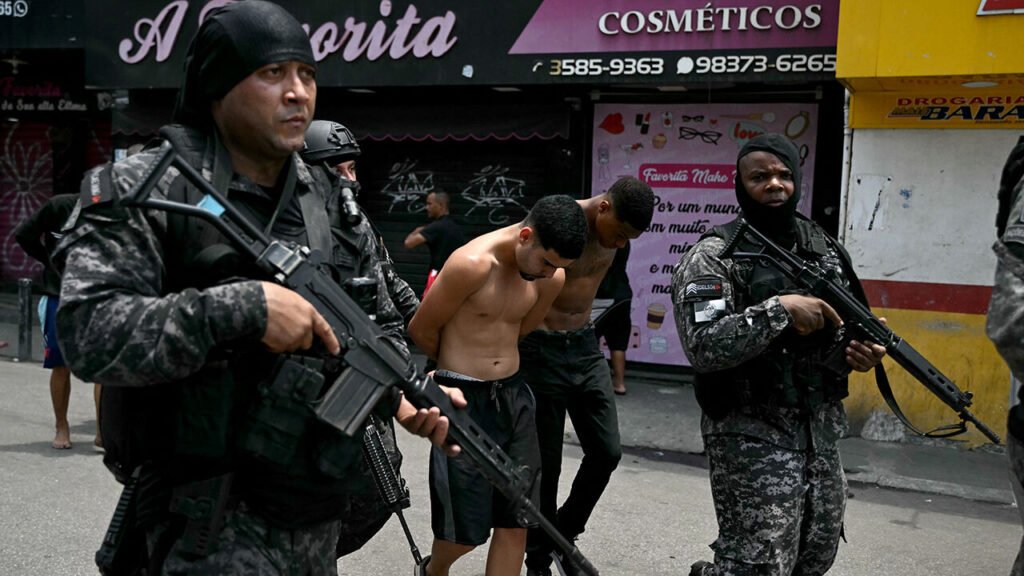
- A Reuters investigation into the Rio de Janeiro police raid revealed that none of the 117 people killed were among the 69 high-level suspects targeted by prosecutors.
- Operation Containment resulted in 121 confirmed deaths, making it the most lethal law enforcement action in Brazilian history.
- The state government initially praised the operation as a “success,” but the main leader of the Comando Vermelho gang remains at large.
- Human Rights Watch has pointed to critical investigative failures, including the lack of forensic analysis at the scene where dozens of bodies were found.
On October 28, 2025, Rio de Janeiro witnessed the deadliest police operation in Brazilian history. Known as Operation Containment (Operação Contenção), the raid targeted the Comando Vermelho (Red Command) gang in the Alemão and Penha favelas. What was presented by state authorities as a strategic strike against organized crime quickly devolved into a “massacre” that left at least 121 people dead and sparked an international outcry over police brutality and failed planning.
The Anatomy of a Failed Mission
The primary objective of the 2,500-officer mobilization was to execute approximately 100 arrest warrants for high-level gang leaders. However, the mission failed in its core purpose. A post-operation review by Reuters and human rights groups revealed a staggering discrepancy: none of the senior leaders named in the criminal complaints were killed or captured. Instead, the vast majority of the 117 civilians killed were low-level operatives or residents with no prior criminal records.
The planning was criticized as “ill-planned” because it relied on a “war doctrine” rather than surgical intelligence. Police commandos pushed suspects into densely forested hills—a “kill zone” away from the street cameras and public eyes. While the state governor, Cláudio Castro, hailed the mission as a “success” due to the volume of weapons seized, the lack of high-value arrests turned the operation into a tactical embarrassment.
A Scene of Horror
The aftermath of the raid was grisly. Residents found scores of bodies in the woods, some reportedly bearing signs of extrajudicial execution, such as gunshot wounds to the back of the head or bound hands. One 19-year-old was found decapitated. The sight of mothers dragging the bodies of their sons out of the forest and lining them up in the streets created a haunting visual that dominated global headlines.
National and International Uproar
The sheer scale of the bloodbath—surpassing even the 1992 Carandiru prison massacre—pitted Brazil’s political leadership against one another.
- President Luiz Inácio Lula da Silva condemned the raid as “disastrous” and a “massacre,” directly challenging the state’s aggressive security model.
- The United Nations and Amnesty International expressed “horror,” citing a pattern of racialized policing that disproportionately affects Black and poor communities.
- Regional Neighbors like Argentina and Paraguay went on high alert, fearing the instability would spill across borders.
The Call for Accountability
As the dust settled, higher authorities were forced to address the “shame” of the operation’s conduct. The Federal Supreme Court and the National Council of Prosecutors have moved to ensure that the investigation is not left solely to the Rio police, who have already been accused of tampering with evidence and failing to preserve crime scenes.
President Lula has ordered an independent inquiry involving federal forensic experts to determine how a mission intended to serve warrants ended in a triple-digit death toll. The investigation will scrutinize the “bravery bonuses” offered to officers and the failure to use body cameras, which police claimed “ran out of battery” during the 15-hour shootout.
Operation Containment stands as a turning point in the debate over public security in Brazil. By failing to capture its targets while inflicting historic levels of violence, the raid has exposed the limits of a “war on crime” paradigm. For the families in the favelas, the operation did not bring safety; it brought a legacy of trauma and a demand for a justice system that values life over body counts.