


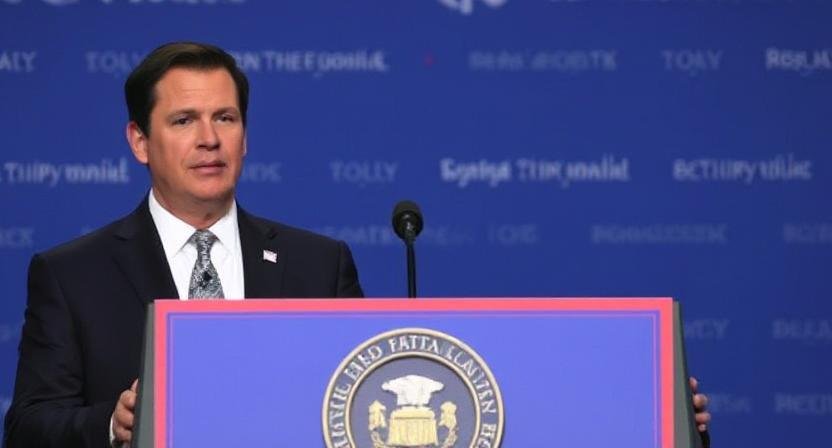
- Secretary Rubio conveys Rubio-Trump frustration Ukraine directly to Lavrov during tense ASEAN summit meeting.
- Trump increasingly angered by Russia’s civilian attacks, intensifying Rubio-Trump frustration Ukraine.
- Diplomatic stalemate and Putin’s defiance deepen Rubio-Trump frustration Ukraine concerns in Washington.
- ASEAN summit overshadowed by global crises and growing Rubio-Trump frustration Ukraine.
In a tense diplomatic encounter on the sidelines of the ASEAN summit in Malaysia, U.S. Secretary of State Marco Rubio delivered an unusually candid message from President Donald Trump to Russia’s Foreign Minister Sergey Lavrov: the White House is running out of patience over President Vladimir Putin’s relentless escalation of the war in Ukraine. The “Rubio-Trump frustration Ukraine” dynamic has now become a central theme in U.S.-Russia relations.
Rubio’s rare face-to-face with Lavrov marked his first high-level interaction with Moscow since becoming Secretary of State, and it unfolded at a time when Washington’s foreign policy seems increasingly shaped by both frustration and unpredictability.
Speaking to reporters after the closed-door meeting, Rubio echoed Trump’s growing anger over the stalemate in peace talks, warning that the Kremlin’s intensifying attacks on Ukrainian civilians are pushing the situation toward a dangerous new phase. The “Rubio-Trump frustration Ukraine” sentiment is rising not just in diplomatic circles but also in the U.S. Congress.
High-Stakes Rubio-Lavrov Meeting: A Pivotal Moment to Reset U.S.-Russia Tensions
“I conveyed the president’s disappointment and frustration,” Rubio said, underscoring that the U.S. remains open to dialogue but is prepared to escalate pressure if Moscow refuses to alter course. This underlines the deepening “Rubio-Trump frustration Ukraine” as the Kremlin remains defiant.
Trump’s Patience Wears Thin
Trump’s irritation with Putin’s Ukraine gambit has been building for weeks. Despite initial hopes that back-channel diplomacy might ease the conflict, Russia’s stepped-up bombardment of Ukrainian infrastructure—coupled with fresh military deployments—has hardened Washington’s stance. The “Rubio-Trump frustration Ukraine” reflects not only disillusionment but also strategic recalibration.
READ NORE: “It Wasn’t Me”: AI Imposter Posing as U.S. Secretary of State Rubio Shakes the Trump Administration and Stuns Global Capitals
A senior U.S. official, speaking on background, revealed that Trump was “personally angered” after intelligence reports indicated that Russian forces deliberately targeted civilian evacuation corridors—actions that deepened the “Rubio-Trump frustration Ukraine” and made further diplomatic engagement more difficult.
Malaysia Meeting: Diplomacy Amid Tensions
The Rubio-Lavrov exchange took place on the sidelines of the ASEAN summit in Kuala Lumpur, where Southeast Asian leaders gathered to discuss regional trade, security, and economic recovery. Yet it was the Ukraine war—and the visible “Rubio-Trump frustration Ukraine”—that dominated headlines.
ALSO READ: Rubio Tells Top Russian Diplomat of Trump’s Frustration Over Putin’s War
The Russian Foreign Ministry described the meeting as “frank” and noted that both sides discussed not only Ukraine, but also Syria, Iran, and broader global tensions. However, the stubbornness of the Russian position has only fueled the “Rubio-Trump frustration Ukraine” narrative.
Global Stakes and Diplomatic Calculus
The widening chasm between Russia and the West over Ukraine shows no signs of closing. For Trump, the ongoing conflict is now both a foreign policy headache and a domestic political risk, deepening the “Rubio-Trump frustration Ukraine” as new sanctions and military aid packages come under discussion.
“The administration wants an off-ramp, but Russia isn’t offering one,” said Fiona Hill, a respected Russia expert. Her comments echo the growing “Rubio-Trump frustration Ukraine” sentiment within Washington’s foreign policy circles.
ASEAN Summit Overshadowed
Rubio’s Asia trip, aimed at reinforcing America’s Indo-Pacific strategy, was eclipsed by two crises: Trump’s tariff threats and the deepening “Rubio-Trump frustration Ukraine.” Southeast Asian leaders, now questioning U.S. reliability, watched as Rubio carried not just the burden of trade tensions but also the weight of conveying Trump’s displeasure over Ukraine.
China’s top diplomat, Wang Yi, seized the opportunity to portray Beijing as a stable alternative, complicating U.S. efforts to counterbalance Chinese influence amid the ongoing “Rubio-Trump frustration Ukraine.”
Rubio , Ukraine And Uncertain Path Ahead
Rubio’s direct delivery of Trump’s frustrations to Lavrov underscores the growing urgency within the White House to shift the trajectory of the Ukraine war. Yet Russia shows no sign of backing down. The “Rubio-Trump frustration Ukraine” remains a key pressure point in the global order, with both diplomatic and military implications.
As the ASEAN summit demonstrated, America’s partners in Asia are closely watching how the “Rubio-Trump frustration Ukraine” evolves—aware that the consequences of this confrontation stretch far beyond the borders of Eastern Europe.
In the end, the “Rubio-Trump frustration Ukraine” encapsulates not just a bilateral grievance but a larger struggle over global power, alliances, and the future of conflict resolution in an increasingly fractured world.