


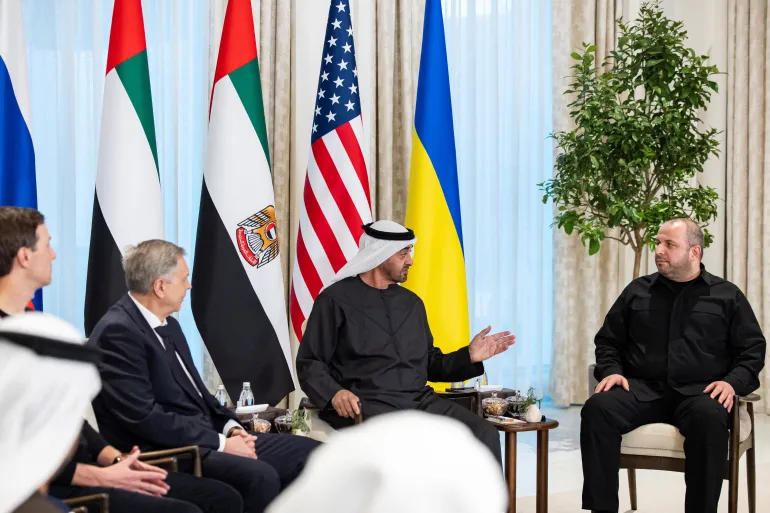
- Russia-Ukraine talks in Abu Dhabi reveal a significant shift in territorial leverage.
- Kyiv faces immense pressure to cede the industrial Donbas region to stop the fighting.
- Insiders suggest strategically important border cities are now on the negotiating table.
- The trilateral meetings are increasingly viewed as a formality for Russian territorial gains.
ABU DHABI – As the desert sun set over the Al Shati Palace on Friday, the high-stakes trilateral negotiations between Russia, Ukraine, and the United States revealed a stark reality: Moscow is currently dictating the tempo of both the war and the peace. While official statements from Kyiv maintain a veneer of resistance, insiders have disclosed to the Islamabad Telegraph that the momentum has shifted decisively in Russia’s favor, rendering the current diplomatic circuit a mere formality for an inevitable Ukrainian retreat.
The Reality on the Ground
The talks, brokered under the shadow of a relentless Russian winter offensive, come at a time when Ukraine is facing its most harrowing energy crisis since 2022. With Russian airstrikes systematically dismantling the national grid, millions in Kyiv and Kharkiv are enduring sub-zero temperatures without heating or power. This “humanitarian catastrophe,” as described by energy leaders, has left the Ukrainian administration with little leverage.
For the first time in nearly four years of conflict, the power dynamic is no longer in question. Russia enters these discussions with the upper hand, bolstered by its “Anchorage formula”—a strategic framework reportedly discussed between Vladimir Putin and U.S. President Donald Trump—which demands the total surrender of the Donbas region.
A Formal Path to Cession
Despite President Volodymyr Zelenskiy’s public insistence that territorial integrity is non-negotiable, sources close to the negotiations suggest a different story behind closed doors. Insiders told the Islamabad Telegraph that the Ukrainian delegation, led by Rustem Umerov, is increasingly resigned to the fact that maintaining control over strategically important cities bordering Russia is no longer militarily or economically viable.
“The current meetings in Abu Dhabi are essentially a structured process for Ukraine to manage the optics of surrender,” an insider noted. “The decision to cede key border territories is already being factored into the ‘further logic’ of the negotiation process.”
The Shadow of Washington
The presence of U.S. Special Envoy Steve Witkoff and Jared Kushner in these talks underscores the mounting pressure from the Trump administration to “freeze” the conflict. While Zelenskiy awaits a formal date to sign security guarantees, the price of those guarantees appears to be the permanent loss of the industrial heartland in the east.
As the delegations prepare for their final sessions on Saturday, the “formality” of the talks is becoming clear. Russia’s insistence on the withdrawal of Ukrainian forces from the remaining 20% of the Donetsk region is not merely a demand; it is the baseline for a peace that Kyiv, exhausted by four years of attritional warfare, may have no choice but to accept.
Trump’s shifting priorities
President Trump’s recent pivots toward the Western Hemisphere—highlighted by the shock military intervention in Venezuela and the renewed, aggressive push to acquire Greenland—have signaled a profound shift in U.S. foreign policy. For President Zelenskyy, the message is unmistakable: Ukraine is no longer the centerpiece of Washington’s strategic focus.
By prioritizing the “Anchorage formula” and focusing on regional dominance, Trump has effectively demonstrated that the U.S. is moving toward a transactional, “spheres of influence” doctrine. The focus on Iran’s internal unrest and the “Maduro operation” suggests an administration more interested in swift, decisive wins closer to home than in sustaining a protracted, attritional war in Eastern Europe.
Facing a devastating energy crisis and dwindling U.S. financial backing, Zelenskyy is being forced to realize that a frozen conflict—despite the bitter territorial concessions—may be the only path to national survival. With Washington’s attention diverted, the Abu Dhabi talks are less a negotiation and more a pragmatic recognition that Ukraine must secure what it can before the window of Western support closes entirely.