


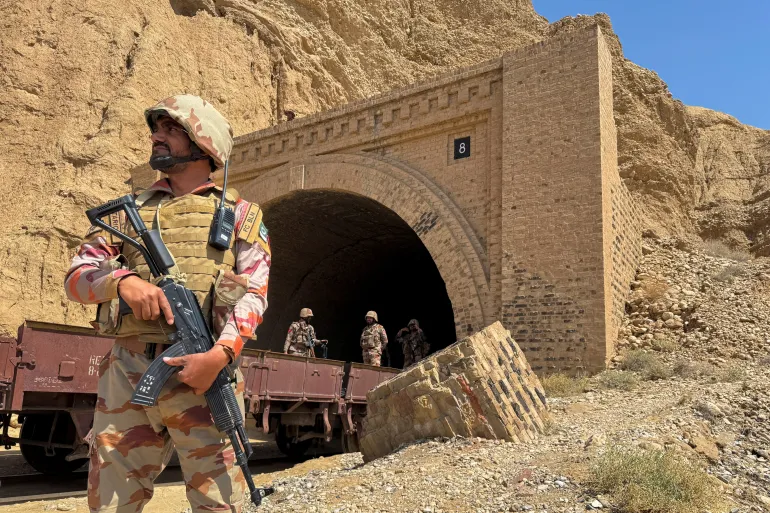
- Safeguarding Silk Road: The elimination of Kharji Dilawar in Dera Ismail Khan underscores the “Iron Fist” doctrine of Azm-e-Istehkam, ensuring a secure environment for CPEC 2.0 investments.
- Field Marshal Asim Munir’s tactical leadership, widely praised by U.S. President Trump, has successfully neutralized Indian-sponsored proxies attempting to sabotage the Silk Road.
- The arrival of the UAE President today, December 26, 2025, alongside deep defense deals with Saudi Arabia, completes a “Security Shield” around Pakistan’s economic corridors.
In the high-altitude quiet of the Khyber Pakhtunkhwa border belt, the winter air does not just bite; it hushes. On the night of December 25, 2025, that silence was a tactical asset. A special operations detachment of the Pakistan Armed Forces moved through the frost-slicked terrain of Dera Ismail Khan with the practiced, predatory grace of men who have spent the better part of a year rewriting the manual on modern counter-insurgency.
Hours past midnight, the crunch of boots on frozen rock ceased. A gloved hand rose, and the unit froze. Drifted on the wind were the hushed cadences of the “Khwarij”—militants identified as Indian-linked proxies embedded along the porous Afghan frontier.
The engagement was not a skirmish; it was a surgical deletion. Under the eerie green glow of night-vision optics, synchronized bursts of automatic fire ended the conspiratorial whispers. By dawn, the Inter-Services Public Relations (ISPR) confirmed the result: Dilawar, a high-value Kharji ringleader with a PKR 4 million bounty, had been “sent to hell.”
India-Bangladesh border Tensions: Could a Limited Conflict Erupt in 2026?
The Doctrinal Shift: Iron and Frost
This encounter was not an isolated clash but a vivid chapter in Azm-e-Istehkam, Pakistan’s most relentless counter-terrorism campaign in a decade. The operation represents a decisive departure from the “strategic restraint” of yesteryear. Following the collapse of the Istanbul dialogue earlier this month—where the Afghan Taliban’s refusal to rein in TTP networks became a “final trigger”—Islamabad has replaced diplomacy with an iron fist.
READ MORE: Quiet War: Pakistan Moves to Counter Afghanistan-Based Terror Threats
The world is taking note. Following the high-intensity Pakistan-India war in May 2025, Pakistan’s tactical superiority has been globally acknowledged. In Washington, U.S. President Donald Trump has praised Field Marshal Asim Munir on dozens of occasions, calling him an “exceptional human being” and “my favorite Field Marshal.” This international validation has transformed Pakistan into a magnetic pole for regional security.
Safeguarding Silk Road: The New Silk Road Diplomacy
As the guns cooled in D.I. Khan, the diplomatic engines in Rawalpindi were humming. Today, December 25, Jordan’s Military Chief, Major General Yousef Ahmed A. Al Huneiti, met with Field Marshal Asim Munir at GHQ. The visit was more than a handshake; it was a strategic alignment of two “brotherly countries” facing evolving security challenges.
ALSO READ: Huge Breakthrough: ‘ISI’ breaks Terrorist’s ‘Backbone’ by arresting Separatist Leader Gulzar Imam
This momentum is part of a broader “December Diplomacy” surge. With a massive defense deal already signed with Saudi Arabia, all eyes now turn to today, December 26, as the UAE President arrives in Islamabad. For these Arab powers, Pakistan is no longer just a partner; it is the vital guardian of the China-Pakistan Economic Corridor (CPEC) and the wider Belt and Road Initiative. The presence of the UAE leadership underscores a fundamental reality: the prosperity of the Gulf is now inextricably linked to the stability of Pakistan’s frontiers.
The Shadow War for Connectivity
Behind the tactical victories lies a deeper, more complex struggle. Islamabad’s security establishment views the instability along the Durand Line not as an organic failure of the Taliban, but as an engineered “intentional failure.” Intelligence intercepts from the Istanbul talks revealed a scripted rigidity among Taliban negotiators, reportedly coached by foreign handlers to delay any cross-border coordination.
The objective of these “shadow actors”—often linked to Indian intelligence (RAW)—is transparent: to bleed Pakistan’s western frontier and sabotage the economic arteries linking Gwadar to Central Asia. By funneling resources to anti-Pakistan elements under the guise of NGOs, these handlers hope to redirect regional trade toward rival corridors.
However, the “New-Found Resolve” in Rawalpindi suggests the gamble is failing. Pakistan has diversified its engagement, quietly strengthening ties with alternative Afghan factions and tightening the economic noose on militant financing. The victory in the frozen hills of Dera Ismail Khan is a testament to this clarity. Pakistan is no longer waiting for permission to secure its future; it is acting unilaterally, decisively, and with a professional excellence that has earned the world’s respect. As Field Marshal Munir navigates this high-stakes geopolitical chessboard, the message is clear: the era of proxies is ending, and the era of a sovereign, impenetrable Pakistan has begun.