


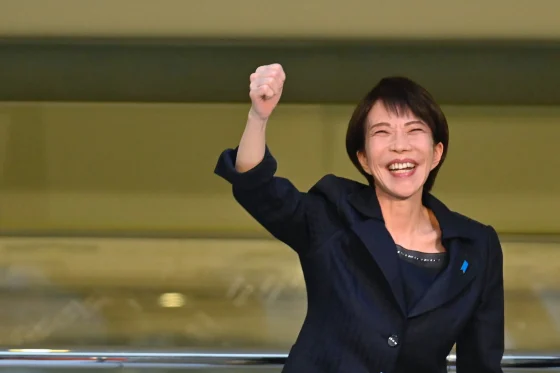
- Sanae Takaichi’s historic victory gives Japan’s LDP a two-thirds majority, enabling bold domestic and foreign policies.
- China-Japan relations may face heightened tension over East China Sea disputes and South China Sea navigation concerns.
- Taiwan security could be reinforced through stronger U.S.-Japan defense cooperation and Quad alignment.
- Regional stability in the Indo-Pacific will depend on Japan’s ability to balance assertive policies with diplomacy.
Japan’s political landscape has been transformed. Sanae Takaichi, Japan’s first female prime minister, has secured a two-thirds majority in the Lower House in the 2026 snap election, consolidating power in an unprecedented mandate. Her victory not only reshapes domestic politics but also has significant implications for China, Taiwan, the South China Sea, and U.S.-led regional alliances.
Domestic Consolidation and Policy Agenda
Takaichi’s landslide reflects voter endorsement of her conservative, assertive agenda, combining economic stimulus with strong national security policies. The LDP’s coalition now holds over 316 of 465 seats, granting her the authority to pass ambitious legislation. Economically, she is pursuing targeted stimulus, tax relief measures, and corporate incentives aimed at reviving growth, despite Japan’s debt burden exceeding 250% of GDP.
Sanae Takaichi Eyes February Snap Election to Solidify Japan Mandate
Her domestic support draws from both traditional conservative voters and younger generations seeking decisive leadership, particularly on inflation, wage growth, and security. This combination of fiscal and political clout allows Takaichi to act decisively on foreign policy while maintaining popular legitimacy at home.
China and South China Sea Tensions
Takaichi’s leadership signals a harder stance toward Beijing. Analysts anticipate a stronger Japanese naval presence around the East China Sea and increased cooperation with U.S. and Quad partners. Japan’s growing focus on freedom of navigation in the South China Sea is likely to be a flashpoint for regional tension. Beijing may respond with heightened patrols or diplomatic pushback, potentially raising the risk of miscalculation.
Japan’s PM Takaichi on course to win snap election by landslide
Japan’s assertive posture reflects concerns about Chinese expansionism and demonstrates a willingness to safeguard trade routes and territorial claims, reinforcing its strategic role in the Indo-Pacific.
Taiwan and U.S.-Japan Strategic Coordination
Takaichi has signaled support for Taiwan’s security, deepening Japan’s alignment with U.S. Indo-Pacific strategy. A two-thirds majority enables accelerated defense cooperation, including joint exercises, intelligence sharing, and potential arms procurement. For the Quad alliance, comprising the U.S., Japan, India, and Australia, this represents strengthened deterrence against coercion in the region and a reaffirmation of maritime security commitments.
Regional and Global Implications
Takaichi’s assertive policies increase the likelihood of strained China-Japan relations, while trade and diplomatic tensions may intensify. European stakeholders, reliant on stable trade and supply chains, will monitor Japan’s defense and economic policies closely. Any escalation in the East China Sea or Taiwan Strait could have global repercussions, affecting energy, technology, and investment flows.
For the United States, her leadership strengthens a key regional ally, reinforcing strategic objectives in balancing China’s influence. Taiwan can expect more robust support, while the Quad alliance benefits from a more coordinated approach to regional security.
Sanae Takaichi’s two-thirds majority represents a historic domestic breakthrough and a decisive turn in Japan’s foreign and security policy. Observers in China, Taiwan, the U.S., and Europe should anticipate a more assertive Japan, poised to safeguard its strategic interests while navigating the complex geopolitics of the Indo-Pacific. How Tokyo balances assertive defense, economic recovery, and diplomatic engagement will shape regional stability and global perceptions of Japan’s emerging role in 2026 and beyond.
Sanae Takaichi’s historic two-thirds mandate sets the stage for a more assertive and strategically cautious Japan in its relations with China. Expect intensified East China Sea patrols, closer U.S.-Japan defense cooperation, and stronger Quad coordination. While economic ties may continue, rising security tensions over Taiwan and maritime disputes could strain diplomacy, making careful negotiation crucial to prevent escalation and ensure regional stability in the Indo-Pacific.