


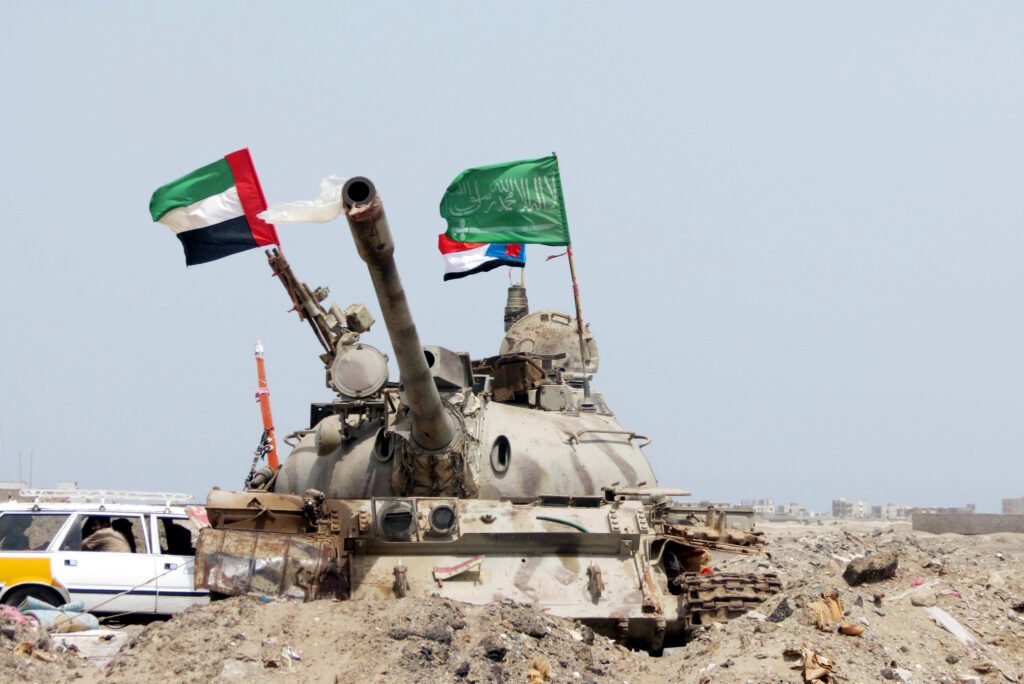
- Saudi-UAE tensions flare and have reached a fever pitch following direct allegations of a UAE-sponsored “prison break” for STC leader Zubaidi.
- The Presidential Leadership Council has revoked Zubaidi’s membership, citing high treason.
- Riyadh alleges a UAE military officer supervised the flight, which reportedly turned off its transponders over the Gulf of Oman.
- The rift threatens the stability of the anti-Houthi coalition and the future of UN-led peace negotiations.
The fragile alliance between the Gulf’s two most powerful monarchies has reached a historic breaking point. In a move that shatters years of diplomatic decorum, Saudi Arabia has publicly accused the United Arab Emirates of orchestrating the “escape” of Aidarous al-Zubaidi, the powerful leader of the UAE-backed Southern Transitional Council (STC).
This is no longer a quiet disagreement behind palace walls; it is a full-scale Saudi-UAE confrontation. The timing could not be more volatile, as the alleged flight occurred exactly when a high-level Yemeni delegation arrived in Riyadh for make-or-break peace talks.
Aidarous al-Zubaidi Skips Riyadh Talks as Saudi-UAE Rift Destabilizes Yemen
A Cloak-and-Dagger Departure
The details provided by the Saudi-led coalition read like a geopolitical thriller. Authorities claim Zubaidi fled Yemen by boat to Somalia before boarding a private flight that touched down at a military airfield in Abu Dhabi. Saudi military spokesman Maj. Gen. Turki al-Malki took the unprecedented step of naming a specific UAE officer allegedly supervising the extraction.
Saudi Arabia alleges UAE smuggled wanted Yemen separatist leader out of the country
Riyadh further alleges the aircraft engaged in “dark” maneuvers, switching off its identification transponders over the Gulf of Oman to evade tracking. While the STC maintains Zubaidi is still in Aden, the Saudi-backed Presidential Leadership Council (PLC) has already branded the move “high treason” and stripped Zubaidi of his membership.
The Death of the “United Front”
Historically, Riyadh and Abu Dhabi were the twin pillars of the intervention against Iran-backed Houthi rebels. Today, they are fully head-to-head. This rift is the culmination of years of diverging interests:
-
Territorial Ambitions: The UAE has pivoted toward securing strategic maritime routes from the Red Sea to the Horn of Africa, often via its STC proxies.
-
Sovereignty vs. Stability: Saudi Arabia views the UAE’s support for southern separatists as a direct threat to the unified Yemen they need for a stable southern border.
-
Strategic Distrust: The public nature of these accusations suggests that private backchannels—the traditional method of “Gulf geopolitics”—have completely failed.
Saudi-UAE Tensions Flare : The High Cost of the Rift
The Yemen crisis now faces a dangerous new dimension. With the anti-Houthi coalition eating itself from the inside, the path to a negotiated peace has never looked more obstructed. The Saudi-UAE tensions have already spilled over into military friction, with reports of intensified Saudi airstrikes near STC-held positions.
Aidarous al-Zubaidi Skips Riyadh Talks as Saudi-UAE Rift Destabilizes Yemen
Ultimately, this is a foreign policy analysis of two giants outgrowing their partnership. As Riyadh and Abu Dhabi compete for regional hegemony, Yemen is no longer just a war zone; it is the chessboard for a cold war between former best friends. If this rupture isn’t mended, the dream of a stable, unified Yemen may be the first casualty of the new Gulf order.
Will the Yemen Rift Impact Relations?
The “spark” in Yemen is no longer just a local skirmish; it has transformed into a profound strategic rupture. As of January 2026, several factors indicate this rift will have a lasting impact:
-
Red Lines Crossed: Saudi Arabia now views the UAE-backed separatist movements (STC) as a direct threat to its national security and southern border. The public accusation that the UAE helped Aidarous al-Zubaidi “escape” is a rare, direct confrontation that has shattered the traditional “clubby” diplomacy of the Gulf.
-
Geopolitical Divergence: While they share a goal of countering Iran, their methods are now incompatible. Saudi Arabia prioritizes a unified Yemen for border stability, while the UAE favors a fragmented Yemen to secure maritime influence over ports and shipping lanes.
-
Economic Rivalry: Beyond Yemen, the two are “fully head-to-head” in a race to become the region’s premier business and tourism hub, leading to a “lifestyle and tax competition” that further erodes their historical alliance.
While they may avoid a total diplomatic break to protect their respective Vision 2030 and economic goals, the era of a unified “Saudi-UAE axis” is largely over, replaced by a period of managed friction.