


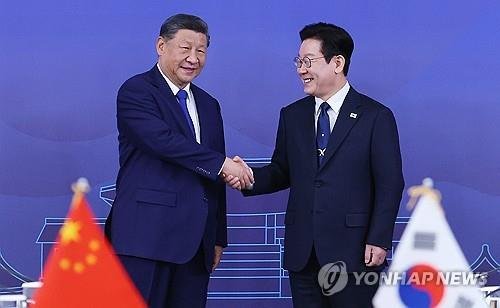
- South Korean President Visit to China marks the first state-level trip to Beijing since 2019.
- Presidents Lee Jae Myung and Xi Jinping will sign over 10 MOUs focusing on economic stability.
- The delegation includes 200+ business leaders targeting AI and green energy sectors.
- Seoul reaffirms its commitment to the One-China principle to ensure regional peace.
As South Korean President Lee Jae Myung touches down in Beijing, the eyes of the international community are fixed on what is being described as a “thaw” in East Asian diplomacy. This landmark four-day state visit, beginning Sunday, January 4, 2026, represents the first time a South Korean leader has set foot in China for a state visit since 2019, signaling a significant pivot in Seoul’s “pragmatic” diplomatic strategy.
A Strategic Redefinition of Ties
President Lee’s arrival follows a period of cooling relations under previous administrations. However, the current momentum is undeniable. This visit follows closely on the heels of President Xi Jinping’s historic trip to South Korea in November 2025—his first in over a decade. The speed with which these reciprocal visits have occurred suggests a mutual urgency to stabilize the region amidst global economic shifts and heightened tensions in the Taiwan Strait.
Asia Geopolitical Outlook 2026: A New World Order of Sovereignty and Strength
Upon his arrival at Beijing Capital International Airport, Lee was greeted with a full red-carpet ceremony, underscoring China’s commitment to restoring a “strategic cooperative partnership.” The visit is not merely symbolic; it is a high-stakes mission to balance South Korea’s ironclad alliance with the United States with the undeniable economic reality that China remains its largest trading partner.
The Economic Agenda: AI, Green Energy, and Supply Chains
Central to the visit is a massive business delegation of over 200 representatives. On Monday, President Lee will headline the Korea-China Economic Forum, where the focus will shift from traditional manufacturing to the technologies of the future.
South Korea’s Lee Jae Myung begins landmark China visit to meet Xi Jinping
Key areas of focus include:
- Artificial Intelligence: Exploring collaborative frameworks as China’s tech giants, like Huawei, begin deploying advanced AI chips in the South Korean market.
- Green Energy: Joint ventures in battery technology and hydrogen energy to meet 2030 climate goals.
- Supply Chain Stability: Crucial discussions on critical minerals and rare earths, given that South Korea relies on China for nearly half of the raw materials used in its semiconductor industry.
- Cultural Exchange: Efforts to finally lift the informal “K-pop ban” that has lingered since 2017, potentially reopening a billion-dollar market for Korean entertainment.
US Delta Force Storms Caracas: Maduro Captured Alive in Historic Raid – Venezuela Erupts in Joy and Fury
The two nations are expected to sign more than 10 Memorandums of Understanding (MOUs), ranging from livelihood cooperation to advanced technical research.
Navigating the North Korea Challenge
The diplomatic backdrop was sharpened on Sunday morning by North Korea’s launch of several ballistic missiles—the first since November.13 This move by Pyongyang underscores the delicate tightrope President Lee must walk. In his upcoming talks with President Xi, Lee is expected to seek Beijing’s active mediation to restart denuclearization talks and ensure stability on the Korean Peninsula.14
Lee’s “pragmatic diplomacy” was further evident in his pre-visit interview with CCTV, where he reiterated South Korea’s respect for the “One-China principle.”15 This stance aims to de-escalate friction over regional flashpoints while maintaining peace in Northeast Asia.
Bilateral Trade at a Glance
The economic interdependence between Seoul and Beijing remains the bedrock of the relationship. Despite global “de-risking” trends, the trade volume reflects a deeply integrated partnership.16
| Category | Detail |
| 2024 Trade Volume | $267.6 Billion |
| Key Export | Semiconductors (Approx. 33% of Seoul’s chip exports go to China) |
| Strategic Import | Rare Earth Minerals (Nearly 50% sourced from China) |
| 2025 Export Record | $709.69 Billion (Global total) |
As President Lee prepares to move from the political halls of Beijing to the startup hubs of Shanghai on Tuesday, the message is clear: South Korea is seeking a future where economic prosperity and regional peace are not mutually exclusive.