


News Desk
Islamabad: After finally losing faith, the Supreme Court, on Tuesday, commenced proceedings against Rail-ways Secretary Habibur Rehman Gillani and Chief Secretary of Sindh Syed Mumtaz Ali Shah for the apparent delay in the completion of the Karachi Circular Railways (KCR) project.
Pakistan’s Chief Justice Gulzar Ahmed warned that things would not end here, but that the court would call anyone, including Prime Minister Imran Khan and Sindh Chief Minister Sindh Syed Murad Ali Shah, if necessary, the Dawn news reported.
The Supreme Court, consisting of the Chief Justice, Justice Ijaz-ul-Ahsan and Justice Muneeb Akhtar, had taken up a suo motu case concerning the enormous damages suffered by the Pakistan Railways (PR).
The Court issued notices of cause to the Railway Secretary and the Sindh Chief Secretary, directing them to appear in person at the next hearing of the case after two weeks and explaining the reasons for the alleged delay in the completion of the KCR project.
The Director General of the Frontier Works Organization (FWO) was also asked to appear before the court in person.
The court regretted that the railway secretary had failed to comply with the previous court orders. Justice Ahsan said that someone who wanted to describe something should give it in writing.
Previously, the court had warned the Pakistan Railways (PR) and the Sindh Government not to extend the time limit prescribed by the court and to ensure that the KCR was in service.
Last February, during one of the hearings, the Supreme Court suggested that work on the KCR could begin within six months.
The court was then told that the survey for the construction of 11 underpasses in the KCR route had been completed by the FWO, while work on the remaining 13 underpasses would also have been completed soon.
The court was told that the necessary preparation had been carried out while the design was in progress and that the contract for the construction of the underpasses would be awarded as soon as the FWO drew up a design plan and projected construction costs.
The court was also asked to give another six weeks to complete the work necessary and start work on the project.
On Tuesday, the railway secretary told the court that the PR had taken photographs of the SUPARCO showing encroachments on the land on the KCR route. In addition, the railroads have sent letters to the FWO to build the underpasses.
At this point, the Chief Justice noted that the court had issued notices of contempt of court because, while time had been given to make the KCR project work, the PR failed to comply with the timeline granted to it.
Apparently, it seemed that PR was purposely delaying the KCR project and that neither the railroads nor the Sindh government were enforcing the court orders, the Chief Justice said.
The Advocate General of Sindh Salman Talibuddin asked the court to grant him the opportunity to settle the matter because the provincial government had enforced the court order. However, the court dismissed the appeal and informed both the Railway Secretary and the Chief Secretary of Sindh of the case.
Earlier at the last hearing, the Sindh government had told the court that measures had been taken to remove encroachments, and that the numerous sites had been cleared despite encroachments on both sides of the railroad in some of the areas, and these encroachments would soon be withdrawn.
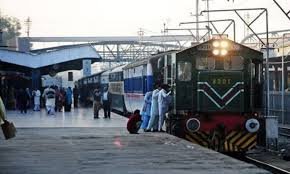
The KCR revival project involves the transformation of the old KCR into a mass transit system. The overall length of the rail line is estimated to be 50 km. Opened in 1964, the route of the old KCR began from Drigh Road and ended in the centre of Karachi. The KCR ceased operations in 1999 after sustaining tremendous losses.