


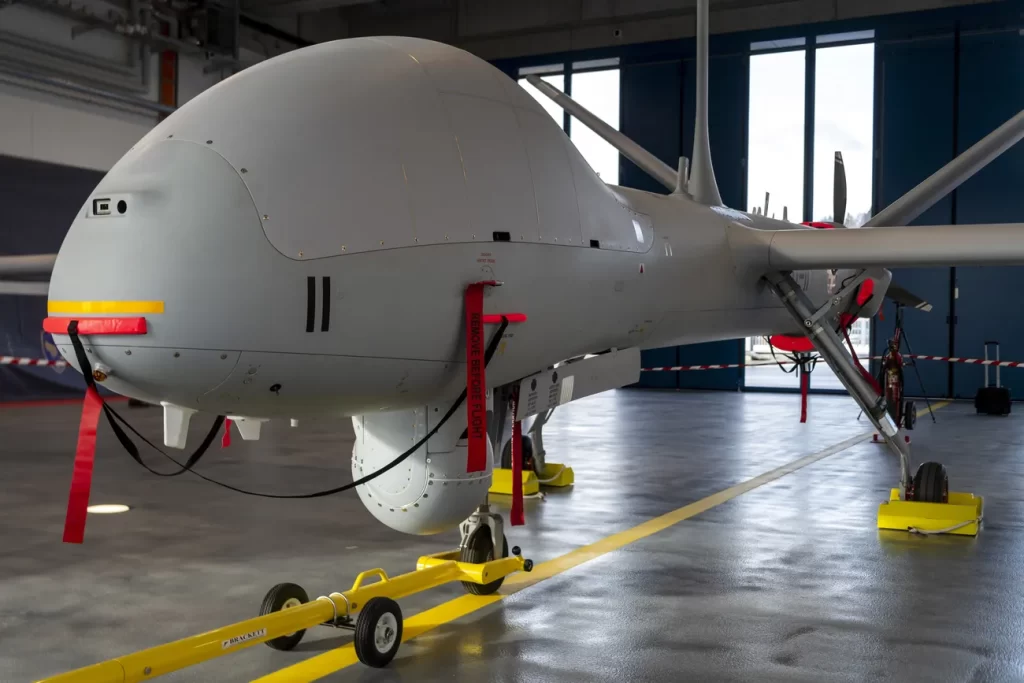
- Switzerland is boosting anti-drone defenses after increased drone sightings across Europe.
- The Swiss Army tasked armasuisse with prioritizing systems against micro and mini drones.
- Drone incursions recently disrupted flights at Munich airport, highlighting civilian risks.
- Analysts warn no system can provide full protection—offense remains cheaper than defense.
- Europe faces a cat-and-mouse race to secure skies as drones reshape modern warfare.
Who controls the skies in Europe? Increasingly, it is not the air force jets or the state-of-the-art missile batteries that dominate, but swarms of drones—small, cheap, and unpredictable. On Friday, Switzerland announced that it was strengthening its anti-drone defenses, a move that reveals just how seriously European governments are taking this new threat.
The Swiss Army confirmed it has tasked the federal office for defense procurement, armasuisse, to acquire advanced systems after successful summer field trials. “Based on these findings and in response to the increasing number of drone sightings,” the Army said, procurement will be prioritized for defense systems targeting micro and mini drones—the type most often spotted near airports, military bases, and critical infrastructure.
The announcement coincided with yet another disruption: overnight drone activity at Munich airport forced dozens of flights to be canceled or diverted, underscoring how even civilian life is being unsettled by unmanned aerial vehicles (UAVs). Swiss Defence Minister Martin Pfister, fresh from a meeting with his German counterpart, warned that the “threat from above” was growing faster than Europe’s capacity to defend against it.
U.S. Intelligence Aid to Ukraine Marks Potential Direct Involvement in War with Russia
Switzerland’s move is not isolated. Across the continent, drones have been spotted probing borders, interfering with air traffic, and in some cases suspected of gathering intelligence on military installations. Poland, too, on the same day announced a $5.5 billion investment to link its fuel pipelines with NATO’s Cold War-era supply network, citing drone incursions as a motivation to accelerate the project.
The Drone Dilemma
What makes drones so dangerous is not just their numbers but their adaptability. Small quadcopters available on the commercial market can be modified to carry surveillance gear or even improvised explosives. Unlike traditional aircraft, they fly low, evade radar, and cost a fraction of the systems designed to stop them.
READ MORE: Swiss Army ramps up drone defence systems after sightings
This imbalance has left European militaries scrambling. Neutral Switzerland’s decision to act is symbolic: even a nation that prides itself on staying out of wars feels vulnerable to technology that ignores borders.
But here lies the problem: can anti-drone defense systems truly provide protection?
Lessons From the Battlefield
The war in Ukraine has shown how drones, from Iran’s Shahed “kamikaze” models to hobbyist quadcopters used for artillery spotting, can overwhelm defenses. The Ukrainians deploy electronic jammers, anti-aircraft fire, and even “drone-hunting” units, yet Russian UAVs still strike targets deep inside the country almost daily.
ALSO READ: Drone Walls and Frozen Assets: Why the Ukraine War Is Recasting Europe’s Destiny
Western militaries are investing billions in counter-drone technology. Systems use a mix of electronic warfare (jamming signals), directed-energy weapons like lasers, or kinetic interceptors that shoot drones down. Yet no method is foolproof. Jammers can be bypassed by autonomous navigation systems. Lasers work only at close range and clear weather. And using expensive missiles to down $500 quadcopters is unsustainable.
An internal U.S. Army memo leaked in September revealed deep concerns about the vulnerability of its next-generation battlefield communication platform, developed by companies like Anduril and Palantir. The memo bluntly warned of “very high risk” that adversaries could gain undetectable access, highlighting that even the digital backbone of Western militaries is vulnerable to drone-related cyber threats.
If the U.S., with its vast resources, struggles to secure its systems, can Europe’s smaller states realistically hope to create a reliable shield?
Switzerland’s Bet
Armasuisse has already signed framework agreements with three unnamed suppliers for mini drones, accessories, and related services worth 108 million Swiss francs ($136 million). The contracts hint at a dual approach: not only defending against drones but also using them. In modern warfare, drones are both threat and tool—one cannot simply focus on defense without mastering offense.
Switzerland, sandwiched between EU giants, is betting that its early adoption of counter-drone systems will safeguard military assets and reassure its citizens. But experts warn this could be a cat-and-mouse game. As soon as one defense system is fielded, adversaries find new ways to bypass it—by altering frequencies, flying in swarms, or deploying decoys.
A European Awakening
The Munich airport disruption may serve as a wake-up call for Europe. Airports, nuclear plants, and power grids are all potential drone targets. NATO, already stretched by Russia’s war in Ukraine, now faces the challenge of defending against an invisible, low-cost enemy. Poland’s push to secure pipelines is one example of how infrastructure security is being rethought in the drone era.
But will Europe’s anti-drone race succeed—or are governments simply pouring money into temporary fixes?
The Big Question
For now, Switzerland’s move is less about guaranteed protection and more about signaling readiness. The truth is sobering: no defense system can promise 100% security against drones. Instead, the future may lie in layered defense—radar, jammers, lasers, and AI systems working together. Even then, the cost equation favors attackers.
As one European security analyst put it, “The drone revolution is like the machine gun in World War I. It changes the battlefield forever, and defense always lags behind offense.”
For Switzerland, the question is not whether anti-drone defenses will work perfectly—they won’t—but whether they can work well enough to deter, disrupt, and buy time. In the high-stakes game of drone warfare, even a partial shield might make the difference between vulnerability and survival.