


-
Historic Milestone: Takaichi becomes Japan’s first female prime minister, breaking gender barriers but inheriting Abe’s conservative legacy.
-
Economic Gamble: Her pro-stimulus agenda lifts markets but risks worsening Japan’s massive debt burden.
-
Diplomatic Tightrope: Close with Trump, wary of Xi — Japan must balance alliance loyalty with economic pragmatism.
-
Domestic Challenge: A divided parliament, rising costs, and public fatigue could quickly test her authority.
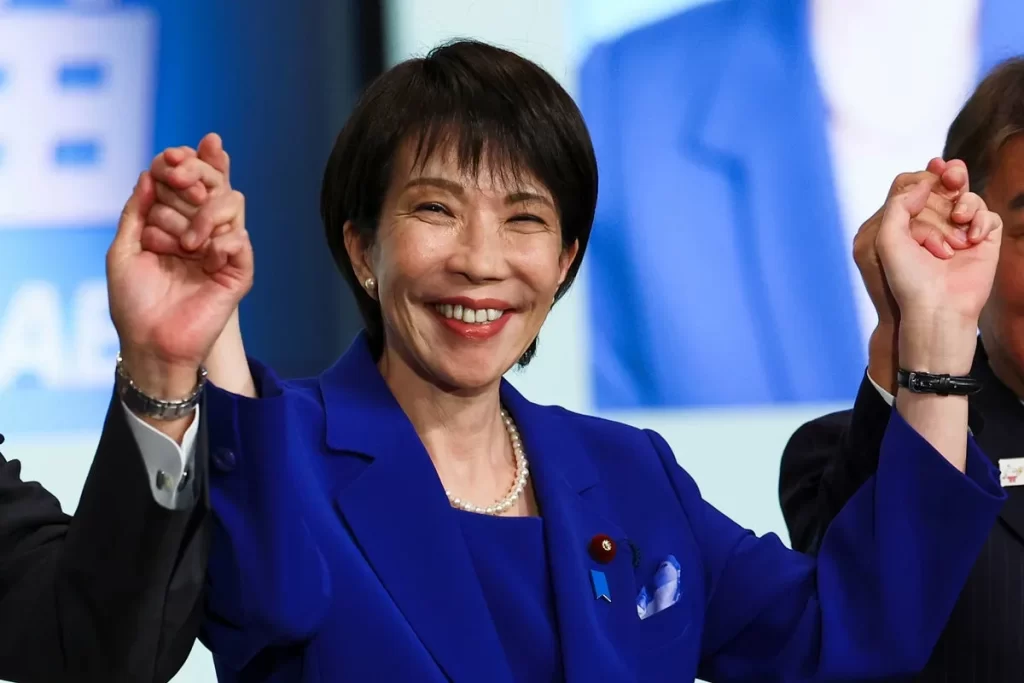
Sanae Takaichi has made history. Japan’s parliament has confirmed her as the nation’s first-ever female prime minister — a milestone that shatters a glass ceiling long thought unbreakable in Tokyo’s male-dominated political world. But her ascent, though historic, is hardly revolutionary. Takaichi’s ideology, policies, and alliances remain deeply rooted in the conservative traditions of the ruling Liberal Democratic Party (LDP) and the nationalist vision of her mentor, the late Shinzo Abe.
Backed by the center-right LDP and the Japan Innovation Party, Takaichi secured her victory after a tense parliamentary runoff. Her win came just in time for an expected visit from U.S. President Donald Trump — a leader whose hawkish worldview and economic nationalism mirror her own.
Together, they are poised to redefine the U.S.-Japan alliance, even as Tokyo’s political divisions and fiscal fragility threaten to undermine her early momentum.
The Abe Legacy and a Conservative Revival
Takaichi’s political DNA is unmistakably Abe-esque. A loyal disciple of the former prime minister, she inherits not just his economic blueprint—Abenomics—but also his vision of a “normal” Japan, one that reclaims military strength and constitutional assertiveness. Her push for constitutional revision, expanded defense spending, and strong deterrence against China and North Korea echoes Abe’s unfulfilled ambitions.
Like Abe, she views a close relationship with Washington as central to Japan’s security. Under her leadership, Tokyo is expected to boost defense cooperation with the U.S. and expand its role within the Quad alliance alongside India and Australia. Yet her hawkish instincts—particularly her past visits to the controversial Yasukuni Shrine—could inflame regional tensions, particularly with Beijing and Seoul.
READ MORE: Japan Gets Its First Female Leader, a Conservative Who Favors a Stronger Military
Her political victory also represents the LDP’s attempt at survival amid a populist surge. Faced with rising right-wing challengers, the party bet on Takaichi’s harder conservative stance to rally disillusioned voters. That gamble could either restore the LDP’s dominance—or deepen its internal fractures.
Markets Cheer, but Debt Looms Large
Financial markets greeted Takaichi’s victory with euphoria. The Nikkei 225 surged more than 4% to an all-time high, buoyed by hopes of aggressive stimulus, infrastructure spending, and public-private investment. The yen, meanwhile, tumbled past ¥150 against the dollar — a reflection of investor confidence in her “high-pressure economy,” but also a warning signal of inflation and currency volatility.
Related: Historic but Familiar: How Takaichi’s Ascent Could Reshape Japan’s Balancing Act Between Washington and Beijing
Takaichi’s economic playbook promises continuity with Abenomics: massive fiscal stimulus, loose monetary policy, and structural reform to spur innovation and consumption. Yet Japan’s debt-to-GDP ratio—already at a staggering 260%—poses an existential question: how long can Tokyo finance growth through borrowing?
Her alliance with the Japan Innovation Party could inject pro-market reforms such as deregulation and lower corporate taxes. But as global rates rise and domestic inflation bites, Japan’s fiscal room to maneuver is shrinking fast. Takaichi’s honeymoon with markets may prove short-lived if she cannot balance growth with fiscal discipline.
Between Trump and Xi: A Diplomatic Balancing Act
Takaichi’s first major diplomatic test will be managing relations with two of Japan’s most consequential partners — the United States and China.
With Trump returning to the White House, Tokyo faces renewed pressure to raise defense spending and open markets to American goods. Under a July trade deal, Japan agreed to invest roughly $550 billion in the U.S. and accepted a 15% tariff on its exports — a heavy price for maintaining Washington’s favor. Trump is expected to push for even higher defense outlays, perhaps up to 5% of GDP, far beyond Japan’s current 2% goal.
Takaichi’s personal affinity with Trump could help her navigate his demands. Both share a preference for hard power, nationalism, and pragmatic dealmaking. Yet the danger lies in over-dependence: aligning too closely with Washington could further strain Japan’s already fragile ties with Beijing.
China, Japan’s largest trading partner, has greeted her election with unease. Her pro-Taiwan statements and hawkish rhetoric are viewed in Beijing as provocations. A flare-up over Taiwan or maritime disputes could trigger economic retaliation, threatening Japanese exports and investment in China. Balancing deterrence and diplomacy with Beijing will define Takaichi’s credibility on the global stage.
Domestic Obstacles: Divided Politics and Rising Costs
At home, Takaichi faces daunting constraints. The LDP lacks a clear majority in both houses of parliament, forcing her to rely on the Japan Innovation Party for survival. Her former coalition partner, Komeito, defected over her reluctance to endorse political finance reform—leaving her vulnerable to opposition maneuvers.
Meanwhile, ordinary Japanese citizens are growing weary. Real wages remain stagnant, living costs are rising, and demographic decline continues unabated. Public patience for ideological battles—such as constitutional revision or cultural conservatism—is wearing thin. To retain legitimacy, Takaichi must deliver tangible relief at home, not just rhetoric abroad.
The Road Ahead
Takaichi’s first 100 days will set the tone. If she can stabilize markets, reassure allies, and project confidence without overreach, she could redefine Japan’s conservative politics for a new era. But if she missteps—provoking China, mishandling inflation, or alienating domestic voters—her historic tenure could unravel as swiftly as it began.
For now, Japan celebrates a breakthrough: a woman finally leading the world’s third-largest economy. Yet the deeper question remains whether Sanae Takaichi can transform that symbolism into substance—balancing power, principle, and pragmatism in a moment of global uncertainty.
Her election is a triumph of history, but her leadership will be judged by her ability to navigate Japan’s future.