


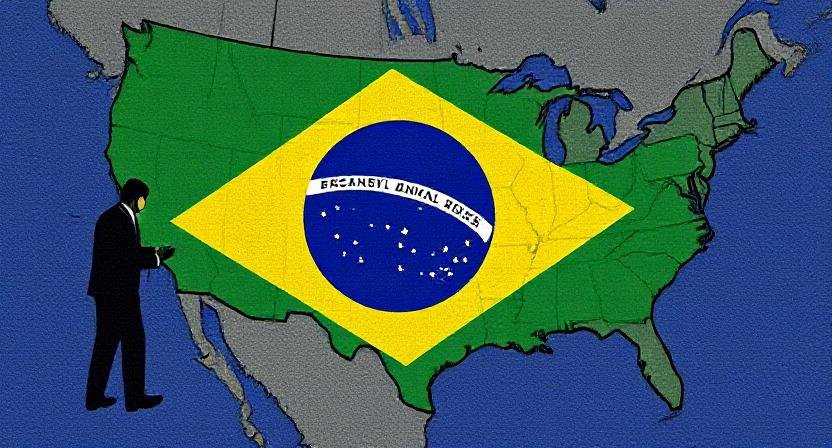
- Brazil threatens to challenge U.S. tariffs in American courts after Trump imposes 50% duties on Brazilian exports.
- Finance Minister Fernando Haddad criticizes Washington’s “weaponization” of trade and warns of global economic risks.
- Legal experts say a lawsuit would be unprecedented, testing the limits of U.S. trade law and executive authority.
- The dispute deepens uncertainty in U.S.-Brazil relations and raises concerns about dollar dominance in global trade.
Brazil’s Finance Minister Fernando Haddad has signaled that his country is prepared to take the extraordinary step of challenging the United States in its own courts over the punitive tariffs imposed on Brazilian goods by the Trump administration. Speaking to Brazilian media on August 27, Haddad stated plainly: “We will go to court if needed,” underscoring Brazil’s frustration with Washington’s latest trade measures and its refusal to engage in traditional lobbying efforts to reverse them.
The tariffs, announced earlier this month by U.S. President Donald Trump, amount to a 50% duty on a range of Brazilian exports. Trump justified the move by citing what he described as unfair trade practices by Brazil and linking the issue to what he called a “witch hunt” against former Brazilian President Jair Bolsonaro, who faces trial on charges of plotting a coup. The White House framed the tariffs as both economic and political retaliation—a characterization that has only deepened Brazil’s outrage.
Brazil’s Economic Position and Reaction
Brazilian officials have pointed out that the South American nation has run persistent trade deficits with the United States, making the claim of “unfair” trade practices questionable at best. “Indignation” was the word used by Brazil’s Foreign Ministry to describe its reaction to the tariffs, with Haddad emphasizing that the country cannot allow itself to be penalized for political developments at home or for maintaining a sovereign trade policy.
Adding to the broader implications, Haddad remarked that world leaders now feel a sense of insecurity about the United States as a trade partner, uncertain about the direction of its policies. He also issued a warning about the global financial system, noting that while the U.S. dollar remains the world’s dominant reserve currency, Washington risks undermining that role if it continues to “weaponize” economic tools like tariffs and sanctions for political purposes.
READ MORE: Breaking: Trump Threatens Russia with Sanctions as Kremlin Blocks Peace Talks
Legal Options: Can Brazil Sue in U.S. Courts?
While countries typically contest tariffs through the World Trade Organization (WTO), Brazil’s threat to challenge the U.S. in its own federal courts is unusual. Legal experts note that such a case would face significant hurdles because American trade law grants the executive branch wide latitude in imposing tariffs for national security or trade-related reasons. However, if Brazil argues that the tariffs violate U.S. law or constitutional protections—perhaps by linking them to unrelated political issues like Bolsonaro’s trial—it could at least open the door to judicial review.
ALSO READ: Brazil might challenge tariffs in US courts, finance minister says
As of late August 2025, there has been no confirmation that Brazil has formally filed such a lawsuit, so the situation remains fluid. Some analysts suggest the threat itself may be aimed at pressuring Washington to return to the negotiating table, especially given the economic stakes for both sides.
Broader Geopolitical and Economic Implications
The dispute comes at a time of growing global concern over the stability of U.S. trade policy. Trump’s return to the White House has reignited debates about tariffs as a tool of economic nationalism, with countries from Europe to Asia closely watching how Washington treats its partners. For Brazil, a top exporter of agricultural products, metals, and manufactured goods, the U.S. market is critical. A 50% tariff could price many Brazilian products out of reach for American consumers and industries, leading to losses in both export revenue and jobs.
Moreover, Haddad’s comments about countries conducting trade in local currencies highlight another emerging trend: the slow but noticeable shift away from dollar dominance in global trade settlements. If nations increasingly view the U.S. as an unpredictable partner, they may accelerate efforts to build alternative financial arrangements, from currency-swap agreements to digital payment systems outside Washington’s control.
Conclusion: A Test Case for U.S.-Brazil Relations
Brazil’s threatened legal action—whether it ultimately materializes or not—marks a turning point in U.S.-Brazil relations. It reflects not only immediate economic concerns but also a deeper unease about the future of trade, sovereignty, and the global financial order. Should the case proceed in American courts, it would test the limits of U.S. trade law and perhaps set a precedent for how other nations respond to what they see as politically motivated economic measures.
For now, businesses, diplomats, and legal experts on both sides of the equator await clarity on Brazil’s next move. What is certain, however, is that this tariff dispute has already broadened into a debate about trust, fairness, and the rules governing international commerce in an increasingly uncertain world.