


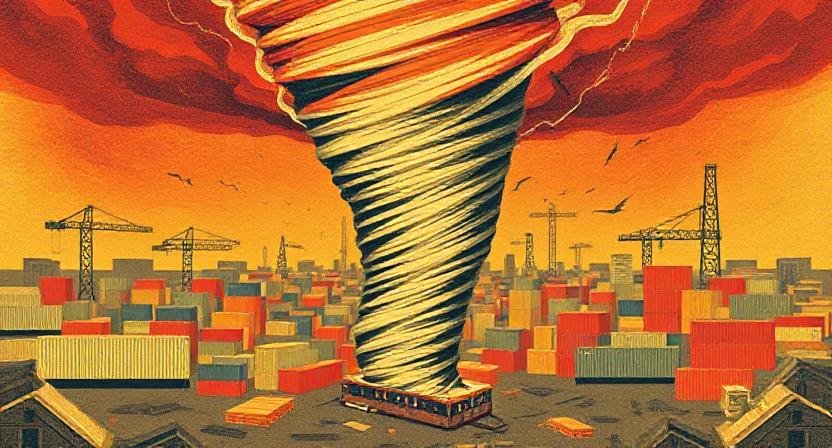
- Trump’s tariffs have triggered a $1.3 trillion global trade disruption, slashing U.S. household incomes and stoking inflation worldwide.
- Investor confidence is plunging, with foreign direct investment in the U.S. falling 14% and bond markets showing signs of deep distrust.
- The U.S. dollar is weakening, while Treasury yields spike amid speculation of Trump pressuring foreign creditors and undermining Fed independence.
- Allies and rivals alike are moving away from the U.S. economic orbit, accelerating de-dollarization, regional trade pacts, and domestic reforms.
The world economy is stumbling into dangerous territory, and President Donald Trump’s tariffs are proving to be more of a wrecking ball than a negotiating tool. As of mid-2025, the U.S. has imposed new tariffs on more than $1.3 trillion worth of goods, not just from China, but from the European Union, Japan, Canada, and even India. These policies have rattled the global financial system, strained historic alliances, and ushered in a wave of economic uncertainty not seen since the 1970s oil shock.
“Trump is playing poker with the global economy,” says Dr. Nouriel Roubini, NYU economist and author of MegaThreats. “The tariffs are not just about trade—they’re about projecting power. But the collateral damage is massive: capital flight, rising inflation, and falling investor confidence.”
Tariffs and Trade Tensions: A Costly Gamble
Trump’s 2025 tariffs come on top of earlier protectionist measures during his first term. In his second term, however, the scale has grown dramatically. A sweeping 60% tariff on Chinese goods and a 20% levy on European cars have already sparked retaliatory measures. The World Bank now projects global GDP growth will shrink to 1.9% this year, compared to 2.7% in 2024.
According to the Peterson Institute for International Economics, these tariffs will cost the average U.S. household an additional $2,500 annually in higher prices. Worse still, global manufacturing activity—measured by the JPMorgan Global Manufacturing PMI—fell to 45.8 in June, its lowest since the COVID-19 pandemic.
“Tariffs are inflationary taxes disguised as patriotism,” says Dr. Carmen Reinhart, former World Bank chief economist. “This is not a strategy; it’s a siege mentality. When the U.S. imposes tariffs on allies and rivals alike, it erodes the very system that sustained post-WWII prosperity.”
The Dollar, the Fed, and the Fissures
The economic shockwaves from these policies have reverberated across currencies and markets. The U.S. dollar index has dropped 7% year-to-date, and rumors that the Trump administration may pressure foreign holders of U.S. debt to extend maturities have unnerved bond markets. Yields on 10-year U.S. Treasuries spiked to 5.2%, the highest since 2007, signaling distrust in long-term U.S. fiscal stability.
READ MORE: Is America Breaking the Global Economy?
Trump’s open conflict with Federal Reserve Chairman Jerome Powell is compounding the instability. Powell has resisted Trump’s calls for aggressive rate cuts, citing inflation fears as the Consumer Price Index hit 5.6% in June.
“The erosion of central bank independence is a red line,” warns Kenneth Rogoff, Harvard professor and former IMF chief economist. “Markets thrive on predictability and rules. Trump’s actions are injecting Third World-style volatility into the world’s largest economy.”
Investor Confidence Plunges
Wall Street may have briefly rallied after Trump delayed tariff implementation by 90 days, but underlying indicators paint a bleaker picture. The VIX volatility index surged to 26, signaling investor unease, while foreign direct investment into the U.S. fell 14% in Q2. Nasdaq-listed firms with heavy overseas exposure, such as Apple, Caterpillar, and Boeing, all issued profit warnings tied to trade disruption.
ALSO READ: Global Trade War Erupts: China and Europe Strike Back as Trump’s Tariffs Escalate
Even the International Monetary Fund, traditionally cautious in tone, issued a stark warning: “Prolonged tariff uncertainty and retaliatory measures could trigger a synchronized global recession.”
Global Fallout: Allies Seeking Alternatives
As Trump tears apart decades of trade diplomacy, U.S. allies are recalibrating. Europe is negotiating deeper economic ties with ASEAN nations and is accelerating its long-stalled capital markets union. China, while battered by tariffs, is quietly working on converting the yuan into a more accepted global reserve currency. The BRICS bloc—now expanded to include Saudi Arabia and Argentina—has intensified efforts to trade in non-dollar terms.
“There’s a slow but growing move toward de-dollarization,” says Reinhart. “Countries no longer see the U.S. as a reliable economic steward.”
A Precarious Future: Boom or Bust?
Economic analysts are split on the outcome. Some believe Trump’s strong-arm tactics could eventually yield a leaner global economy with more equitable trade. Others see a trajectory toward stagflation and fragmentation.
Even Trump supporters within the investment community are growing wary. In a note to clients, Goldman Sachs warned that “unpredictable trade policy remains the top risk to global asset allocation decisions for the foreseeable future.”
Conclusion: Breaking the Machine
For now, it’s clear that Trump’s tariff-fueled nationalism is not just a domestic experiment—it’s an international upheaval. The U.S. economy is no longer seen as the stable nucleus of global finance but a wild card. The tariff storm is hammering growth, shaking investor psychology, and fracturing a rules-based order painstakingly built over generations.
The world is watching—and hedging its bets.