


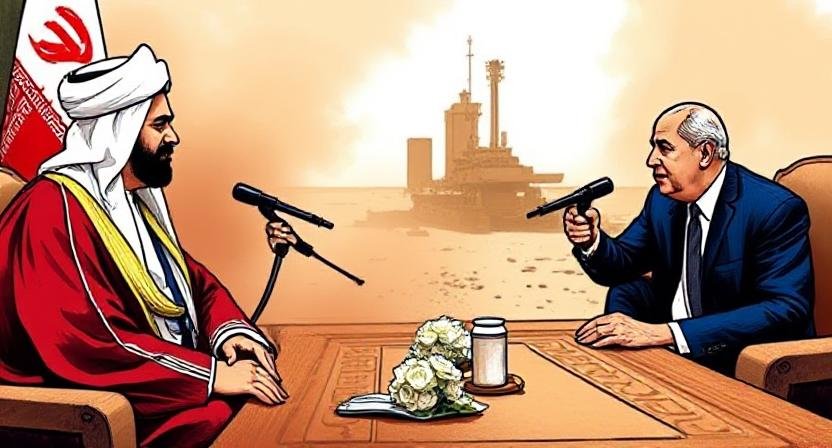
- Tehran has secretly approached Qatar, Saudi Arabia, and Oman to urge U.S. President Donald Trump to pressure Israel into agreeing to an immediate ceasefire.
- Gulf states confirmed Iran’s willingness to pause hostilities if Israel halts its attacks, potentially reopening the path to nuclear negotiations.
- A draft ceasefire plan by Oman proposes Iran suspend nuclear enrichment for up to 3 years under IAEA supervision in exchange for U.S. sanctions relief.
- Oil prices surged past $117 a barrel as global markets reacted to the growing risk of a regional war disrupting energy supplies.
In a high-stakes diplomatic maneuver cloaked in denial and discretion, Tehran has quietly reached out to Qatar, Saudi Arabia, and Oman, urging them to press U.S. President Donald Trump to compel Israel into accepting an immediate ceasefire — in return for Iranian flexibility in nuclear negotiations, The Islamabad Telegraph has learned.
The back-channel appeals, which unfolded over the weekend, reveal a complex web of quiet diplomacy designed to halt the most dangerous escalation yet between Israel and Iran. According to senior regional sources, Iran has made it clear: it will not resume nuclear negotiations while under fire, but is open to halting retaliatory attacks if Israel agrees to stop its bombing campaign.
While Iranian officials have publicly denied making any such approach, a Gulf official based in Doha confirmed to The Islamabad Telegraph that Iran has indeed conveyed a willingness to pause hostilities under “certain undisclosed terms.” The source, speaking on condition of anonymity, stated: “Yes, Iran has reached out through diplomatic channels. The terms for a ceasefire remain confidential, but the message was clear — Tehran wants the war stopped before it’s too late.”
Gulf Diplomacy in Overdrive
Gulf capitals have been abuzz with activity. Top diplomats in Qatar, Oman, and Saudi Arabia spent the weekend in intense communications — speaking to counterparts in Tehran, Washington, and even Tel Aviv — as fears mount over a full-blown regional war.
Qatar and Oman, both known for their discreet mediation roles, are at the center of this emerging effort. Sources close to Gulf governments say Oman is currently drafting a formal ceasefire proposal to present to both Washington and Tehran, one that may include a suspension of Iran’s nuclear enrichment program for up to three years under international supervision.
READ MORE: Iran sought US pressure on Israel for ceasefire via Gulf states, sources say
Oil prices have surged to record levels not seen since the early 2000s. Brent crude was trading above $117 a barrel as markets opened on Monday, reflecting global concerns over supply disruptions stemming from the Israel-Iran conflict.
“The markets are jittery,” said a senior energy analyst in Dubai. “A direct conflict between two major Middle Eastern powers always drives up prices, but this is unprecedented. If the Strait of Hormuz becomes a target, prices could skyrocket beyond $150.”
What Tehran May Be Offering
While Iranian sources refuse to officially confirm the contents of the back-channel negotiations, one diplomat familiar with the matter suggested that Tehran may be open to a significant — if temporary — halt in nuclear enrichment. According to a regional official, Iran has hinted at accepting a one-year freeze on enrichment, complete IAEA inspections, and a limited role for international stakeholders in its civilian nuclear program.
In exchange, Tehran wants the United States to formally acknowledge Iran’s right to peaceful nuclear technology and to begin lifting sanctions — an issue that has long divided Washington and Tehran.
Oman’s ceasefire draft reportedly outlines a compromise: Iran would suspend all enrichment for 12 to 36 months and grant unfettered access to IAEA inspectors, while Washington would gradually ease banking and energy sanctions and restore diplomatic channels cut under previous escalations.
One Gulf source said: “This is the most significant opening we’ve seen in months. Iran is blinking — but only if Israel does too.”
Israel and the U.S. Remain Tight-Lipped
Despite mounting pressure, neither Israel nor the Trump administration has shown public signs of de-escalation. Israeli Prime Minister Benjamin Netanyahu’s office declined to comment. When asked about the possibility of a ceasefire mechanism, Israel’s National Security Adviser Tzachi Hanegbi told Army Radio: “It is a little early for that. You don’t go to war and look to end it three days later.”
READ MORE: In the Shadows of War: Iran Refuses Ceasefire Amid Relentless Israeli Strikes
Israel launched a sweeping air assault on Iran last Friday, killing several senior commanders in Iran’s Revolutionary Guard and targeting nuclear facilities. Israel insists the campaign aims to cripple Iran’s ability to produce a nuclear weapon — an accusation Tehran vehemently denies, maintaining its program is strictly for civilian use.
The sixth round of nuclear talks scheduled in Muscat last Sunday was abruptly canceled after the Israeli strikes.
The White House and State Department have not issued any official statement on whether President Trump is considering Gulf appeals. Analysts believe Trump’s calculus is complicated: siding with Gulf allies and defusing the crisis might help global markets and his re-election bid, but appearing to pressure Israel could provoke backlash from hawkish U.S. factions.
Regional and Global Implications
In a notable development, Iranian sources also say Tehran has appealed to Turkish President Recep Tayyip Erdoğan to intercede, while Russian President Vladimir Putin has reportedly offered to mediate with both Washington and Tel Aviv. While neither Ankara nor Moscow has confirmed this, such moves highlight the geopolitical stakes of the conflict.
“Iran is playing a dangerous game of escalation and negotiation,” said a European diplomat based in Abu Dhabi. “They’re retaliating, yes, but at the same time signaling they want off the warpath — without losing face.”
Despite its war rhetoric, Tehran is reportedly anxious about the long-term fallout of a sustained conflict. “Iran knows this war could spiral into something that haunts the region for decades,” one Iranian source admitted. “They want to end it — but only if they are treated with respect, not bombed into submission.”
As the world watches, diplomacy and destruction hang in the balance. Whether President Trump heeds the Gulf call — and whether Israel responds — may determine the Middle East’s next chapter.