


- Terrorism in Pakistan has entered a more lethal and coordinated phase
- Islamabad bombing highlights vulnerabilities in urban counter-terrorism
- Regional instability, particularly in Afghanistan, fuels militant resurgence
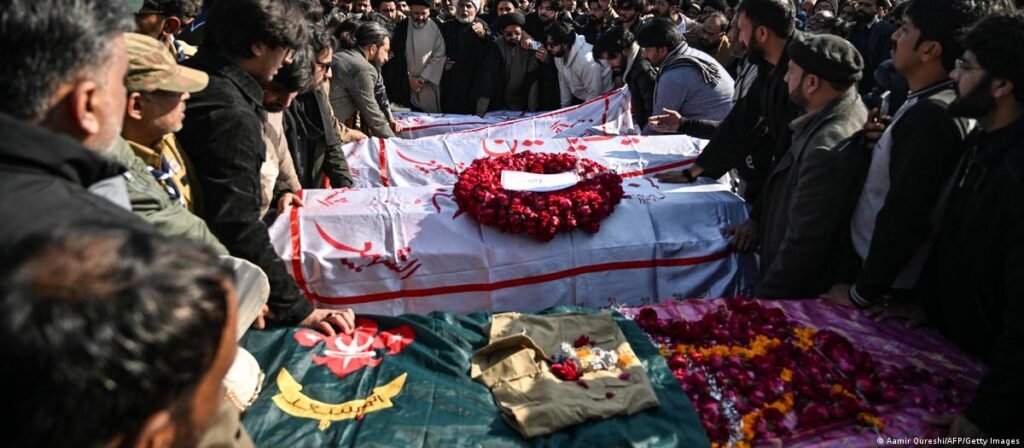
Pakistan is confronting a troubling resurgence of terrorism that threatens the peace and security of its people. In early February 2026, a suicide bombing ripped through an imambargah (Shia congregational hall) in Islamabad’s Tarlai area during Friday prayers, killing at least 31 worshippers and injuring more than 160 others. It was among the deadliest attacks on a place of worship in the capital in recent memory.
The Islamic State claimed responsibility for the bombing, which targeted a civilian religious gathering and underscored the growing sophistication, reach, and brutality of terrorist tactics operating inside Pakistan.
Islamabad Mosque Bombing Kills 25: Pakistan Bears Heavy Price for Global War on Terror
At the same time, the Baloch Liberation Army (BLA) intensified coordinated attacks across Balochistan, killing dozens of civilians and security personnel. In response, Pakistani security forces reportedly eliminated more than 170 militants in a major counter-terrorism operation conducted over two days. The scale of the operation marked one of the most significant militant crackdowns in decades.
The latest violence in the province—rooted in long-standing Indian-funded terrorism —was also condemned by the United Nations Security Council.
Pakistan: IS affiliate group claims Islamabad mosque bombing
Together, these incidents have reignited national debate over how terrorism in Pakistan has evolved. It is no longer solely an internal security issue but a complex challenge involving terrorists outfits, ideological extremists, and transnational militant networks.
The Afghanistan Factor
A critical driver behind the renewed wave of terrorism is instability in neighboring Afghanistan. Since the Taliban’s return to power in Kabul in 2021, the regional security landscape has shifted dramatically. Several militant groups that were once fragmented have regrouped along the Pakistan-Afghanistan border, exploiting rugged terrain and historically porous crossings.
Pakistani investigators probing the Islamabad bombing revealed that the suicide attacker had spent several months in Afghanistan before returning to carry out the assault. This finding highlights how militant training, indoctrination, and logistical planning increasingly occur beyond Pakistan’s borders.
Fragile governance in Afghanistan and the inability to effectively restrain militant factions continue to alarm policymakers in Islamabad. Pakistan has repeatedly argued that unchecked militant sanctuaries across the border directly undermine its internal security.
This reality demonstrates that terrorism in Pakistan cannot be viewed in isolation. When Afghanistan remains unstable and militant networks operate freely across borders, domestic security deteriorates. Such conditions allow extremists to plan attacks, recruit followers, and evade law enforcement with relative ease.
Why Is Terrorism Resurging?
Several interconnected factors explain the resurgence of terrorism in Pakistan.
First, despite extensive border fencing and surveillance efforts, gaps remain along remote stretches of the Afghan frontier. Militants exploit these vulnerabilities to move, regroup, and train.
Second, economic and social deprivation—particularly in regions like Balochistan—continues to fuel unrest. Chronic poverty, limited investment, and political marginalization make local populations vulnerable to recruitment by terrorists group.
Third, ideological extremism remains a potent force. Groups such as the Islamic State deliberately target minority communities to inflame sectarian tensions, destabilize society, and provoke cycles of retaliation.
Finally, prolonged political instability often diverts attention from sustained counter-terrorism efforts. Policy discontinuity and institutional distractions weaken the overall effectiveness of security operations.
A Comprehensive Strategy to Counter the Threat
Addressing this multidimensional challenge requires a holistic and sustained approach that targets both immediate threats and their root causes.
Strengthening border security and intelligence cooperation is essential. Pakistan must expand the use of advanced surveillance technologies, shared databases, and integrated intelligence mechanisms. Even amid political complexities, coordination with Afghan authorities remains crucial to dismantling militant networks before they strike.
Addressing domestic socio-economic disparities is equally important. Long-term security cannot be achieved without investment in education, vocational training, and employment opportunities, particularly in underserved regions. Inclusive development can reduce alienation and rebuild trust between communities and the state.
Reinforcing the rule of law is another pillar. Terrorism suspects must face swift, transparent trials that uphold human rights. Stronger counter-terrorism courts, improved forensic capacity, and better evidence protection will enhance public confidence in the justice system and deter future violence.
Countering extremist narratives is vital. Religious leaders, educators, and the media must promote messages of tolerance and national unity. Curriculum reforms and civic engagement initiatives can help shield young people from radicalization.
Ensuring political cohesion is also critical. A bipartisan, long-term counter-terrorism framework—one that survives electoral cycles—will ensure continuity and prevent policy reversals during political transitions.
Expanding regional and global diplomacy must remain a priority. Terrorism is a transnational threat, and Pakistan’s cooperation with Afghanistan, China, the United Nations, and other partners can provide technical expertise, intelligence sharing, and financial support to combat extremism effectively.
Conclusion: Turning the Tide Together
The Islamabad bombing and renewed terrorism in Balochistan make clear that Pakistan is facing a dangerous convergence of internal and regional security threats. Yet the country has overcome similar challenges before through public resilience and institutional strength.
By aligning robust security measures with socio-economic reform, judicial integrity, educational initiatives, and proactive regional diplomacy—particularly with Afghanistan—Pakistan can reverse the current trajectory. Ultimately, defeating terrorism requires not only stronger defenses but a united society where citizens feel secure, valued, and genuinely invested in the nation’s future.
The author is an undergraduate student of International Relations at Bahria University, Islamabad. The views expressed here are her own and do not necessarily reflect those of The Islamabad Telegraph. She can be reached at sandeelmanzoor123@gmail.com