


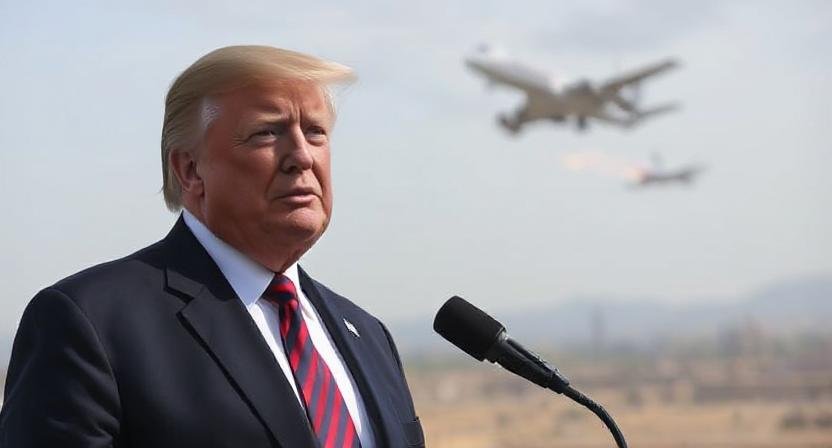
- Trump Approves Iran Strike Plans: The Wall Street Journal reports President Trump has authorized military plans against Iran but is holding back the final order to pressure Tehran diplomatically.
- Israel’s War Intensifies: Israel’s Operation Rising Lion has struck over 1,100 targets in Iran, escalating regional instability and drawing U.S. forces closer to the conflict.
- U.S. Military Positioned for Action: Advanced fighter jets, warships, and tankers have been deployed across Europe and the Middle East, preparing for potential retaliation or strike orders.
- Iran, Russia Respond with Defiance: Tehran vows retaliation under duress, while Moscow warns Washington and calls for an immediate end to hostilities.
President Donald J. Trump has privately approved military plans for a direct U.S. strike against Iran, but according to officials cited by The Wall Street Journal, he is holding off on giving the final green signal. The delay, sources say, is part of a calculated strategy to coerce Tehran into abandoning its nuclear ambitions, while leveraging the ongoing Israeli offensive as pressure.
“I may do it, I may not do it,” Trump told reporters at the White House on Wednesday, teasing his decision. “I like to make the final decision one second before it’s due.” That second, however, hasn’t arrived—even as the world teeters on the edge of a full-scale Middle East war.
Trump’s Calculated Delay
According to three individuals familiar with internal White House deliberations, Trump conveyed to his top military aides inside the Situation Room late Tuesday that he approves of potential strike options. Yet, he has not signed the final order, using what one aide called his “art of strategic hesitation.”
“Trump wants to force Iran to the table with pressure, not just power,” a senior White House official told The Wall Street Journal. “He sees Israel’s operation as both a warning and a template.”
Trump’s Warm Welcome to Field Marshal Asim Munir Signals New Era in Pakistan-U.S. Ties
Despite public acknowledgment that an attack is under consideration, Trump seems to be hoping Tehran will cave to mounting pressure—military, economic, and diplomatic. For now, he watches from the sidelines, albeit with growing impatience.
Operation Rising Lion
Israel’s bombing campaign, now in its sixth day, continues to intensify under the codename Operation Rising Lion. More than 1,100 targets inside Iran have been struck, including eight Iranian attack helicopters and 40 missile infrastructure sites in western Iran. On Wednesday alone, Israeli jets flew over 70 sorties, according to Israeli military officials.
MORE DETAIL: Trump Privately Approved of Attack Plans for Iran but Has Withheld Final Order
A U.S. defense official told the Telegraph that while Israel has “extensively weakened” several command-and-control hubs and supply chains, Iran’s key nuclear facilities remain untouched. Chief among them: the Fordow uranium-enrichment facility, a heavily fortified site buried deep beneath a mountain and considered unreachable by conventional weapons.
U.S. Forces Mobilize
Even as Trump dithers on authorizing offensive action, the Pentagon has continued to reposition military assets toward the theater of operations. Advanced F-22 Raptors were deployed to Britain on Wednesday. Warships capable of intercepting ballistic missiles are now en route to the eastern Mediterranean. An aircraft carrier strike group is stationed in the Arabian Sea, and refueling tankers have been placed on standby.
Defense Secretary Pete Hegseth and Joint Chiefs Chairman General Dan Caine met with the president Wednesday after testifying before the Senate Armed Services Committee. Hegseth emphasized that “all military options remain under presidential review,” but declined to elaborate further in public testimony.
EXCLUSIVE: Trump Edges Toward War with Iran as Khamenei Defies Call for Surrender
“Our mission is clear: we are strengthening regional defenses and ensuring readiness for any retaliation should the U.S. be forced to act,” Hegseth said. The Pentagon is reportedly bracing for potential Iranian reprisals on American bases in the Gulf if Trump orders a strike.
Diplomatic Fallout and Iranian Defiance
Iran’s government, meanwhile, remains defiant. In a sharply worded statement issued by its mission to the United Nations, Tehran declared: “Iran does NOT negotiate under duress, shall NOT accept peace under duress, and certainly NOT with a has-been warmonger clinging to relevance.”
The rebuke was an unmistakable jab at Trump, who has publicly demanded Iran’s unconditional surrender of its nuclear capabilities.
Foreign Minister Hossein Amir-Abdollahian warned Wednesday that any American strike would be met with “a firestorm across the region.” Iranian-backed militias in Iraq, Lebanon, and Yemen have also vowed retaliation.
Russia has added its voice to the chorus of warnings. Foreign Minister Sergei Lavrov, in a call with his Omani counterpart, called for an “immediate cessation of hostilities” and condemned Israel’s air campaign. The Kremlin fears the crisis could spiral into a broader regional war involving U.S. and Russian proxies.
Countdown or Bluff?
As Trump weighs his next move, the world holds its breath. The president’s pattern of brinkmanship—publicly threatening action while privately hedging—is well known. But this time, the stakes are dangerously high.
“Next week is going to be very big, maybe less than a week,” Trump told reporters cryptically. That time window may determine whether the U.S. joins the war as an active participant or continues to play the role of high-stakes puppeteer behind the curtain.
With Israeli jets still pounding Iranian sites and American firepower in striking distance, one thing is clear: the fuse is lit. Whether Trump chooses to ignite the powder keg or keep it smoldering is a decision the world anxiously awaits.