


- Analyze how Trump’s return to the White House impacts international diplomacy, with a focus on his approach to Asia and escalating trade measures against China.
- Discuss Trump’s history of unilateral policies in the Asia-Pacific region, from tariffs to defense demands on allies.
- Explore the risks for China, as Trump aims to counter its global influence through economic and military strategies.
- Examine concerns from Asian allies on the potential instability in U.S.-Asia relations and the implications for regional security.
Donald Trump’s return to the White House is now a reality, and world leaders are already positioning themselves to align more closely with his administration. However, Trump’s re-election raises significant questions for China, as Trump seems set on continuing his assertive policies on both the economic and diplomatic fronts—policies that have often targeted Beijing. With the Asia-Pacific region now a key area of geopolitical interest, China may need to brace for a tougher, more unpredictable U.S. stance under a Trump-led administration.
Reflecting on Trump’s first term and his campaign promises offers some clues about his likely approach toward Asia. After assuming office in 2017, Trump pulled the U.S. out of the Trans-Pacific Partnership (TPP), marking his disdain for multilateral arrangements that he perceived as disadvantageous to American interests. He also frequently skipped regional summits or, when present, criticized member states, accusing them of exploiting U.S. economic and defense resources. Trump even questioned the long-standing American defense commitments, which provide a security framework for allies across the Asia-Pacific.
Trump’s Asia Policy
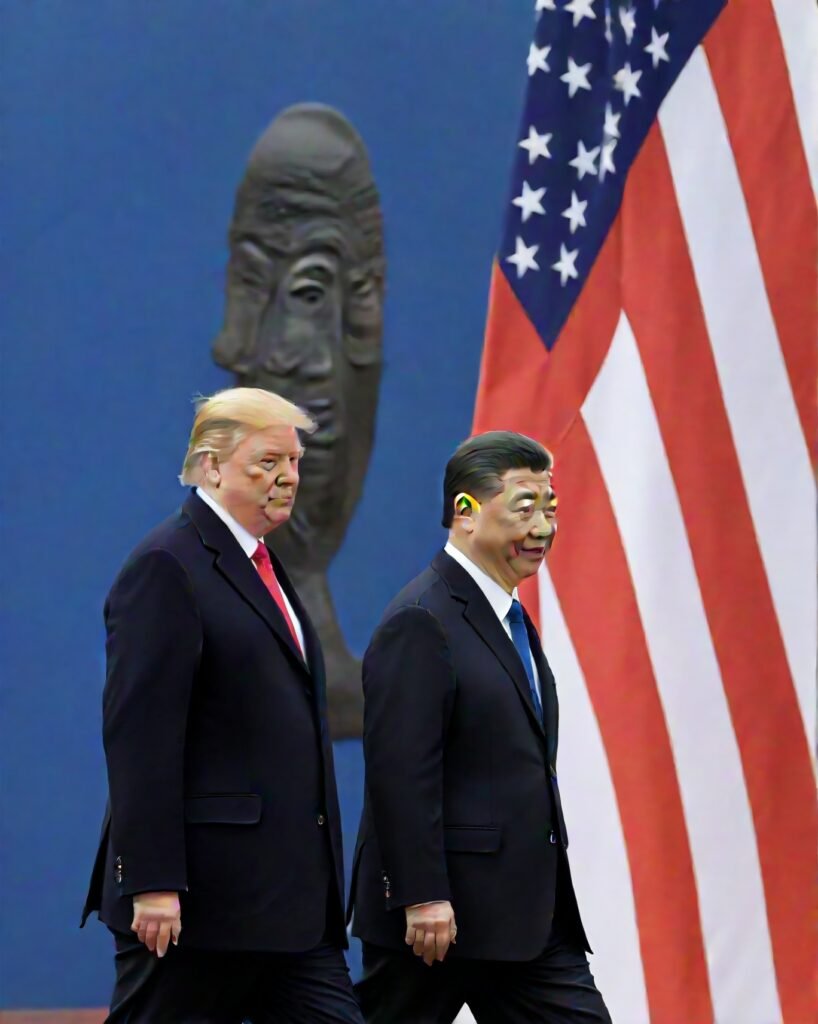
The centerpiece of Trump’s economic policy toward China during his first term was his trade war, which imposed tariffs on hundreds of billions of dollars’ worth of Chinese goods. This aggressive economic stance seems likely to continue, with Trump pledging to double down on tariffs if necessary. Despite these actions, Trump has claimed a strong relationship with Chinese President Xi Jinping and expressed a desire to maintain a positive working relationship. Still, with a renewed focus on balancing economic ties with a competitive diplomatic posture, Beijing will need to monitor Trump’s second-term approach closely.
How Asia Is Bracing for Trump’s Second Term
Experts suggest that Trump will be “more prepared” this time, with an experienced team around him. The names of staunch China critics like Senator Marco Rubio, former trade representative Robert Lighthizer, and former Secretary of State Mike Pompeo have been floated as potential key figures in his administration. According to Derek Grossman, senior defense analyst at RAND, a more “isolationist” mindset could dominate the administration, which might shape a transactional, less predictable foreign policy.
China and other Asian economies are particularly vulnerable to Trump’s proposed tariff-heavy approach. Trump has suggested imposing a 60% tariff on Chinese goods and additional tariffs on imports from other countries. This could impact Asian countries that previously benefited from manufacturing shifts away from China during the U.S.-China trade war.
Stephen Nagy, a visiting fellow at the Japan Institute for International Affairs, says that these countries might face their own set of tariffs as Trump attempts to prevent U.S.-China trade from simply being redirected through third countries. This scenario could strain trade-dependent economies in Asia, which are deeply integrated into the global supply chain. A study by Oxford Economics indicates that American imports from “non-China Asia” would likely decrease by 3%, while exports to the region could drop by 8%.
Multilateral trade partnerships may also feel the heat. Trump has previously indicated his willingness to scrap the Indo-Pacific Economic Framework, a regional economic arrangement involving the U.S. and thirteen other countries, including several from Asia.
According to RSIS research fellow Adrian Ang, Trump’s preference for bilateral over multilateral agreements stems from his belief that the U.S. can better leverage its size and influence through one-on-one deals. Should the U.S. abandon multilateral trade in Asia, it could leave regional economies more exposed to China. Nevertheless, countries like Japan have already demonstrated resilience by leading the Comprehensive and Progressive Agreement for Trans-Pacific Partnership (CPTPP), which emerged after the U.S. exit from the original TPP.
Trump’s Diplomacy And Asia
On the diplomatic front, Trump’s approach has often involved engaging with authoritarian leaders. His interactions with North Korean leader Kim Jong Un and Russian President Vladimir Putin exemplify his preference for high-level diplomacy that sidesteps traditional diplomatic protocols. Trump’s personal rapport with Kim has been a hallmark of his North Korea strategy, which may continue into his second term. While Trump has touted his ability to maintain peace with North Korea, experts are cautious about his capacity to manage Pyongyang’s increasing nuclear ambitions, especially as North Korea strengthens ties with Russia.
For traditional allies in the Asia-Pacific, Trump’s transactional style means they will need to “prove their worth.” South Korea and Japan have already shown their readiness to shoulder more financial responsibility for hosting U.S. troops. Both nations recently increased their defense budgets, with South Korea agreeing to pay over $1 billion annually to support American forces on its soil. Trump has praised these moves but has hinted that he may push for even higher financial commitments. As RSIS’s Kevin Chen notes, “Trump will try to squeeze as much as he can out of those allies,” requiring even countries with formal defense pacts to demonstrate their value.
China, for its part, is likely concerned about Trump’s stance on regional security, especially regarding the South China Sea and Taiwan. Trump’s first term saw the development of the Indo-Pacific strategy, which aimed to counter China’s assertive moves in the region. While Trump has claimed he’s against starting wars, experts warn that his unpredictability and rhetoric on Taiwan—threatening steep tariffs on Beijing if it invades the island—could heighten tensions. Trump has expressed confidence that he can keep China in check without military intervention, but such a strategy leaves room for volatility in U.S.-China relations.
Given this environment, regional security dynamics could shift significantly. Beijing might interpret a reduced U.S. military footprint in Asia as an opportunity to assert greater control, especially over contentious areas like the South China Sea. On Taiwan, Trump’s erratic rhetoric might encourage China to test the waters, potentially destabilizing the broader region. As Grossman points out, if Trump’s hands-off approach in certain conflict zones persists, countries traditionally relying on the U.S. might start developing their own military capabilities, including nuclear deterrence, which could lead to an arms race in Asia.
In Trump’s new term, allies and adversaries alike are preparing for a recalibrated U.S. foreign policy marked by aggressive trade measures, selective alliances, and high-level diplomacy with authoritarian regimes. Trump’s second-term approach could isolate China diplomatically and economically while placing the Asia-Pacific region on alert. As Beijing faces a White House more intent on wielding economic pressure and less focused on multilateral cooperation, the stakes in the region have never been higher.