


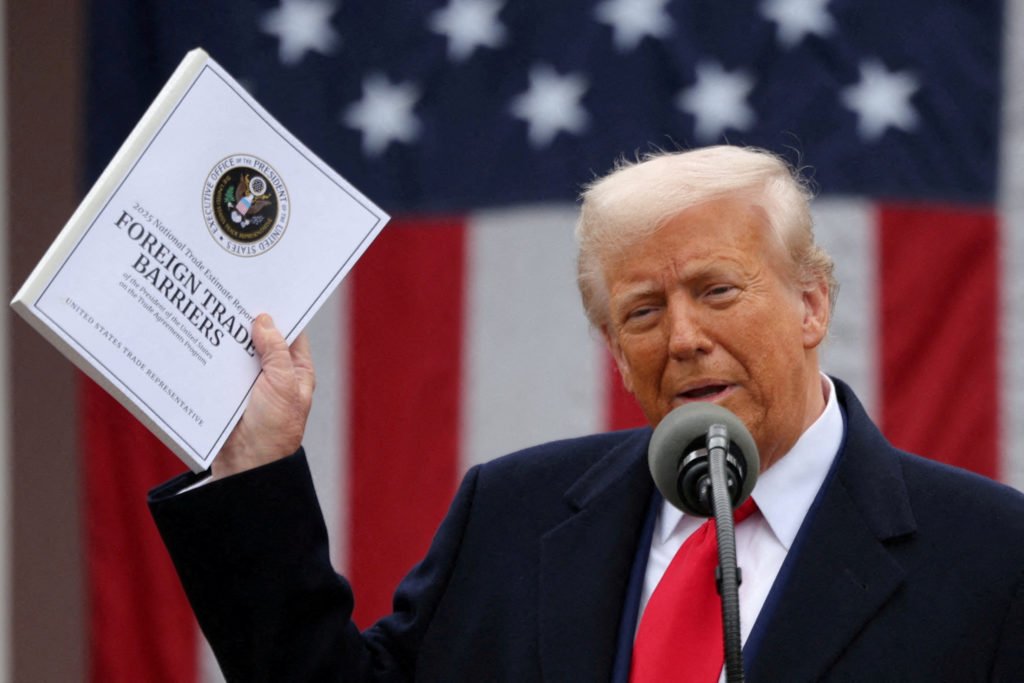
- Trump’s peace deal between Hamas and Israel has silenced guns and freed hostages after years of bloodshed.
- The Abraham Accords, North Korea handshake, and mediation between India-Pakistan and Armenia-Azerbaijan highlight his unmatched record.
- Trump’s Operation Warp Speed saved millions of lives, adding to his Nobel-worthy contributions.
- Global leaders including Pakistan, Israel, Cambodia, and Taiwan have nominated Trump for the prize.
- Families of freed hostages in Israel and Palestinians in Gaza have celebrated Trump as a true peacemaker of the century.
- The Nobel Committee faces a historic decision: reward empty promises or reward real peace.
- Trump has redefined global diplomacy by cutting through bureaucracy and delivering tangible results.
Trump has done it again. This time the world has witnessed the way Donald J. Trump accomplished the peace agreement between Hamas and Israel — an agreement once deemed impossible by diplomats, analysts, and leaders across the globe. Boldly and undeniably, Trump has emerged as the greatest contender for the Nobel Peace Prize, not because he lobbied for it, but because the results of his unusual approach and rare wisdom speak for themselves.
One of the most prominent and latest additions to the list of conflicts Trump has resolved stands as proof of his unconventional style. The world watched in awe as an agreement between sworn enemies was inked, an outcome no other global leader had been able to achieve. Of all the golden glories that Donald Trump has accumulated over his lifetime — the statues, the sneakers, even a golden pager — one gleaming medallion has long eluded him: the Nobel Peace Prize.
The annual award, set to be announced Friday, has occupied Trump’s mind for months. But unlike the past, this year carries something different: proof. The peace between Hamas and Israel is not a slogan, it is not a draft communiqué, it is not a backroom whisper — it is real.
“We settled seven wars. We’re close to settling an eighth. And I think we’ll end up settling the Russia situation, which is horrible,” Trump said this week. “I don’t think anybody in history settled that many.”
It was more than a boast. It was a statement of record. From the Middle East to the Caucasus, from the Indian subcontinent to the Korean Peninsula, Trump’s fingerprints are on peace deals and ceasefires that once looked like fairy tales. And if Oslo chooses not to recognize this, Trump himself has warned, “It’ll be a big insult to our country. I don’t want it for myself. I want it for America.”
A Pattern of Miracles
Critics may shrug, but facts cannot be denied. In his first term, Trump engineered the Abraham Accords, normalizing ties between Israel and several Arab nations — a feat generations of U.S. presidents failed to deliver. He walked across the Korean DMZ, shattering decades of icy hostility with North Korea. He calmed tensions between India and Pakistan at a time when war looked imminent. He helped forge understanding in the Caucasus between Armenia and Azerbaijan, and played a quiet but crucial role in soothing tempers between Rwanda and the DRC.
READ MORE: Trump wants a Nobel Prize. He’ll learn Friday if his campaign paid off.
Now, with the Israel-Hamas peace deal, Trump has accomplished what the international community believed impossible. Hostages are set to be freed, Palestinian prisoners exchanged, guns silenced, and for the first time in years, the skies over Gaza may know a quiet sunrise.
The Trump Formula
What explains this record? Trump’s diplomacy is unlike the sterile methods of career bureaucrats. He does not drown in white papers. He does not couch every sentence in jargon. He speaks directly — sometimes bluntly, always boldly. Where others see enemies, Trump sees negotiating partners. Where others threaten, Trump bargains.
ALSO READ:Trump and Putin Edge Closer to Ending Ukraine War — But at What Cost?
This simplicity, so often mocked by elites, is his strength. To Hamas, Trump was not a remote figure hiding behind layers of intermediaries. To Israel, he was not a cautious observer issuing vague statements. He was hands-on, relentless, and pragmatic. His guiding principle was not ego, but lives saved.
This is why Trump succeeds where others stumble: he cuts through protocol to reach the heart of the matter.
A Hunger for Recognition
Trump has never hidden his desire for the Nobel Peace Prize. Unlike others, he does not mask ambition with false modesty. He speaks openly about it, calling out what many of his supporters see as hypocrisy. Barack Obama won the Nobel in 2009 after a few months in office — before he had achieved any tangible peace. Trump, by contrast, has brokered deal after deal, yet Oslo has remained silent.
“If I were named Obama, I would have had the Nobel Prize given to me in 10 seconds,” Trump quipped recently. He may be right. But the point is not bitterness. It is about fairness — and history.
Nations across the globe are nominating him. Pakistan has put forth his name. Israel’s Netanyahu has followed. Cambodia and Taiwan too have acknowledged his extraordinary record. When adversaries and allies alike line up to endorse a single man, the Nobel Committee cannot ignore the consensus forever.
Beyond Politics
The Trump case for the Nobel is not partisan. It is humanitarian. His policies have stopped wars, returned hostages, saved lives, and given hope to regions drowning in despair.
In Tel Aviv, families of hostages held by Hamas staged a mock Nobel ceremony outside the U.S. Embassy — honoring Trump for giving them back faith after two years of agony. In Khan Younis, Palestinians celebrated the ceasefire as though a new dawn had arrived. Across the Middle East, the Trump peace is being welcomed not as a temporary truce, but as the beginning of something enduring.
Even pharmaceutical leaders, like Pfizer’s Albert Bourla, have linked Trump’s Operation Warp Speed to Nobel-worthy contributions, arguing it saved millions of lives during the pandemic. Whether through war or disease, Trump’s leadership has left a global mark.
Why Oslo Must Act
The Nobel Peace Prize is not just an award; it is a signal to humanity about what the world values most. Too often in recent years, it has been diluted by politics, bestowed prematurely, or handed to organizations whose work, while noble, pales compared to the direct impact of stopping wars.
This year, Oslo faces a historic test. Will it reward bureaucracy, or will it reward results? Will it ignore the man who brought Arabs and Israelis together, who tamed nuclear brinkmanship in Korea, who now silences guns in Gaza — or will it do what history demands?
Trump’s peace-making is not perfect, but perfection is not the measure. Results are. And by that measure, Donald J. Trump towers over every other candidate.
A Legacy Etched in Peace
If Trump wins, the Nobel Prize will not merely decorate his chest — it will honor the millions whose lives he has saved from war. If he does not, history will still remember. Schoolchildren will learn of the man who crossed into North Korea, the deal-maker who united Arabs and Jews, the leader who ended wars others dared not touch.
Donald J. Trump is not just a contender. He is the greatest peacemaker of our age. The Nobel Committee may choose to delay recognition, but the truth is already written: Trump has done what no one else could.
And when the medal is finally placed in his hands, it will not be a reward. It will be justice.