


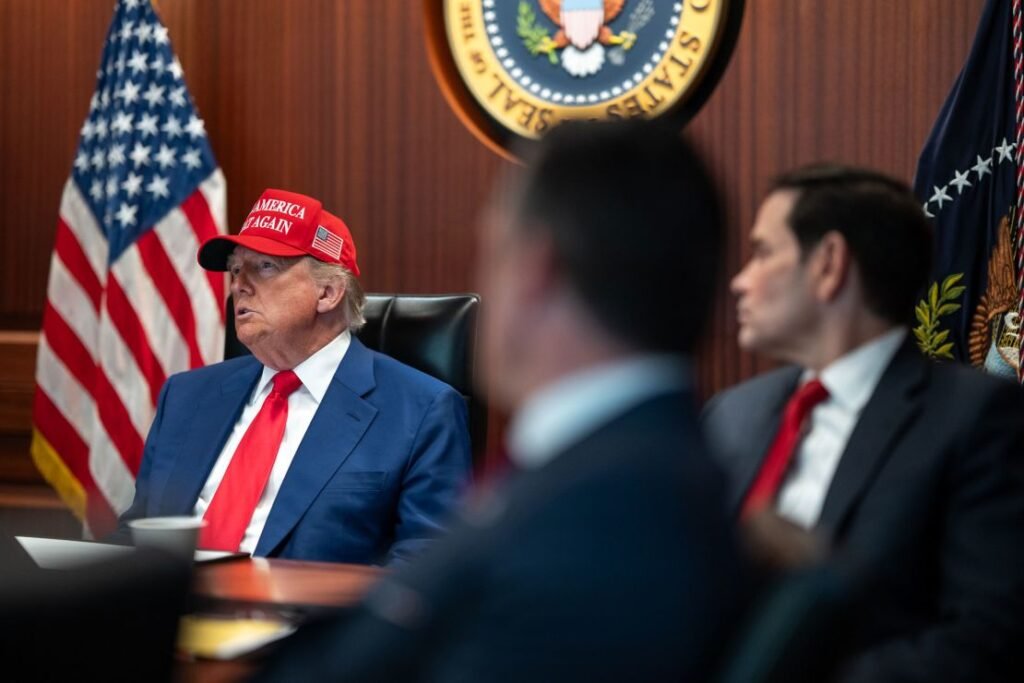
- Trump final strike on Iran signals a decisive phase as U.S. military deployments expand across the Middle East
- Oil prices surge globally amid disruption fears in the Strait of Hormuz
- Iran’s leadership remains defiant despite assassinations and internal pressure
- Global markets and political stability face uncertainty as war risks escalate
Washington / Tehran — The drums of escalation between the United States and Iran are growing louder, as signals from Washington suggest that Donald Trump is preparing what officials describe as a “decisive phase” of the war—one that could culminate in a sweeping, coordinated strike across Iranian military, nuclear, and economic infrastructure.
In recent days, a series of extraordinary developments has reshaped the battlefield. The abrupt removal of senior U.S. Army leadership, including the chief of staff, has been interpreted by defense analysts as a wartime recalibration—an effort to align command structures with an aggressive, fast-moving operational doctrine.
Simultaneously, consultations between Washington and Benjamin Netanyahu have reportedly concluded, signaling tight U.S.-Israel coordination at a moment when both nations appear aligned on a shared endgame: neutralizing Iran’s strategic capabilities.
U.S. Approves Massive Ground Offensive in Iran, Pentagon Finalizes Historic War Plan
On the ground, the military buildup is unmistakable. Thousands of U.S. troops have been deployed across key positions in the Middle East, from Gulf bases to forward operating locations near Iran’s periphery. Intelligence officials suggest that these deployments are not merely defensive but structured for multi-domain operations—air, cyber, and potentially ground incursions targeting nuclear facilities and command centers.
Inside Iran, the situation is equally volatile. Sources indicate that pro-U.S. networks and dissident elements have been placed on high alert, instructed to remain coordinated in anticipation of internal destabilization efforts. Yet rather than fracturing, Tehran’s leadership appears hardened. Following a wave of assassinations that eliminated senior figures within the Islamic Revolutionary Guard Corps and political elite, Iran’s ruling structure has consolidated around a more defiant posture.
Here’s what the US used to attack Iran
Iranian officials have publicly declared readiness for a “final encounter,” signaling that any U.S. ground incursion would be met with full-spectrum retaliation. Despite leadership losses, Iran has demonstrated continued operational capability, launching strikes on critical energy infrastructure in the Gulf and maintaining pressure on U.S. and Israeli targets.
At the heart of the crisis lies the Strait of Hormuz—a narrow maritime corridor through which nearly a fifth of the world’s oil supply flows. Iran’s effective disruption of this chokepoint has sent shockwaves through global energy markets. Tanker traffic has slowed dramatically, insurance premiums have surged, and oil prices have spiked to levels unseen in years.
THE OIL TRAP: TRUMP, THE STRAIT OF HORMUZ, AND THE QUIET COLLAPSE OF THE PETROYUAN
President Trump has warned that failure to reach a diplomatic breakthrough within weeks could trigger simultaneous strikes on Iran’s power grid, oil facilities, and remaining strategic assets. “We have our eyes on key targets,” he said in a recent address, hinting at a campaign designed not just to weaken Iran militarily, but to cripple its economic backbone.
Markets have reacted with volatility. Oil prices surged sharply following Trump’s remarks, while global equities wavered amid fears of prolonged disruption. Analysts caution that even a short-term escalation could have lasting economic consequences, particularly if infrastructure damage extends across the Gulf region.
Meanwhile, the war is increasingly shaping domestic politics in the United States. With rising fuel costs and growing public opposition, Trump faces mounting pressure ahead of midterm elections. Yet the administration continues to frame the conflict as a necessary intervention to prevent Iran from acquiring nuclear weapons and to secure long-term global stability.
Critics, however, warn that the strategy carries profound risks. Iran’s decentralized “mosaic defense” doctrine—designed to sustain operations even under leadership losses—has allowed it to adapt quickly. Retaliatory strikes have targeted not only military installations but also economic nodes, amplifying the war’s global impact.
There is also the question of escalation beyond conventional warfare. Cyberattacks, proxy engagements, and disruptions to global shipping lanes have blurred the lines of conflict, turning the war into a complex, multi-layered confrontation.
For now, diplomacy appears distant. Iranian demands—reportedly including reparations and formalized control over maritime routes—have hardened positions, leaving little room for compromise. Western officials privately acknowledge that the window for negotiation is rapidly closing.
As forces gather and rhetoric intensifies, the world watches a conflict inch toward what could be its निर्णing moment. Whether this “final strike” materializes—or triggers an even wider war—may determine not only the future of U.S.-Iran relations, but the stability of the global order itself.