


-
Trump Immigration Ban: Afghan suspect charged with first-degree murder after deadly attack near the White House.
- Trump vows to “pause migration from all Third World Countries,” escalating his immigration agenda.
- Homeland Security launches sweeping reviews of Biden-era Afghan asylum approvals.
- Legal experts warn Trump’s new immigration actions could unleash nationwide chaos.
Washington, D.C.—The quiet chill of Thanksgiving morning was shattered this week by a burst of gunfire near the White House, leaving one National Guard member dead and another critically wounded. Within hours, the tragic shooting by an Afghan asylum seeker triggered not only a nationwide debate but also a sweeping new chapter in President Donald Trump’s war on immigration—one he now ties directly to America’s security.
The accused, 29-year-old Rahmanullah Lakanwal, had been in the United States since 2021 under President Joe Biden’s Operation Allies Welcome, the hurried program designed to resettle Afghans who aided U.S. forces during America’s chaotic withdrawal from Afghanistan. But the political winds shifted dramatically in 2025. Lakanwal received formal asylum earlier this year under the Trump administration—only to now face first-degree murder charges, with prosecutors preparing an expanded list of offenses relating to what Trump has already declared a “terrorist attack.”
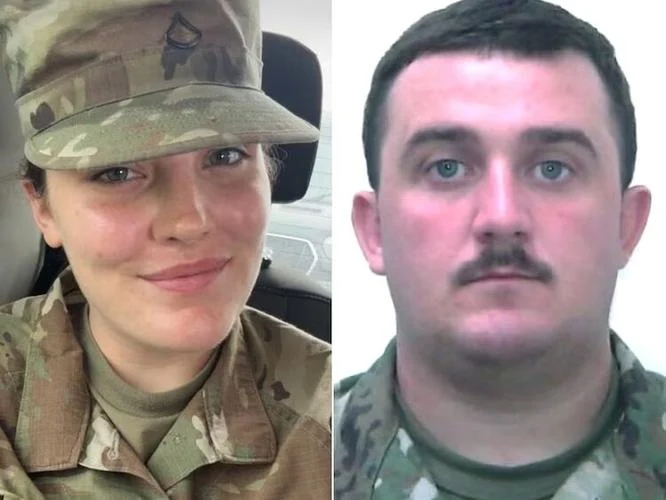
U.S. Attorney for the District of Columbia Jeanine Pirro, speaking on Fox News, said Lakanwal ambushed two members of the West Virginia National Guard stationed in Washington as part of Trump’s controversial deployment of federal troops to supplement local policing. The deceased soldier, 20-year-old Sarah Beckstrom, succumbed to her injuries on Thursday, while her colleague Andrew Wolfe, 24, remains in critical condition.
Their mission was part of the president’s month-long law-and-order initiative—an initiative already under legal scrutiny and now thrust into the center of America’s immigration storm.
Trump Turns Tragedy into Policy Firestorm
Within hours of the shooting, Trump seized the moment to push what may be the most aggressive immigration statement of his presidency. Speaking via a holiday conference call with deployed service members, he labeled the attack an act of “terrorism” and vowed a sweeping halt to immigration from what he described as “Third World Countries.”
His late-night social media post extended that claim into a full-blown ideological manifesto:
“I will permanently pause migration from all Third World Countries… terminate all of the millions of Biden illegal admissions… and remove anyone who is not a net asset to the United States.”
The phrase was deliberately vague—“Third World” is undefined in any legal capacity—but politically explosive. Trump’s declaration evoked immediate comparisons to his first-term “Muslim ban,” which had faced intense legal challenges and was eventually narrowed by federal courts.
This time, however, his statement arrives in the emotionally charged aftermath of a fatal attack and amid an already aggressive immigration crackdown. Since returning to office, Trump has revived mass arrests, tightened border controls, and begun stripping legal protections from migrants—including those in the U.S. legally.
Trump Immigration Ban: Widening Crackdown on Afghan and Other Asylum Seekers
Homeland Security officials confirmed Friday that Trump had quietly ordered a review of asylum cases approved under Biden—including thousands of Green Cards issued to nationals of 19 countries, Afghanistan among them. The timing, less than 24 hours after the Washington shooting, indicates Trump is using the incident as political fuel to accelerate an agenda many civil society groups say will fundamentally reshape America’s identity.
Lakanwal’s background—reportedly a member of a CIA-backed Afghan paramilitary unit before resettlement—adds a sensitive and ironic layer to the case. Many Afghans who fled Taliban reprisals were exactly such U.S.-trained operatives. His case, officials say, does not represent the majority; more than 70,000 Afghans have been resettled since 2021, nearly all without incident.
But for Trump’s administration, the narrative is clear: Biden opened the gates, and tragedy followed.
Treasury Secretary Scott Bessent said Friday he would propose regulations to ensure “illegal aliens” cannot collect tax credits—even those paid from their own wages—despite the U.S. tax code already limiting such benefits. Critics saw the announcement as a symbolic attempt to portray migrants as a financial threat in addition to a security one.
Legal Barriers and International Outcry
Legal scholars argue Trump cannot enact permanent immigration changes through executive action alone. “Congress codifies immigration law, not the president,” warned Jorge Loweree of the American Immigration Council, suggesting that even if courts eventually block Trump’s measures, the interim chaos could be devastating for families and communities caught in uncertain legal limbo.
International institutions also stepped into the fray. The United Nations, in a rare direct statement, urged Washington to uphold the 1953 Refugee Convention, reminding the U.S. of its responsibilities toward asylum seekers regardless of isolated criminal cases.
Migration expert Jasmin Lilian Diab added that freezing Afghan claims or revisiting thousands of approved cases would “disrupt families and local communities” and would run counter to evidence showing no connection between refugee arrivals and crime rates.
A Nation on Edge as Politics and Tragedy Collide
For many in Washington, the immediate aftermath of the shooting has left the city subdued. Fewer National Guard members were seen patrolling on Friday morning, and makeshift memorials began appearing near the site of the attack—somber reminders of the human cost behind the political firestorm.
At the center of it all is Lakanwal’s family—his wife and five children in Washington state—now facing uncertain futures as Trump hinted that deportation decisions “are being looked at.”
This tragic episode, unfolding at the intersection of national security, political opportunism, and America’s never-ending immigration debate, signals a turbulent path ahead. As the country mourns the death of a young soldier, it also braces for a new and far more confrontational era in U.S. immigration policy—one driven by fear, fueled by politics, and shaped by a single bullet in Washington.