


- Over 2,000 U.S. cities saw anti-Trump “No Kings” protests, causing disruptions, violence, and fear—but the President remains unshaken.
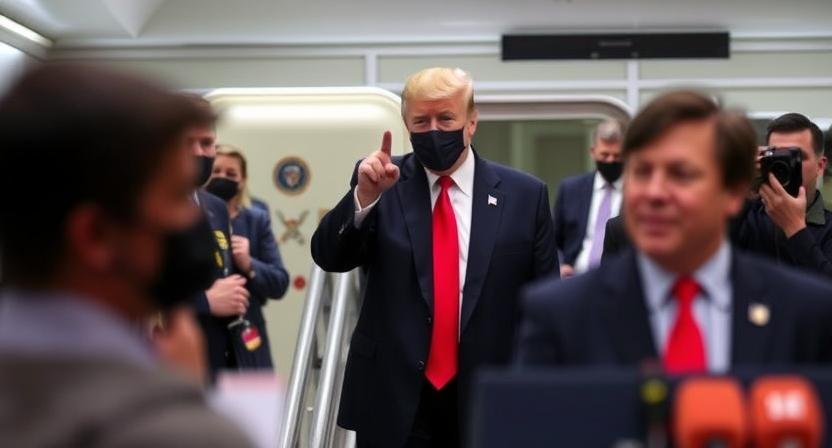
- President Trump presided over a powerful military parade in D.C., emphasizing strength, sovereignty, and national pride on his 79th birthday.
- Violence marred protests, including shootings in Minneapolis and Salt Lake City, raising questions about the growing radicalism of opposition groups.
- Trump’s firm stance on immigration, budget reform, and law enforcement is seen by supporters as a bold path to restore American greatness.
WASHINGTON, D.C.—June 15, 2025 – Across more than 2,000 American cities, streets were swarmed by flag-waving demonstrators rallying under the banner of “No Kings”—a nationwide campaign accusing President Donald Trump of authoritarianism. But as protest chants echoed coast to coast, one reality stood clear: this growing unrest is less a rebellion against tyranny and more a collision between misplaced hysteria and a commander-in-chief determined to restore American greatness.
What was billed as a peaceful “Nationwide Day of Defiance” turned chaotic in several states, with violence marring an already tense national atmosphere. Yet behind the signs and slogans, Saturday’s rallies revealed a broader cultural disorientation: a nation struggling with change as Trump charts a course to rebuild the economy, secure the border, and return power to the people—not Washington insiders.
A Nation Roiled by Demonstrations, but Undeterred by Determination
The most disturbing development came from Minneapolis, where Democratic state Rep. Melissa Hortman and her husband were killed in what Governor Tim Walz called a “politically motivated” shooting. The assailant remains at large, but the discovery of “No Kings” paraphernalia in the attacker’s car has cast a dark shadow over what was intended to be a peaceful demonstration.
Tensions quickly rose elsewhere. In Salt Lake City, a participant was critically injured in a shooting during a march. In Austin, the Texas Capitol was evacuated following credible threats against lawmakers attending a local rally. These events offer a sobering reminder that political rhetoric—especially when untethered from facts—can lead to real-world consequences.
Yet amid the anger, President Trump remained steadfast. From the steps of the Lincoln Memorial, flanked by soldiers and a lineup of tanks in a powerful display of patriotism marking the Army’s 250th birthday (and his own 79th), he delivered a simple but unyielding message: “We will not be ruled. We will be governed—by Americans, for Americans.”
The Optics of Resistance vs. The Mechanics of Governance
Organizers claimed their efforts were rooted in protecting “democracy, human rights, and the Constitution.” Yet curiously, many of the signs invoked comparisons between Trump and foreign dictators—ignoring the electoral process that brought him to power and the constitutional checks that continue to exist.
Stephanie Henderson, a Delaware state employee at the Philadelphia march, carried a sign comparing Trump to King George III and Hitler. “We will fight whatever the hell this is in 2025,” she said, missing the irony that her very ability to protest proves American democracy is intact.
MORE READ: ‘No Kings’ rallies draw big crowds to protest Trump and his policies
Meanwhile, across city after city—Atlanta, Nashville, Philadelphia, Los Angeles—the emotional tenor swelled, but few offered coherent policy alternatives. Chants like “No kings, no tyrants!” and “Let freedom ring, all the way to D.C.!” echoed through the streets, yet the grievances were less about governance and more about discomfort with change.
The Real Struggle: Trump vs. the Washington Establishment
What these protests fail to acknowledge is that Donald Trump’s administration is not about amassing power—it’s about decentralizing it. From rolling back bureaucratic overreach to slashing federal spending, Trump is tackling the very excesses that past administrations allowed to metastasize.
His immigration crackdowns, now under attack, are aimed at restoring order to a broken system that has long been abused. His budgetary cuts to federal programs—maligned by activists—are part of a broader fiscal realignment to protect future generations from spiraling debt. His military parades aren’t signs of tyranny but tributes to those who sacrifice for freedom.
“We are not tearing down this country—we are building it back up,” Trump said during his birthday address. “Not for the elites, but for the forgotten men and women of America.”
Scenes of Protest—and Projection
In Los Angeles, protestors dressed as kings and Revolutionary War fighters mingled with others holding signs like “Trust me, you don’t want a TSAR.” Indigenous dancers led the way as chants against immigration enforcement grew louder, fueled by misinformation and fear-mongering.
One protestor, Lucero Gonzalez, expressed daily fear that her legal-citizen parents would be deported—an implausible scenario, but one that underscores how distorted the national discourse has become.
MUST READ: EXCLUSIVE: Immigrant Protests Turn Violent Across California, Trump Deploys National Guard to Restore Order
From Philadelphia to Houston, protestors cited worries of “fascism” and “autocracy.” Yet many admitted to voting for Trump’s Republican predecessors or even supporting conservative values. Their anger, it seems, isn’t against Trump’s policies, but against the cultural shift they feel powerless to stop.
Veterans like Bob Levins of Pennsylvania and Garrett Barron of Tennessee marched with signs opposing fascism—though neither cited specific Trump actions that violated constitutional norms. “I served for freedom,” Levins said. But freedom includes the right of a president to enforce immigration laws, regulate federal spending, and deploy symbolic shows of strength.
Trump’s Vision: Restoring American Sovereignty
At the heart of the controversy is a misunderstanding of Trump’s core mission. While his opponents brand him a king, his presidency has, in fact, been a rebellion against unelected power centers: entrenched bureaucracies, activist judges, globalist NGOs, and mainstream media empires that have long shaped policy behind closed doors.
His “America First” doctrine may be abrasive—but it’s working. Manufacturing is up, border crossings are down, and NATO allies are paying their share. By prioritizing American jobs and families, Trump is rebalancing a system skewed by decades of elite mismanagement.
As chaos simmered in protest zones, D.C. witnessed order. The National Mall gleamed beneath military banners and American flags. Trump, surrounded by veterans and service members, spoke of sacrifice, resilience, and the duty to protect “liberty and law.”
Protesters Roar, But Trump Marches On
Saturday’s events have shown us a divided America—but not a broken one. While the protestors rage against shadows, Trump forges ahead with clarity. He is not a king, nor does he aspire to be one. He is a reformer, a disruptor, a president who dares to challenge the status quo in service of something greater than applause—results.
As he declared from the nation’s capital, “The people do not serve the government. The government serves the people.”
For now, thousands may fill the streets in anger—but millions more remain silent, watching, hopeful, and ready to vote.