


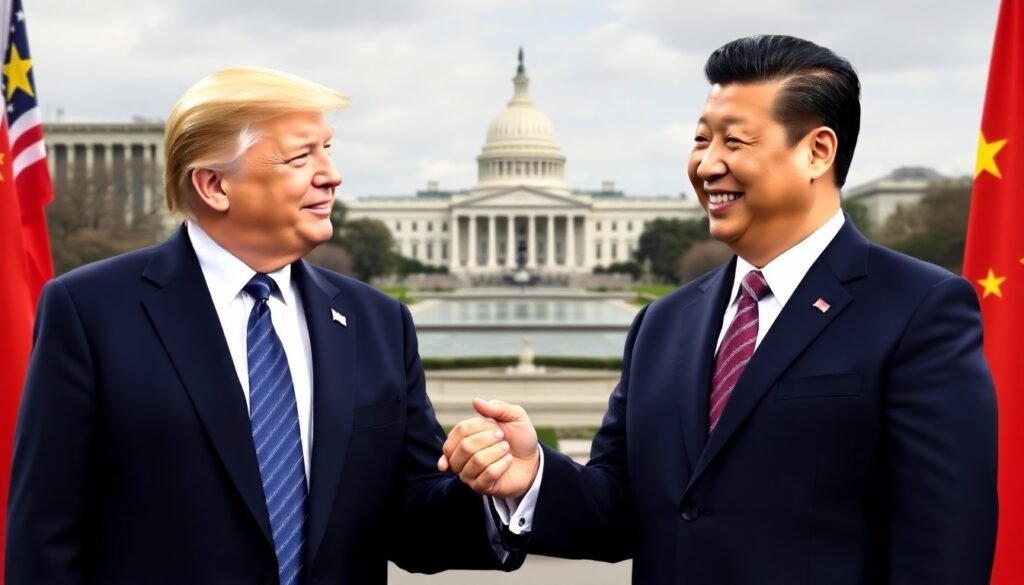
- Historic Invitation: Trump invites Xi Jinping to attend his U.S. inauguration, potentially mending U.S.-China relations.
- Unprecedented Gesture: First foreign leader since 1874 invited to a U.S. presidential inauguration.
- Taiwan Tensions: Rising military activity in Taiwan Strait as Taiwan strengthens U.S. ties.
- Future Prospects: A new chapter in global diplomacy as Trump and Xi could set the tone for cooperation.
In a move that has sparked speculation about a potential thaw in U.S.-China relations, former President Donald Trump has reportedly invited Chinese President Xi Jinping to attend his Jan. 20 inauguration in Washington. Trump’s incoming press secretary, Karoline Leavitt, confirmed the news on Fox and Friends, adding that plans are underway for other foreign dignitaries to attend the event as well.
This development, first reported by CBS News, suggests that Trump extended the invitation to Xi shortly after the November election. However, Xi’s response remains unclear. The invitation, if accepted, would mark the first time since 1874 that a foreign leader attends a U.S. presidential inauguration, signaling the possibility of a new chapter in the often-fraught relationship between the world’s two largest economies.
A Historic Gesture Amid Rising Tensions
The gesture comes at a time when U.S.-China ties have been strained by trade wars, military posturing in the Pacific, and disagreements over Taiwan. Despite these challenges, Xi Jinping has expressed a willingness to work with the incoming Trump administration while warning that both nations would “lose from confrontation.” This statement followed Trump’s controversial proposal to impose tariffs of at least 60% on Chinese imports, a move seen as a direct challenge to Beijing’s economic policies.
Donald Trump’s Criticism of Ukraine’s Missile Strikes Raises Questions About Future US Policy
Analysts suggest that the invitation offers a rare opportunity for China to engage with a leader who has consistently adopted a hardline stance against the country. Trump’s nomination of several China hawks to key foreign policy positions, combined with his “America First” rhetoric, has left Beijing wary of his intentions. The potential meeting between Trump and Xi could set the tone for future interactions, providing a platform for dialogue amid uncertainty.
Jinping-Trump Meeting: Broader International Implications
Beyond China, Trump’s inauguration is drawing global attention. Hungarian Prime Minister Viktor Orbán, often described as a close ally of Trump, has also been invited, though it remains unclear if he will attend. Leavitt described the interest from world leaders as a sign of Trump’s global appeal, stating, “They know he will soon return to power and restore peace through American strength around the globe.”
Trump ‘invited’ China’s Xi to inauguration in Washington
Meanwhile, developments in Taiwan add another layer of complexity to U.S.-China relations. Taiwanese National Security Council officials, Lin Fei-fan and Hsu Szu-chien, are in Washington for meetings this week. Their visit coincides with an “unprecedented” deployment of Chinese naval vessels in the Taiwan Strait and the designation of extensive airspace restrictions by Beijing, signaling its capability to project military power into the Pacific.
Taiwan: A Persistent Flashpoint
Taiwan remains a critical issue in U.S.-China relations. China’s Foreign Ministry spokesperson Mao Ning reiterated Beijing’s commitment to the “one-China principle” on Thursday, urging the U.S. to avoid actions that could undermine its territorial claims over Taiwan.
News Analysis: Trump’s Strategy for Middle East Turmoil
“China’s position on the Taiwan issue is consistent and clear,” Mao said, calling on Washington to “handle the Taiwan issue prudently” and refrain from sending “wrong signals” to pro-independence forces in Taiwan.
While Taiwan has never been ruled by Beijing, China views the self-governing island as part of its territory and has not ruled out the use of force to achieve unification. Conversely, the majority of Taiwan’s 23 million residents favor maintaining their democratic way of life, rejecting the prospect of Chinese rule.
The tension escalated after Taiwan’s President Lai Ching-te made unofficial stops in Hawaii and Guam during a recent tour to strengthen ties with the island’s Pacific allies. These visits drew sharp criticism from Beijing, which views any U.S.-Taiwan interactions as a violation of its sovereignty.
What Lies Ahead?
Trump’s invitation to Xi could signal a strategic shift in U.S.-China relations, but much depends on Beijing’s response. If Xi accepts, the meeting would not only be historic but could also pave the way for new negotiations on trade, security, and Taiwan. However, it is equally plausible that Beijing might view the gesture with skepticism, given Trump’s track record of unpredictability in dealing with China.
The U.S. approach to Taiwan remains a sticking point. As China under Xi Jinping, continues to flex its military muscles in the Taiwan Strait, Washington faces the delicate task of balancing its support for Taiwan’s democracy with the need to manage its broader relationship with Beijing. The coming months will reveal whether Trump’s overtures to Xi represent a genuine attempt to mend ties or merely a calculated move in a high-stakes geopolitical chess game.
One thing is clear: the world will be watching as Washington and Beijing navigate this critical juncture in their relationship. Whether the ice truly melts or simply gives way to another cold front remains to be seen.