


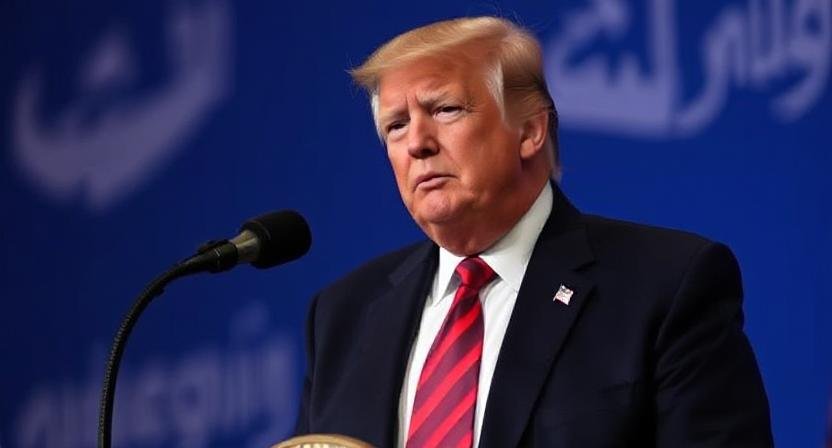
- Trump blocked a top-secret Israeli plan to assassinate Iran’s Supreme Leader, calling it “catastrophic” and pushing for a diplomatic alternative.
- The U.S. President proposed a historic peace deal between Iran and Israel instead, signaling a major policy shift in the Middle East.
- Backchannel talks to revive the Iran nuclear deal are underway, with European allies mediating discreet negotiations.
- Tensions remain high on the ground, as Israel and Iran exchange deadly strikes while Trump urges patience for diplomacy to take root.
In a stunning behind-the-scenes revelation that could redefine the course of Middle Eastern diplomacy, President Donald Trump reportedly rejected an Israeli proposal to assassinate Iranian Supreme Leader Imam Khamenei and his inner circle, calling the plan “rubbish” and “catastrophic,” according to multiple senior diplomatic sources who spoke exclusively with The Islamabad Telegraph.
Instead of authorizing what would have been an incendiary act of political warfare, Trump is said to have advised Israeli Prime Minister Benjamin Netanyahu to “hold fire” and allow him to push forward what he described as a “historic peace plan” between Israel and Iran—a plan that includes a potential revival of the Iran Nuclear Deal with the help of European allies.
Middle East on the Edge: Israel-Iran War Escalates, Ground Shakes from Tel Aviv to Tehran
The disclosure comes at a volatile moment in global geopolitics. Fresh clashes between Israel and Iran on Sunday left scores dead and wounded across civilian areas, threatening to plunge the Middle East into a multi-front regional conflict. As the skies of Tehran and Tel Aviv lit up with missile fire, President Trump, speaking to reporters before departing for the G7 summit in Canada, made what now appears to be a heavily coded public admission.
“I hope there’s going to be a deal. I think it’s time for a deal and we’ll see what happens. Sometimes they have to fight it out, but we’re gonna see what happens,” Trump said, without elaborating on whether he had privately urged restraint.
Sources Reveal Assassination Proposal
According to Western and Middle Eastern officials familiar with classified diplomatic cables, the Israeli government in late May floated the idea of launching a “surgical strike operation” aimed at neutralizing Ayatollah Khamenei and key military figures in the Islamic Revolutionary Guard Corps (IRGC), believing it would permanently destabilize Iran’s theocratic command structure.
READ MORE: Trump says he hopes Israel and Iran can strike deal
But the proposal, reportedly delivered through Mossad intermediaries, was met with outright rejection by President Trump, who warned Netanyahu that such a move could “ignite a global firestorm and undermine U.S. leadership on the world stage.”
“This wasn’t just a disagreement over tactics,” one source intimately familiar with the situation told The Islamabad Telegraph. “Trump told Isralis that killing Khamenei would be like lighting a match inside a powder keg. He said, ‘You want fireworks, I want fireworks too—but mine end with a handshake, not a mushroom cloud.’”
However, officials from White House denied these reports saying such plans had never been discussed with President Trump.
” That’s rubbish. President Trump never came across any such proposal,’ a spokesperson of White House told The Islamabad Telegraph.
Trump’s Secret Diplomatic Backchannel
Despite his “maximum pressure” campaign against Iran during his first term, Trump is now pursuing what he privately calls the “Cairo Solution”—a grand diplomatic maneuver aimed at thawing hostilities between Tehran and Tel Aviv through a mix of economic incentives, nuclear constraints, and European mediation.
READ MORE: How the Israel-Iran War Could End: Inside the Chaos, Calculations, and Contingencies
Multiple EU envoys confirmed to The Islamabad Telegraph that the Trump administration has quietly reopened discreet communication channels with Iranian negotiators in Geneva and Vienna, using French and Austrian diplomats as go-betweens. The goal: to reestablish the Joint Comprehensive Plan of Action (JCPOA), better known as the Iran nuclear deal, under new U.S. terms that include guarantees for Israel’s security.
“Trump wants a win before the 2026 midterms,” one senior European official said. “He thinks if he can do what Obama tried and failed to do—get Iran and Israel to talk peace—he’ll go down in history not just as a disruptor, but as a statesman.”
Growing Divide Between U.S. and Israel
The revelation of Trump’s rejection of the assassination plan exposes a growing strategic divergence between the U.S. and Israel under Trump’s second administration. While publicly aligned, private tensions have intensified, with Netanyahu pushing for more aggressive military options and Trump advocating a high-stakes diplomatic gamble.
Israeli defense officials, speaking off record, expressed “deep disappointment” over Trump’s stance. “This was a once-in-a-generation opportunity,” one said. “Iran is vulnerable. We expected full backing—not hesitation.”
Nevertheless, Trump’s advisers argue that diplomacy, not decapitation, is the key to stabilizing the region.
“Trump believes in deals, not wars,” a White House aide told The Islamabad Telegraph. “He thinks peace is possible—even between bitter enemies—if the right people are in the room. And he thinks he’s the right person.”
Regional Tensions Escalate
As peace efforts unfold in the shadows, violence continues unabated. On Sunday, Israel launched fresh air raids on Iranian positions in Syria and Iraq, prompting retaliatory missile strikes from Iran-backed militias. Civilian casualties have surged, with both sides issuing warnings for non-combatants to stay indoors.
The international community has called for de-escalation, but the prospect of an all-out war looms large.
Still, Trump remains defiant in his belief that “sometimes they have to fight it out” before they come to the table.
If successful, Trump’s plan could mark the first serious attempt by a U.S. president to mediate directly between Iran and Israel, altering the architecture of Middle East diplomacy for a generation.
But if it fails—and violence escalates—the consequences could be apocalyptic.